How Realtors Can Take Advantage of Smart Home Technology to Win More Listings and Close Faster
Smart homes are now common in real estate.
Buyers want connected devices, easy controls, and lower bills. This guide shows how smart home tech can help agents make listings stand out, attract tech-savvy buyers, and close deals faster.

Why Lead With Smart Home Benefits in Tech and Real Estate
When agents meet with clients, smart home features often catch their eye. That’s true for first-time buyers and sellers who want to downsize. It’s not just about shiny gadgets. It’s about making daily life easier. Smart lights, auto-locking doors, and smart thermostats can cut small hassles. They help a home feel simple, safe, and ready to use.
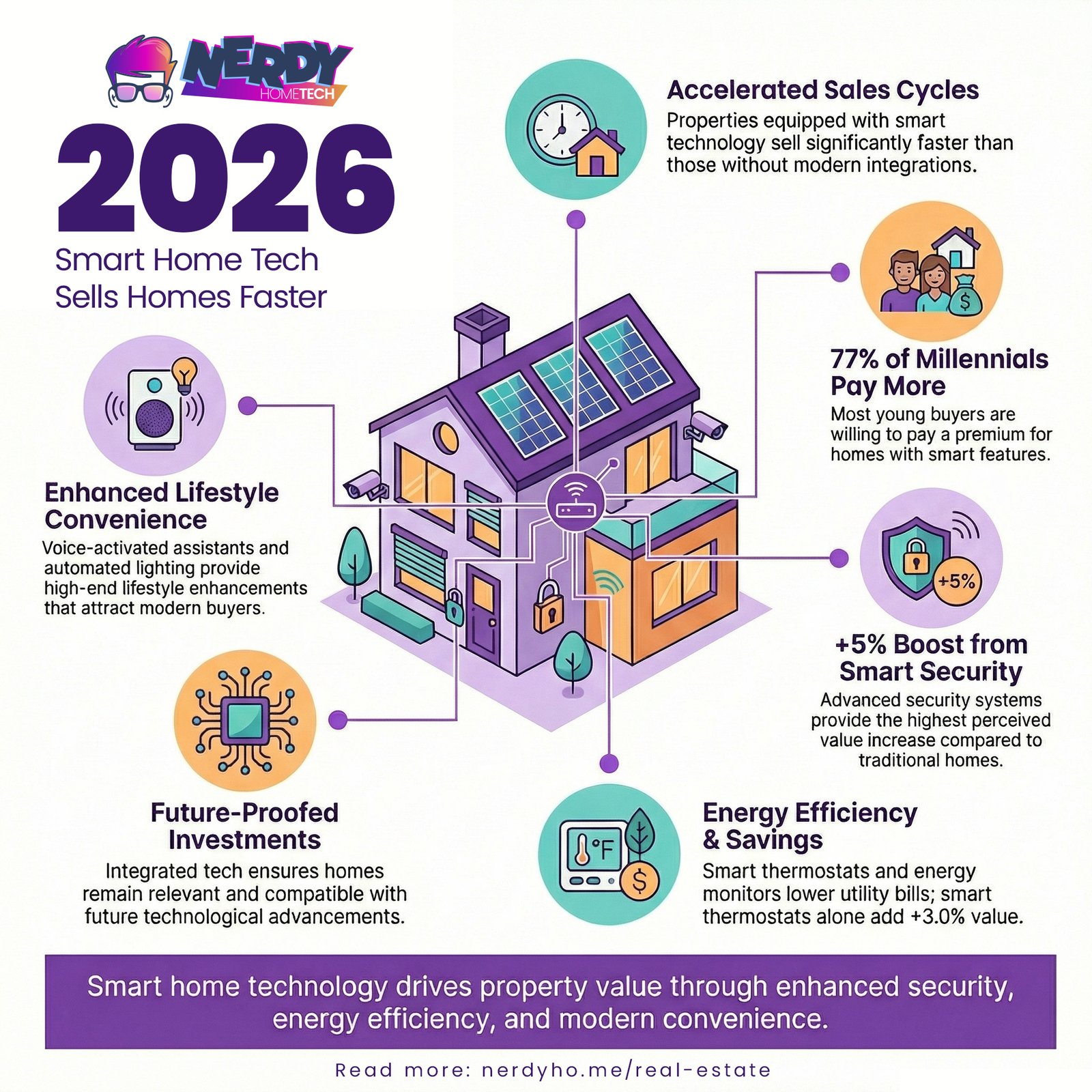
Furthermore, energy-aware devices often lower utility bills, which supports a higher perceived value. While a higher selling price or a faster close is never guaranteed, these are tangible benefits that provide security and peace of mind through remote monitoring and quick alerts.
At Nerdy Home Tech, the goal is to help translate those technical features into the real-world outcomes that buyers actually care about. Instead of simply pointing out a “smart thermostat,” agents can explain that it automatically helps lower heating and cooling costs.
“Automated lighting” means arriving to a well-lit home every time, and “smart security” gives homeowners the ability to see what’s happening from anywhere. Tying real estate tech directly to comfort, cost savings, and safety—rather than just listing specifications—clearly differentiates a presentation.
Using this approach can create a solid competitive advantage. Listings that highlight smart home features often stand out on online platforms, attracting tech-savvy buyers. On the logistical side, digital tools and smart locks can streamline property showings by improving access control.
Of course, mastering these devices and understanding their potential downfalls takes a bit of learning, and seamless operation isn’t always a given. However, demonstrating comfort with IoT, addressing privacy concerns honestly, and helping with onboarding positions agents as trusted advisors in the industry.


How Real Estate Technologies Create Competitive Advantage
- Attracts tech‑savvy buyers: Listings that highlight smart home features stand out on online platforms and social media.
- Differentiates presentations: Tie real estate tech to comfort, cost savings, and safety—not just specs.
- Streamlines property showings: Smart locks and digital tools improve access control and scheduling.
- Builds credibility: Comfort with IoT in real estate, privacy, and onboarding positions agents as trusted advisors in the real estate industry.
The Buyer's Agent's Edge: Turning Smart Tech into a Client Win
While listing agents focus on presentation, a buyer's agent equipped with smart home knowledge can uncover hidden value, identify potential liabilities, and gain a significant negotiating advantage. By looking beyond the "wow" factor, you can provide a deeper level of service and guide your clients toward a truly intelligent investment.
From Assessment to Negotiation: Leveraging Your Findings
Your smart home assessment isn’t just for your client’s information—it’s a powerful negotiation tool.
- Negotiating with Outdated Tech: If a home has first-generation smart devices that are slow, unsupported, or lack modern security features, you can argue that these are not assets but liabilities that will require immediate replacement. This can be used to justify a lower offer price.
- Highlighting the “Dumb” Home Discount: In a market where comparable homes feature integrated smart technology, you can leverage a property’s lack of smart features as a point for negotiation, framing it as a necessary budget item for your client post-purchase.
- Validating a Premium with High-End Systems: Conversely, if a home features a professionally installed, fully integrated system from a premium brand (like Lutron Caséta for lighting or a Control4 system), you can validate the home’s list price to your client. This demonstrates that they are paying for a reliable, high-value feature, not just a gimmick.
By shifting your perspective, smart technology ceases to be just a feature and becomes a strategic element of the transaction. For a buyer’s agent, this knowledge is a clear competitive advantage.
A Practical Real Estate Technology Framework
- Tell a clear technology story
Avoid jargon. Connect each device to comfort, energy efficiency, safety, and ROI. Keep the language concrete and outcome‑driven. - Build a vetted partner network
Collaborate with installers, cybersecurity specialists, and proptech vendors. This estate tech ecosystem enables turnkey upgrades, onboarding, and support. - Create compelling digital demonstrations
Use high‑definition photos, short videos, and virtual tours or virtual walkthroughs to show features in action—smart lighting scenes, voice routines, and even smart garage door openers. - Target the right audiences
Use CRM (client relationship management) and engagement data to identify early adopters and neighborhoods where connected devices perform best. - Quantify ROI
Estimate energy savings, potential insurance discounts, and resale signals. Buyers commit to measurable benefits, not just gadgets.
Addressing Common Concerns About Real Estate Tech
“It’s too complicated.”
Provide simple onboarding: basic voice commands, app walkthroughs, and printed quick‑start guides.
“What about privacy and data protection?”
Recommend reputable ecosystems, enable two‑factor authentication, prefer local processing when possible, and offer security audits through partners specializing in cybersecurity.
“Isn’t it expensive?”
Frame costs against energy efficiency gains, avoided retrofit expenses, and potential resale premiums—especially for existing homes.
Emerging Real Estate Tech Trends to Watch
- Artificial intelligence and machine learning:
Powering lead generation, hyper‑personalization, and market analysis; informing property valuation and pricing. - Virtual reality and virtual tours:
Elevating customer experience and shortening decision cycles. - Big data and predictive analytics:
Identifying neighborhood demand signals and likely buyers. - Blockchain technology:
Early‑stage applications in real estate transactions and digital identity. - Smart home integration:
Interoperability across connected devices, platforms, and home technology ecosystems.
Bottom Line
Technology for real estate is now table stakes. By weaving smart home technologies and broader real estate technology into listings, presentations, and follow‑up, agents can differentiate quickly, serve modern expectations, and close with confidence. The winning approach remains the same: communicate in plain language, quantify outcomes, partner with experts, and showcase the connected home experience through engaging digital tools.
 Walmart.com
 Walmart.com