Eneloop Pro AA

Eneloop Pro AA NiMH batteries are pre-charged high-capacity cells that recharge up to 500 times. They deliver steady power even down to -4 degrees Fahrenheit, making them the choice for professional gear.
Situational Benefits
| Photography and Flash | You can shoot long sessions without sudden voltage drops because these cells supply steady current for repeated flash cycles. |
| Gaming and Controllers | You get longer playtime between charges and consistent performance so controllers dont behave unpredictably mid-game. |
| Outdoor Events | Cold-tolerant design and steady power mean your lanterns and headlamps stay bright during summer nights. |
Versatility
These AA cells are flexible enough for both daily gadgets and demanding gear. While optimized for high-drain devices, they also work fine in remotes, clocks, and toys, and they play well with most NiMH chargers.
Energy Efficiency
Rechargeable up to about 500 cycles, these batteries lower the per-use energy footprint compared with single-use alkalines. Low self-discharge means you waste less charge while batteries sit unused.
Problem Solving
If youre tired of dead batteries mid-activity, these solve that by offering consistent output and predictable recharge life. They cut down on trips to the store and underperforming devices.
Eco Friendliness
Made to be reused hundreds of times and factory pre-charged with solar power, these rechargeable AA batteries reduce single-use waste significantly.
Key Benefits
- Consistent high-drain performance for flashes and strobes
- Pre-charged and ready out of the package
- Low self-discharge: retains 85 percent charge for 1 year
- Rugged temperature tolerance for outdoor use
- Reusable hundreds of times to cut waste
Grounded Reality Check
Risk: High capacity comes at a cost of cycle life. While standard Eneloops hit 2,100 cycles, these hit 500. Additionally, using a timer-based dumb charger can cook these cells, potentially lowering that cycle count to under 200. Invest in a smart charger.
Eneloop Standard

The standard Eneloop is designed for long-term ownership. They can be recharged up to 2,100 times and retain about 70 percent charge for up to 10 years in storage.
Situational Benefits
| Seasonal Storage | You can stash batteries in a drawer between seasons and expect them to hold most of their charge when summer returns. |
| Household Staples | For remotes and clocks, you get steady runtime so daily devices behave reliably without frequent swaps. |
| Travel and Vacation | Pre-charged readiness means you can pack them and use them immediately without hunting for a charger. |
Versatility
These AAs are versatile enough for everyday electronics and low- to moderate-drain gadgets. They handle most consumer gear and make managing multiple device types simpler.
Energy Efficiency
With up to 2,100 cycles, these reduce waste and the energy used to manufacture replacements over time, making them the smartest long-term efficiency option.
Problem Solving
If you tire of frequently replacing single-use cells or finding dead batteries in storage, these stay usable for a decade, solving the dead remote frustration permanently.
Eco Friendliness
Solar pre-charging and extreme longevity mean these have one of the lowest environmental footprints of any battery on the market.
Key Benefits
- Exceptional cycle life designed for 2,100 recharges
- Low self-discharge keeps them ready for up to 10 years
- Pre-charged and usable right out of the package
- Consistent performance across a wide range of devices
Grounded Reality Check
Reality: 2,100 cycles is a lab estimate. In real-world Nerdy conditions, high-heat environments or over-discharging in smart devices can brick these cells. If a device has a high parasitic drain, it might drain these below the recovery threshold.
Energizer Power Plus

Energizer Power Plus AA batteries use 15 percent recycled materials and are built for long service life. They hold power for up to 12 months in storage and resist leaks.
Situational Benefits
| Everyday Household | Remotes, clocks, and flashlights run reliably so daily tasks dont stall. |
| Kids Toys | Stable runtime for toys and controllers so play sessions arent interrupted mid-game. |
| Emergency Kit | Long storage life and leak resistance make them sensible to store for flashlights and radios. |
Versatility
These cells are versatile across low- and moderate-drain devices. They arent hyper-specialized but cover most household needs for standardizing your setup.
Energy Efficiency
By being rechargeable and holding charge for months, they reduce the number of disposables you buy, improving your setups material efficiency.
Problem Solving
Solves the hassle of constant alkaline replacement with a repeatable, stable power source usable for years.
Eco Friendliness
Recycled content and reuse potential lower landfill waste and make it easier to choose a greener option without sacrificing convenience.
Key Benefits
- Built with 15 percent recycled materials
- Pre-charged and ready straight from the pack
- Designed to resist leaks for safer storage
- Holds charge for 12 months in storage
Grounded Reality Check
Truth: The recycled content is a small percentage, and internal resistance is higher than Eneloops. If used in high-drain devices like speedlights, you will notice significantly slower cycle times.
Duracell Recharge

Duracell rechargeable AA batteries use Long-Life Ion Core technology, aimed at heavier-use electronics like gaming controllers and wireless peripherals.
Situational Benefits
| Gaming Sessions | Consistent power during extended play so controllers dont drop responsiveness mid-match. |
| Baby Monitors | Reliable hold and predictable runtime help ensure critical safety devices stay powered. |
| Travel | Pre-charged readiness means you can pack a few spares and trust theyll work immediately. |
Versatility
Versatile across a wide range of consumer devices. Still performs well in remotes and clocks while being tuned for heavier use.
Energy Efficiency
Reduces single-use cell consumption, lowering both material waste and the energy embedded in frequent replacements.
Problem Solving
Offers a predictable power source that cuts down on emergency runs to the store when batteries die during critical use.
Eco Friendliness
Built for hundreds of recharges and compatible with common chargers, helping reduce landfill contributions.
Key Benefits
- Long-Life Ion Core for fewer recharges
- Holds charge in storage for up to a year
- Works with standard NiMH chargers
- Pre-charged and ready out of the pack
Grounded Reality Check
Fit Risk: These cells are slightly thicker than standard alkalines. In some tightly-engineered battery compartments, they can be difficult to remove once inserted.
POWEROWL 2800mAh

These high-capacity 2800mAh cells are aimed at situations where you swap batteries often and need the longest possible runtime per charge.
Situational Benefits
| Long Photo Shoots | Keep flashes and accessories powered longer so you dont swap cells mid-session. |
| Camping Trips | Translate high capacity in lanterns to fewer battery swaps and steadier light through the night. |
| Household Bulk | Standardize across remotes, toys, and utility devices with a large 16-pack. |
Versatility
Suited for cameras, flashlights, and controllers. Standard NiMH chemistry makes them compatible with most chargers.
Energy Efficiency
High capacity reduces recharge frequency for a given runtime. Low self-discharge means less wasted energy sitting idle.
Problem Solving
Provides longer runtime per charge for gear that eats through batteries quickly.
Eco Friendliness
Using in bulk cuts single-use waste. High-capacity cells reduce the total number of disposables reaching landfills.
Key Benefits
- Massive 2800mAh capacity for extended runtime
- Large 16-count pack for bulk replacement needs
- Low self-discharge helps retain charge in storage
Grounded Reality Check
Discharge Risk: High-capacity NiMH cells typically have a shorter overall lifespan total cycles and higher self-discharge compared to standard capacity cells like Eneloop. Dont use these for things that sit for months.
Basics AA Rechargeable

Built around practicality, these hit a comfortable 2000 mAh capacity and are a sensible entry point for standardizing household power.
Situational Benefits
| Everyday Devices | Reliable runtime in remotes and clocks so routine tasks arent interrupted. |
| Day Trips | Pre-charged readiness means you can toss a spare set in a bag and trust theyll work. |
| Simplification | Standardizing on one reliable type reduces clutter and simplifies swaps. |
Versatility
Versatile across low- and moderate-drain gadgets. Not specialized for extreme draws but covers 90 percent of consumer electronics.
Energy Efficiency
Up to 1,000 cycles lowers disposable consumption over time, improving household material efficiency.
Problem Solving
Provides a predictable, reusable power source that cuts emergency store runs.
Eco Friendliness
Reduces landfill waste and the embedded energy of repeated disposable production.
Key Benefits
- Pre-charged and ready out of the package
- Good mid-level 2000mAh capacity
- Low self-discharge keeps them usable after storage
- Balanced performance for broad household use
Grounded Reality Check
Supply Chain Variance: Amazon rotates manufacturers. While early batches were high-quality Japanese-made cells, some recent batches have shown more variation in capacity and internal resistance.
EBL 2800mAh High Capacity

A dependable stash for dozens of devices. These high-capacity cells are handy for seasonal gear and drawer-full-of-remotes situations.
Situational Benefits
| Multiple-Device Homes | Keep spare sets on hand to swap across toys and flashlights without hunting for alkalines. |
| Event Prep | Enough batteries to keep speakers, lights, and controllers powered for backyard gatherings. |
| Workshop Tools | Easily maintain cordless tools and utility devices without downtime. |
Versatility
Handles a broad mix of electronics. Suitable for indoor/outdoor household items and hobby devices.
Energy Efficiency
Reusing in bulk lowers embedded energy and waste associated with single-use cells over time.
Problem Solving
Bulk availability means less interruption mid-activity and fewer emergency store runs.
Eco Friendliness
Repeated use cuts landfill waste significantly compared to disposable throwaways.
Key Benefits
- High 2800mAh capacity for extended runtime
- Supplied in an 8-pack for ready bulk replacement
- Standard NiMH chemistry compatible with most chargers
Grounded Reality Check
Capacity Inflation: Third-party tests often show EBL cells land closer to 2400-2500mAh rather than the 2800mAh claim. Dont base critical power needs solely on the label number.
insziii USB-C Lithium
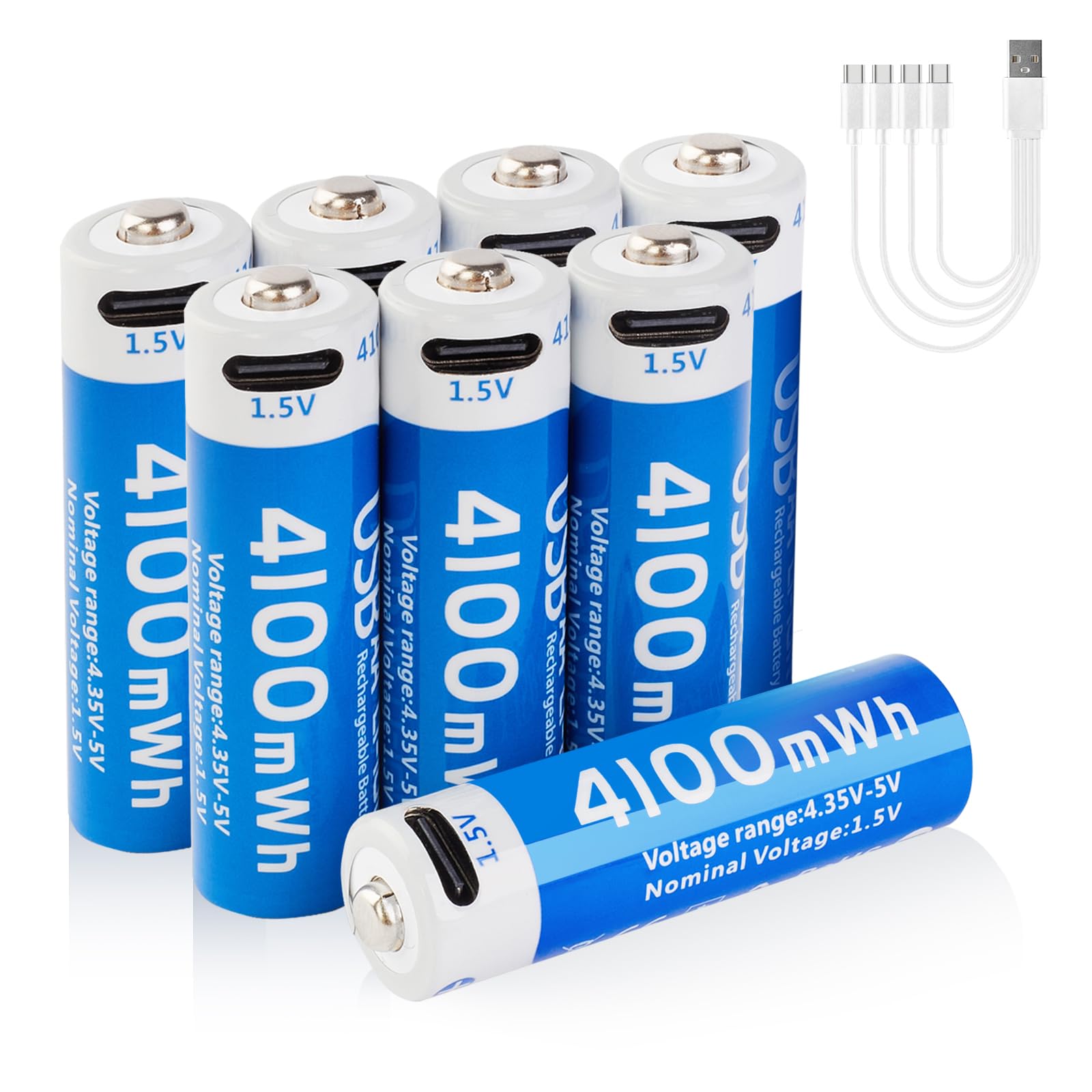
AA-sized batteries that behave like disposables 1.5V but recharge via USB-C. No dock required-charge individual cells on the go.
Situational Benefits
| Smart Door Locks | Reliable voltage for motors and sensors; recharge quickly via cable. |
| TV Remotes | Higher constant voltage reduces missed signals and sluggish responsiveness. |
| Travel | Packing a USB cable is easier than a charger dock when away from home. |
Versatility
Works in any AA slot that accepts 1.5V. Built-in USB adds flexibility for on-the-go top-ups.
Energy Efficiency
Recharging hundreds of times cuts single-use waste. USB charging eliminates the need for an extra dock.
Problem Solving
Simplifies workflow: charge as needed, avoid overbuying disposables, and keep devices powered without a dedicated station.
Eco Friendliness
Long cycle life lowers landfill waste and the resource cost of frequent replacements.
Key Benefits
- Built-in USB-C charging port on every cell
- Constant 1.5V output matches alkaline voltage curve
- No separate charging dock needed
- High effective capacity and approximately 1,200 cycle life
Critical Safety Warning
Binary Shutdown: Unlike NiMH, these maintain 1.5V until they are empty. Your device will report 100 percent battery until the second they shut off. Do not use these for smart locks if you rely on the low battery warning to avoid lockouts.
Final Comparison Chart
| Product | Chemistry | Capacity | Cycle Life |
|---|---|---|---|
| Eneloop Pro | NiMH (LSD) | 2500 mAh | Up to 500 |
| Eneloop Std | NiMH (LSD) | 2000 mAh | Up to 2,100 |
| Energizer | NiMH | 2300 mAh | Up to 1,000 |
| Duracell | NiMH | 2500 mAh | Up to 400 |
| Powerowl | NiMH | 2800 mAh | N/A |
| Amazon Basics | NiMH | 2000 mAh | Up to 1,000 |
| EBL | NiMH | 2800 mAh | N/A |
| insziii | Lithium | 2733 mAh equiv | Up to 1,200 |
Wrapping Up
You can cut costs and waste this summer by switching to the right rechargeable AA batteries for each device. Matching battery type to the device and keeping a simple charging routine ensures you get the best combination of convenience, savings, and sustainability. Just remember: high capacity is for high use, and high cycles are for long-term household standards.