
The Scenario: When the Grid Fails
It’s 2 PM on a Tuesday. A severe storm front—the kind that recently tore through Texas—suddenly knocks out the power grid. For a homeowner, the quiet that follows kicks off a silent countdown.
You have four hours before the food in your refrigerator starts spoiling. If you’re running a CPAP machine for sleep apnea, a sump pump in a flooding basement, or any medical device that needs consistent power, that clock feels way faster.
In these moments, a high-capacity power station stops being a “cool gadget” and becomes a practical asset. You’re not just buying a battery—you’re buying food security, the ability to keep a medical device running, and peace of mind that you won’t lose your investment if the outage stretches longer than expected.
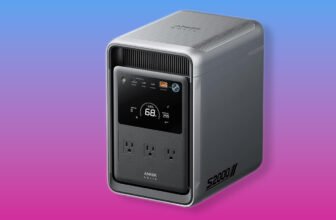
The Anker SOLIX F2000 (formerly called the PowerHouse 767) is designed specifically for this scenario. It costs around $1,699–$1,799 depending on the retailer, and it’s built for homeowners and RV enthusiasts who want reliable backup without breaking the bank.
Let’s break down whether it’s actually worth the investment.
Who’s this for:
- Homeowners who want backup power for outages without using a gas generator.
- RV owners who need strong portable power for trips, appliances, and gear.
- Remote workers who need laptops, routers, and key devices to stay online.
- Campers who want high-capacity power for longer off-grid stays.
- DIY users who need enough output for tools and jobsite gear.
- Buyers who want long battery life and don’t mind the extra weight.

Last updated on 2026-09-20
What You Actually Get in 2,000 Watt-Hours (and Why It Matters)
The F2000 has two key stats: 2,048Wh capacity and 2,300W continuous output (with real-world peaks up to 2,800W for high-surge devices).
Think of this like a truck. The battery capacity (2,048Wh) is your fuel tank. The power output (2,300W) is your engine. A bigger tank doesn’t help if the engine can’t pull the load.
Here’s what 2kWh actually buys you:
| Use Case | What 2kWh Actually Buys You |
|---|---|
| Refrigerator Backup | Roughly 30–40 hours, depending on your fridge. A small dorm-style fridge drawing about 150W runs longer than a full-size model with an ice maker drawing 300W or more. Your actual runtime depends on how often the compressor cycles on. Don’t assume exactly 35 hours. Test it with your own equipment. |
| Medical Devices | Multiple nights for a CPAP machine, which typically uses 60–80W per night, or a home oxygen concentrator. One full charge gets you about 25–30 hours of CPAP runtime, which covers most short-term outages. |
| High-Wattage Appliances | Unlike smaller 1,000W units, the F2000 can run a sump pump around 1,200W, a power saw around 1,800W, or a standard coffee maker around 1,500W without tripping. This matters if your home has water intrusion or you need tools during an extended outage. |
| Real Cost Per Stored Kilowatt-Hour | The F2000 costs about $0.83 per kWh. For comparison, a Bluetti AC200L with 4kWh costs about $0.62 per kWh. It’s cheaper per unit, but twice the weight and less portable. If you want something you can wheel into your truck, the F2000 is the better value. |
The Battery Inside: LiFePO4 and Why It Matters
The F2000 uses Lithium Iron Phosphate (LiFePO4) chemistry instead of the older lithium-ion cobalt used in phone batteries. Here’s why this matters:
Lifespan:
LiFePO4 is rated for 3,000+ charge cycles. At one charge per day, that’s roughly 8–10 years of daily use before capacity drops below 80% (the warranty threshold). If you only charge it monthly during outages, it’ll easily last 15+ years. The 5-year warranty covers defects and capacity retention at 80%.
Safety:
LiFePO4 is chemically more stable than the lithium-ion in your phone. It’s way less prone to “thermal runaway” (overheating and catching fire), which is why it’s safe to keep this in a bedroom or home office. Older lithium-ion cells have a real fire risk; LiFePO4 essentially doesn’t.
Idle Drain:
Anker adds GaNPrime efficiency circuitry and a Power Saving Mode that minimizes the power the unit draws just sitting around. Real idle drain is ~0.5W per day, meaning if you charge it fully and stick it in a closet for six months, it’ll still have 85% charge when you pull it out. You won’t dig into a dead battery in an emergency.
The Wheels and the Weight: Is It Actually Portable?
At 67.2 pounds, the F2000 is heavy. Full stop.
But Anker designed it like a piece of luggage: retractable handle, durable wheels (“EverFrost” style rubber), and a solid chassis. This transforms it from a stationary backup into something you can roll from the garage to the kitchen during a blackout, or down the driveway to power your RV.

Real talk: You can’t comfortably deadlift 67 pounds. Don’t try. The wheels are the point. Pushing it is fine. If you’re a single person with upper-body limitations or you live in a third-floor apartment, this weight matters. For most homeowners and RV owners, the wheels solve the portability problem.
Compare this to the EcoFlow Delta 2 Max, which weighs 42 pounds but has no wheels. That sounds better until you realize you’re manually carrying it every time you need to move it.
| Preview | Product | Rating | |
|---|---|---|---|
 | EF ECOFLOW Portable Power Station DELTA 2 Max 2048Wh, 2400W LiFePO4 Battery* | CHECK PRICE |
Last updated on 2026-09-15
12 Outlets + RV Port: Enough Connectors for Everyone
The F2000 has strategic ports for different scenarios:
| Port Type | Quantity | What It’s For |
|---|---|---|
| AC Outlets (Standard) | 4 | Standard wall plugs; max 2,300W total |
| AC Outlet (Heavy) | 1 | NEMA 20 (20-amp industrial outlet) for sump pumps, power tools, appliances |
| RV Port (TT-30R) | 1 | Plug directly into your RV; no adapters needed; saves ~$50 on dongles |
| USB-C (100W) | 3 | Fast-charging for laptops and tablets |
| USB-A (2.4A) | 2 | Charging phones and slower devices |
| Car Socket (12V) | 2 | Car chargers and 12V accessories |
The RV port is genuinely useful if you boondock or travel. One less adapter failure point matters when you’re off-grid for weeks.
Connectivity: The F2000 connects via Bluetooth through an IoT button (physical tap for pairing). There’s no Wi-Fi, so you can’t check battery status from a distance. For homeowners using this as a stationary backup, Wi-Fi would be nice. For RV owners in areas without cell service, it doesn’t matter anyway.
UPS Mode Explained: Why Automatic Beats Manual When the Lights Go Out
This is the feature that separates the F2000 from cheaper competitors.
When you plug the F2000 into a wall outlet and plug your devices into the F2000, it acts as an Uninterruptible Power Supply (UPS). If the grid flickers or cuts out, the F2000 automatically takes over in roughly 20 milliseconds. Your computer doesn’t reboot. Your CPAP doesn’t reset.
EcoFlow and some competitors offer EPS instead—”Emergency Power Supply.” The difference: manual switchover or a noticeable delay (500ms+), which means a brief power gap. For a desktop computer, this is annoying. For a CPAP user, a reset mid-sleep is a medical issue.
Critical note: If you’re running a CPAP, test the F2000 with your machine before trusting it for nightly backup. Some older CPAP models don’t work well with power-saving circuits, and a reset at 3 AM is not acceptable. Modern CPAPs are usually fine, but verify.
Anker vs. EcoFlow: Speed vs. Longevity
The EcoFlow Delta 2 Max is the F2000’s closest competitor. Here’s the trade-off:
| Feature | Anker SOLIX F2000 | EcoFlow Delta 2 Max | Why It Matters |
|---|---|---|---|
| Output | 2,300W (surge to 2,800W) | 2,400W | Anker’s surge capacity handles bigger loads; practical difference is minimal |
| Charge Speed | ~1.5–1.8 hours (2,200W input) | ~70 minutes | EcoFlow charges faster; Anker takes time but uses standard outlets |
| Warranty | 5 years | 2 years | Anker’s longer warranty reflects LiFePO4 durability confidence |
| Weight | 67 lbs (with wheels) | 42 lbs (no wheels) | Wheels make Anker more portable; without them, EcoFlow is a deadlift every time |
| Noise Level | 50dB (quiet office) | ~30dB (watch ticking) | EcoFlow quieter; Anker still acceptable for most spaces, but not silent |
| Wi-Fi | No (Bluetooth only) | Yes | EcoFlow lets you check status remotely; Anker doesn’t |
| Expansion | One additional battery max | Multiple batteries daisy-chain | EcoFlow more expandable for off-grid living |
The Verdict:
Choose Anker if you want a long-term, wheels-equipped backup. Choose EcoFlow if you need speed, silence, and expandability.
Anker’s 5-year warranty vs. EcoFlow’s 2 years reflects real confidence in LiFePO4 durability. If you’re keeping this for 8–10 years, Anker wins on total cost of ownership.
Real Drawbacks You Should Know
Weight and Stairs:
67 pounds is not light. Wheels help on flat ground, but don’t expect to carry this upstairs one-handed. If you live in a third-floor apartment or have mobility issues, this might be too heavy.
Noise for Bedrooms:
At 50dB, it’s quiet for a power station but louder than background noise in a bedroom. If you’re running it overnight to charge, you’ll hear it. EcoFlow’s 30dB is objectively quieter.
Expansion Limits:
You can add one additional F2000 battery (doubling capacity to 4kWh), but you can’t daisy-chain three or four units like some EcoFlow competitors. If you’re planning long-term off-grid living, this is a ceiling.
“Forever Battery” is Optimistic: The marketing claim that LiFePO4 lasts forever is oversold. It lasts longer than most, but “forever” is false. At 8–10 years with daily use, capacity degradation becomes noticeable. Plan for replacement within a decade if you rely on this daily.