
The Ultimate Guide to Choosing the Best Portable Power Station for Your Needs
You shouldn't have to guess whether your gear will stay powered when you're away from a wall socket. Portable power stations are everywhere right now, but they aren't all built for the same job. Some excel at charging laptops behind a truck seat, while others can keep a portable fridge cold through a muggy night. Choosing the wrong one means your essential tools shut down right when you need them most.
To keep things practical, we look past the brand slogans to focus on the numbers that dictate real-world survival: usable capacity in watt-hours, steady output wattage, plug selection, and how quickly you can replenish the cells. Whether you are prepping for a stormy summer season or packing out a camper van for weekend getaways, matching your equipment to the right power architecture prevents expensive mistakes on the road.
Top Picks for Portable Power
| Product | Best Category | Key Buying Info | Read More |
|---|---|---|---|
 Anker SOLIX C300 | Best High-Capacity Portability | Score: 94/100 Concentrated multi-port fast USB performance. | |
 EcoFlow Trail 300 | Best DC-Only Travel | Score: 92/100 Dedicated high-draw 300W DC output path. | |
 Jackery Explorer 300 | Best With AC Outlet | Score: 91/100 Integrated pure sine wave AC outlet. | |
 BLUETTI Elite 30 | Best Power Lift & UPS | Score: 90/100 Under 10ms integrated Uninterruptible Power Supply (UPS) system. | |
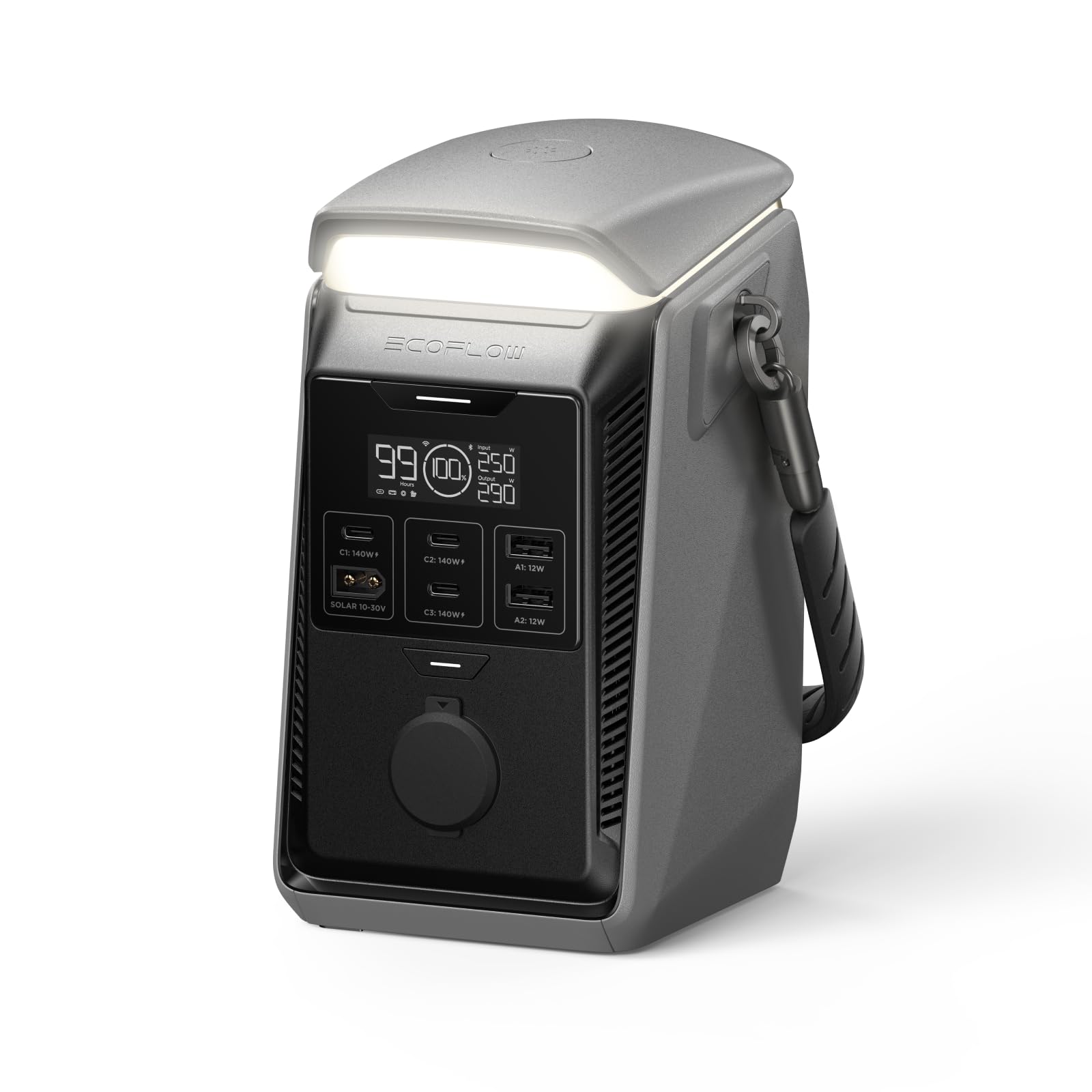 EcoFlow Trail Plus | Best USB-C Charging | Score: 88/100 High-throughput 140W USB-C power delivery port. | |
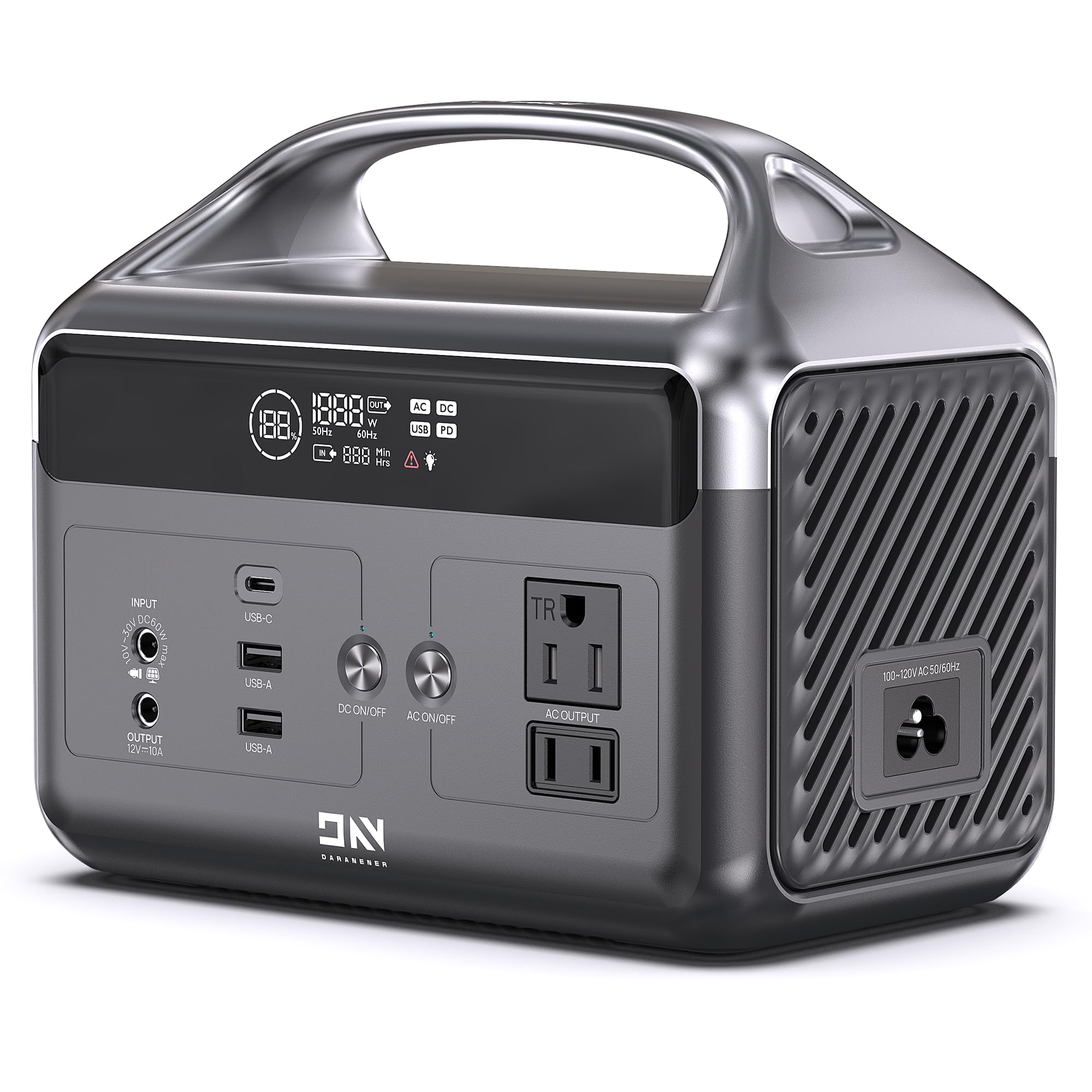 DaranEner NEOZ | Best Budget 300W | Score: 82/100 300W continuous / 600W peak output profile at a budget entry level. | |
 MARBERO M82 | Best Ultralight Travel | Score: 75/100 Exceptional structural weight savings. |
How We Chose
We build our power benchmarks by analyzing four core specifications that dictate how a station acts in the field. First is battery capacity, measured in watt-hours, which acts as the literal fuel tank size for your electronics. Next is continuous output wattage, because your tools will trigger internal safety shutdowns instantly if a power station's inverter cannot sustain their current draw. We also weigh the specific plug layout to ensure you aren't stuck carrying unnecessary adapters, and verify total physical weight so you don't break your back hauling equipment from the tailgate to the tent site.
Our approach deliberately separates traditional hybrid stations from specialized, DC-first power banks. Built-in AC inverters provide standard household plugs, but they add noticeable weight and constantly drain battery power just by staying turned on. By measuring how cleanly each manufacturer balanced these efficiency tradeoffs, we filtered out marketing fluff to isolate reliable options for everyday travel and home emergency back-ups alike.

Happy Explorer Outdoor First Aid 265 Piece Kit

Anker SOLIX C300
The SOLIX C300 compresses 288 watt-hours of dependable energy into an incredibly low-profile, dense block shape that easily slides into tight gear lockers. It relies on a balanced multi-port grid so you can charge your entire family's phones and lights at the exact same time without slowing down.
It beat similar alternatives because its distinct vertical shape packs high-capacity performance into a tighter layout than its immediate DC-first competitors. You get premium LiFePO4 stability inside a shell that handles typical campsite abuse easily.
Pros
- Excellent port density for gear
- Durable long-life battery cells
Cons
- Lacks integrated standard AC plug
Tech Specs
| Major Features |
|
| Interface | 288 Wh |
| Power Requirement | 300 Watts |
| AC Outlet | No |
| Hardware Specificity | 6.17 lbs (2.8 kg) |
Ideal For
- Space-conscious travelers who want maximum battery storage in a small footprint.
- Campers using multi-port arrays for lights, fans, and mobile accessories.
- Off-grid users looking for reliable solar replenishment during daylight.
Not For
- Anyone requiring standard 110V house plugs to drive appliances.
Editor's Take
Anker knows how to manage port density, and this brick handles multi-device stress without breaking a sweat. It's a fantastic fit if you're trying to pack your trunk efficiently but don't want to compromise on total off-grid runtime. We recommend it if you need dense, reliable storage for a weekend away.
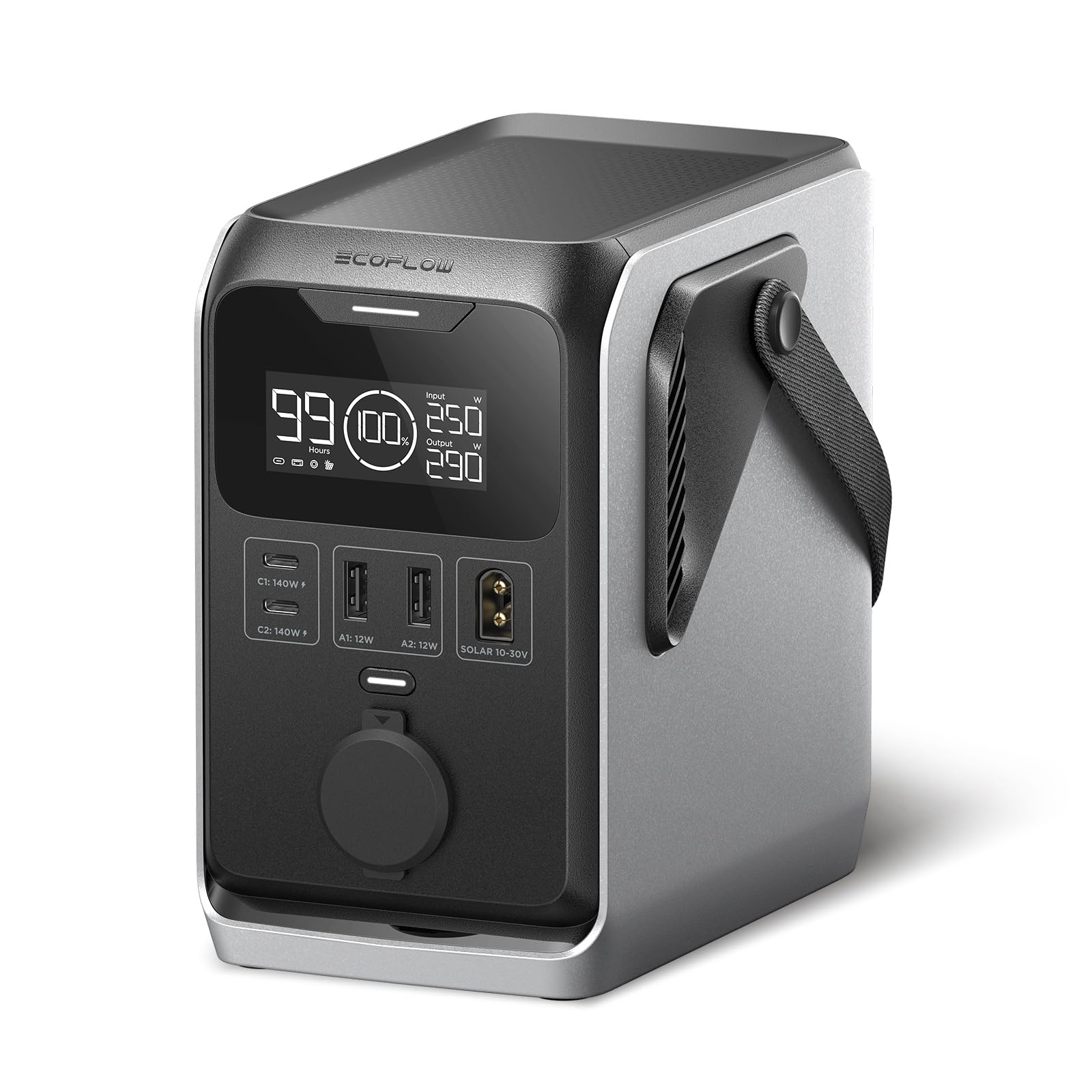
EcoFlow Trail 300
The Trail 300 drops the traditional heavy internal AC inverter entirely, giving you a streamlined, lightweight battery bank optimized for pure 12V and USB execution. By stripping out components you don't need for basic camp gadgets, it keeps your kit light while ensuring your portable cooler stays cold without interruption.
It beat similar alternatives because it offers a full 300 watts of continuous DC delivery without forcing you to carry a massive, oversized housing. You'll appreciate how it maximizes storage space behind your seat during long cross-country road trips.
Pros
- Highly weight-efficient profile
- Long-lasting LiFePO4 battery cells
- Robust continuous DC power path
Cons
- Complete lack of an AC wall plug
Tech Specs
| Major Features |
|
| Interface | 288 Wh |
| Power Requirement | 300 Watts (Continuous DC) |
| AC Outlet | No |
| Hardware Specificity | 5.69 lbs (2.58 kg) |
Ideal For
- Campers who run dedicated 12V portable compression refrigerators.
- Overland travelers looking to charge cameras and radios over USB-C.
- Minimalists who want durable LiFePO4 cells without the weight penalty of an inverter.
Not For
- Anyone who needs to plug in a traditional 110V household appliance or laptop brick.
- Users looking for integrated home emergency back-up options.
Editor's Take
It's a incredibly focused tool that prevents you from hauling bulk you don't actually need. If your entire travel kit runs off cigarette-style plugs and USB lines, this station gives you premium longevity without useless clutter. We recommend it if you want to run a mobile fridge efficiently without draining your car battery.
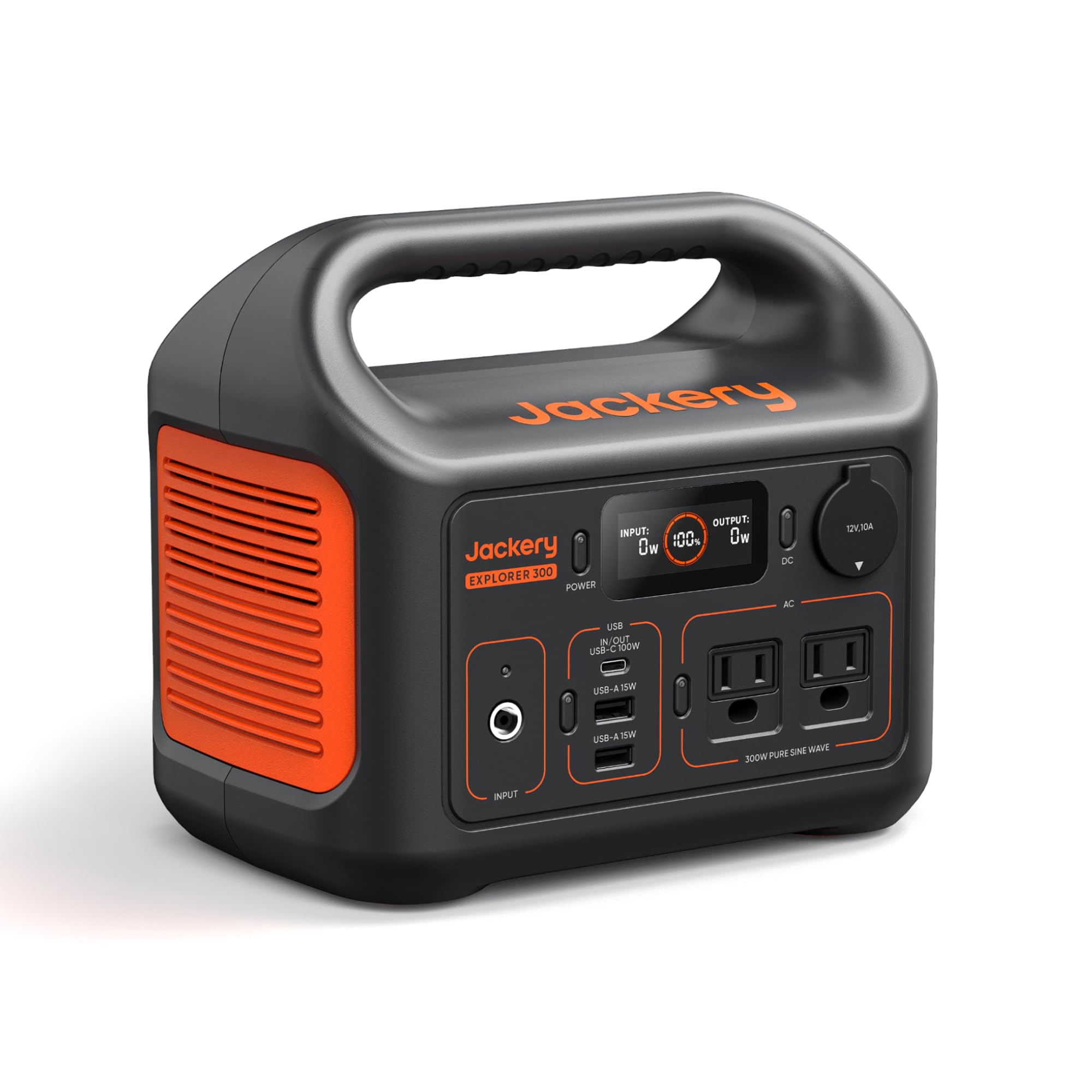
Jackery Explorer 300
The Explorer 300 features a built-in pure sine wave inverter, allowing you to run household wall plugs safely wherever you pitch your tent. It cleanly replicates the smooth power coming out of your home outlets, which means sensitive electronics and small appliances won't glitch out or buzz while running.
It beat similar alternatives by giving buyers a highly reliable balance of portable weight and full-platform AC/DC connectivity. The integrated molded handle makes it a breeze to snatch out of your trunk during quick roadside stops.
Pros
- Safe pure sine wave AC output
- Flexible all-in-one port setup
Cons
- Heavier than dedicated DC-only options
Tech Specs
| Major Features |
|
| Interface | 292 Wh |
| Power Requirement | 300 Watts |
| AC Outlet | Yes |
| Hardware Specificity | 7.1 lbs (3.22 kg) |
Ideal For
- Casual campers who want to plug standard wall chargers directly into their station.
- Homeowners prepping for short power failures who need to keep emergency radios or lights alive.
- Van life beginners looking for dead-simple operation without auxiliary wiring.
Not For
- Heavy users running tools or high-wattage heating coils over 300W.
Editor's Take
If you don't want to convert your entire gear kit over to 12V DC plugs, this is the exact hybrid bridge you're looking for. It runs everything from camera blocks to modest CPAP setups without breaking your budget. It's our top recommendation for anyone who values classic, home-style outlet convenience on their trips.
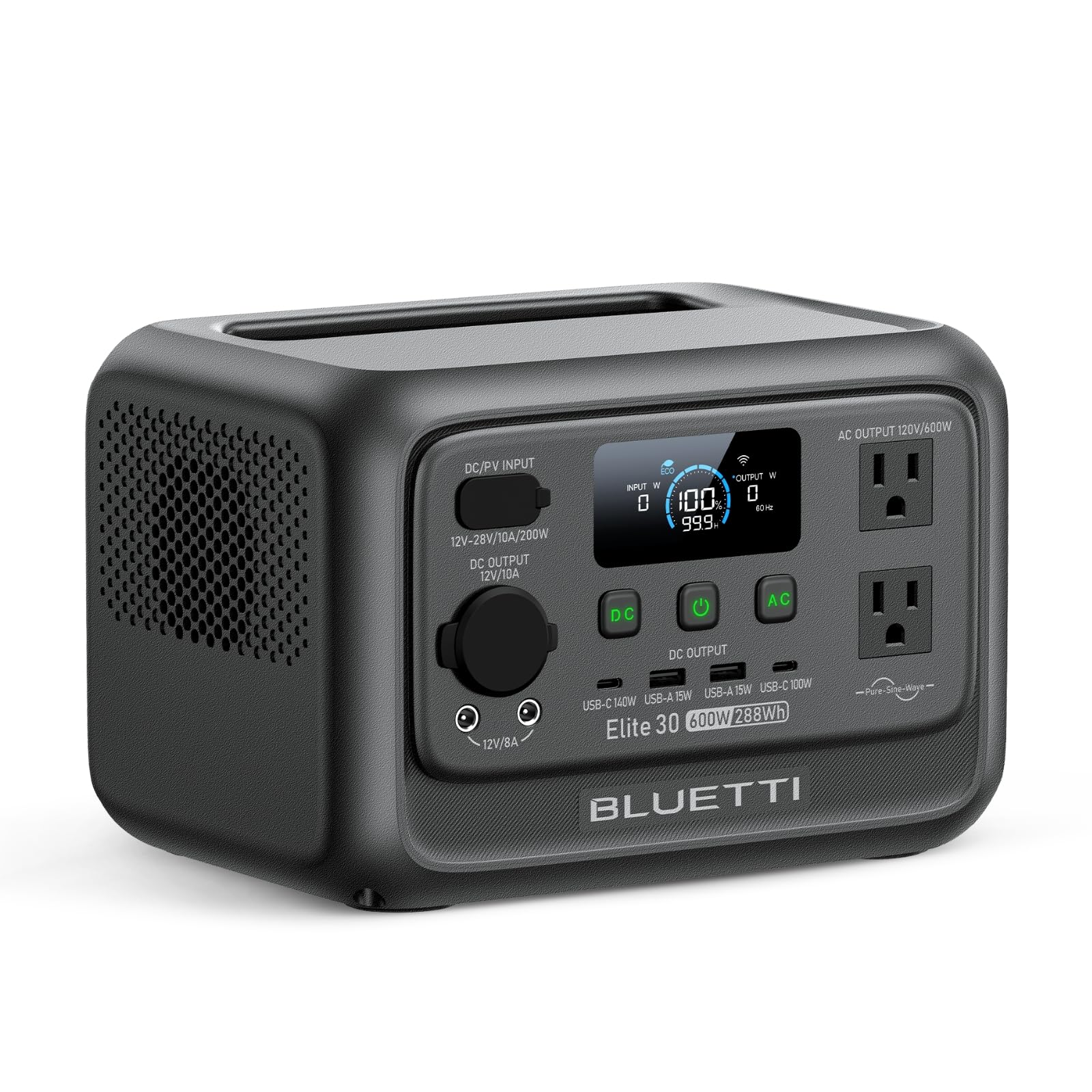
BLUETTI Elite 30
The Elite 30 brings heavy industrial backup logic down to a portable scale with its lightning-fast sub-10ms automated transfer switch. If your home power drops during a storm, this station loops in so quickly that sensitive home routers and network drives won't even register the outage.
It beat similar alternatives because it punches way above its weight class with a massive 600W continuous output limit and an incredible 1,500W surge peak. Keep in mind that while it shares a similar battery size to other entries, it belongs to a much higher performance class and weighs nearly 10 pounds.
Pros
- Massive 600W continuous capacity
- Automated emergency UPS backup
Cons
- Heaviest product in this roundup
Tech Specs
| Major Features |
|
| Interface | 288 Wh |
| Power Requirement | 600 Watts (1,500W Peak Surge) |
| AC Outlet | Yes |
| Hardware Specificity | 9.4 lbs (4.26 kg) |
Ideal For
- Remote workers needing unbroken backup protection for routers and storage arrays.
- Campers trying to kickstart tricky induction motors or portable fridge compressors.
- Buyers looking for premium high-wattage flexibility inside a compact shell.
Not For
- Ultralight pack travelers who view a 9.4-pound box as a logistics problem.
Editor's Take
This box is an absolute powerhouse for its size, but make sure you actually need that extra muscle before carrying the weight penalty around. The automated backup speed gives you incredible peace of mind if your home neighborhood has a shaky electrical grid. We highly recommend it for dedicated emergency workstations.
EcoFlow Trail Plus
The Trail Plus doubles down on high-speed digital charging layouts by packing a 140W USB-C output port onto its mobile framework. It handles demanding laptop workflows smoothly, letting you keep your field workstation alive without fishing for heavy wall blocks or proprietary adapters.
It beat similar alternatives by focusing its architecture entirely on modern Power Delivery standards, making it the fastest pocket option for digital nomads. Keep in mind that there's a discrepancy in the original product specs regarding its total capacity, and the manufacturer omitted the final weight rating.
Pros
- Fast-charging laptop compatibility
- Streamlined mobile transport body
Cons
- No standard household AC outlets
- Conflicting internal spec sheets
Tech Specs
| Major Features |
|
| Interface | Unresolved / Contradictory (288 Wh vs 300 Wh) |
| Power Requirement | 300 Watts |
| AC Outlet | No |
| Hardware Specificity | Weight missing from source data |
Ideal For
- Remote professionals who work entirely from laptops and portable hotspots.
- Photographers who need rapid, on-site USB-C battery pack replenishment.
- Light day-trippers tracking energy off-grid through solar panel inputs.
Not For
- Buyers expecting a standard household plug for medical gear or tools.
- Travelers who need precise, verified weight metrics for strict packing list limits.
Editor's Take
This is a solid option for high-speed device charging if you don't mind a few unverified numbers on the official spec sheet. It treats modern USB-C laptops like royalty while clipping out the ancient bulk of an inverter. We suggest a soft recommendation if your daily work depends entirely on staying connected away from the office.
DaranEner NEOZ
The DaranEner NEOZ focuses strictly on the bare essentials, matching a built-in AC inverter with a 60W USB-C fast charging port. It's built to keep your wallet happy while still ensuring you have active access to standard wall plugs during brief neighborhood outages or quick park barbecues.
It beat similar alternatives by giving buyers a working 300W inverter without charging a premium entry fee. Be aware that its total storage capacity sits lower at 192Wh, and the official documentation lists the battery type using an ambiguous "LiFePO4-like" qualifier rather than standard grading metrics.
Pros
- Highly affordable entry cost
- Diverse multi-port arrangement
Cons
- Lower total capacity at 192Wh
- Unverified cell chemical grading
Tech Specs
| Major Features |
|
| Interface | 192 Wh |
| Power Requirement | 300 Watts (600W Peak Surge) |
| AC Outlet | Yes |
| Hardware Specificity | 5.73 lbs (2.60 kg) |
Ideal For
- Budget-conscious buyers who need an occasional emergency wall plug.
- Tailgaters running light arrays or small projectors for an evening event.
- Casual drivers looking for a cheap, light power safety net under the seat.
Not For
- Extended off-grid travelers who need premium, verified cell longevity ratings.
Editor's Take
The NEOZ does exactly what it promises on a budget, though you shouldn't expect the infinite lifespan of a high-end commercial build. If you just need a straightforward power bank to run a radio or fan occasionally, it saves you money without leaving you completely stranded. We recommend it as a light, occasional backup solution.
MARBERO M82
The MARBERO M82 prioritizes absolute physical portability over raw performance, weighing in at a mere 2.29 pounds. Its tiny footprint fits easily into a standard backpack, serving as an expanded alternative to traditional pocket phone bricks for quick day hikes or hostel stays.
It beat similar alternatives based on sheer structural weight reduction alone, giving you a tiny AC outlet where other micro packs skip them entirely. However, please note that it drops continuous performance down to just 80 watts and uses conventional lithium cells rather than heavy-duty LiFePO4 chemistry.
Pros
- Featherweight two-pound chassis
- Fits comfortably inside a daypack
Cons
- Extremely limited 80W power ceiling
- Lacks premium durable LiFePO4 cells
Tech Specs
| Major Features |
|
| Interface | 88 Wh |
| Power Requirement | 80 Watts |
| AC Outlet | Yes |
| Hardware Specificity | 2.29 lbs (1.04 kg) |
Ideal For
- Backpackers and mobile travelers who need to keep weight under absolute minimum limits.
- Commuters looking to keep phone, drone, or headlamp arrays charged on daylight trips.
- Air travelers wanting a small auxiliary backup link that fits easily under plane seats.
Not For
- Anyone attempting to power travel fridges, cooking elements, or true 300W appliances.
Editor's Take
This is a micro power bank with a novelty wall plug attached, meaning it will trip out instantly if you try to plug in anything larger than a basic electronic charger. That said, staying under the 100Wh mark makes it exceptionally flight-friendly for quick domestic layovers. Do not buy it for camp appliances, but grab it if you travel purely on foot.
Product Comparison
| Product | Features | Rating | See Price |
|---|---|---|---|
Anker SOLIX C300 |
| 94/100 | |
EcoFlow Trail 300 |
| 92/100 | |
Jackery Explorer 300 |
| 91/100 | |
BLUETTI Elite 30 |
| 90/100 | |
EcoFlow Trail Plus |
| 88/100 | |
DaranEner NEOZ |
| 82/100 | |
MARBERO M82 |
| 75/100 |
Buyer’s Checklist
| Feature to Consider | Why It Matters |
|---|---|
Verify your tool demands | Make sure the total continuous running watts of your devices don't exceed the station's sustained inverter rating. |
Understand inverter idle drain | Onboard AC plugs consume power just by being active, making pure DC banks more efficient for 12V camping coolers. |
Check cell longevity markers | Look for LiFePO4 chemistry if you want your investment to survive years of frequent cycle use without losing capacity. |
Keep flight rules in mind | Ensure your travel station drops below the strict 100Wh FAA boundary if you intend to bring it into a passenger cabin. |
Final Thoughts
Every single power station in this roundup serves a distinct operational outcome depending on how you structure your mobile life. If your main goal is keeping your overland refrigeration running without hauling dead weight, the EcoFlow Trail 300 sheds unnecessary inverter bulk to optimize off-grid efficiency. Remote workers needing rapid, streamlined laptop top-ups can lean on the high-speed delivery of the EcoFlow Trail Plus, while those seeking dense port arrangements for family campsite charging will find a highly compact, travel-friendly solution in the Anker SOLIX C300.
If you value the flexibility of running standard household plugs directly from your tailgate, the Jackery Explorer 300 offers a reliable pure sine wave framework that treats sensitive electronic components with care. Home backup planners running critical work routers or hardware with high startup motor demands can isolate the robust 600W threshold and automated speed of the BLUETTI Elite 30. For quick weekend use that protects your budget, the DaranEner NEOZ secures essential AC outlet access without a premium price tag, while foot travelers requiring maximum weight optimization can slip the featherweight MARBERO M82 right into their daypack for effortless accessory charging.
Frequently Asked Questions
What is the difference between a DC-only station and a standard hybrid power bank?
DC-only power stations lack an internal AC inverter, meaning they cannot provide standard household wall outlets. Stripping this component out eliminates the weight and constant battery drain associated with running an inverter, making them significantly more efficient for specialized gear like 12V travel fridges and USB-C laptops. Hybrid units include the inverter hardware to offer standard plugs, but they weigh more and consume battery power just by staying turned on.
Can I safely run sensitive medical gear like a CPAP machine on these power stations?
You can run sensitive medical devices safely only if the power station features a pure sine wave AC outlet or a direct DC power cable path. Pure sine wave inverters replicate clean residential grid power, preventing microprocessors from overheating or glitching. Always verify that the continuous wattage requirement of your specific medical machine fits comfortably below the running limits of the station you choose.
Why does battery chemistry matter when comparing different travel models?
Battery chemistry directly dictates the long-term lifespan and safety profile of your portable station. Lithium Iron Phosphate cells, commonly labeled as LiFePO4, are highly stable and generally survive thousands of charge cycles before losing capacity. Conventional lithium cells are noticeably lighter and allow for smaller product designs, but they offer shorter total cycle lifespans before performance begins to degrade.
How do I estimate how long a portable power station will run my specific device?
You can calculate an estimated run time by taking the total watt-hours of the station and dividing it by the active wattage draw of your device, while accounting for natural conversion losses. Inverters typically lose roughly fifteen to twenty percent of their stored energy to heat when translating DC battery power into AC wall current. Running devices directly through native DC or USB lines bypasses this loss for better overall runtime.
Can I leave these units permanently plugged into a wall socket at home?
Units equipped with dedicated automated transfer switches or uninterruptible power supply modes are explicitly engineered to remain plugged into wall sockets safely. These stations route grid power directly to your electronics during normal operation, bypassing the internal battery cells until an actual outage occurs. For stations lacking specific backup certifications, keeping them plugged in constantly can accelerate cell degradation over time.
What does a surge or peak wattage rating mean compared to continuous output?
Continuous output is the maximum sustained wattage a power station can deliver safely over extended periods of time without tripping its internal breakers. Surge or peak wattage represents a brief burst of extra power that the inverter can provide for a few seconds to kickstart electrical motors. Devices containing compressors, such as portable refrigerators, require these high initial power spikes just to turn on before dropping down to lower running wattages.