
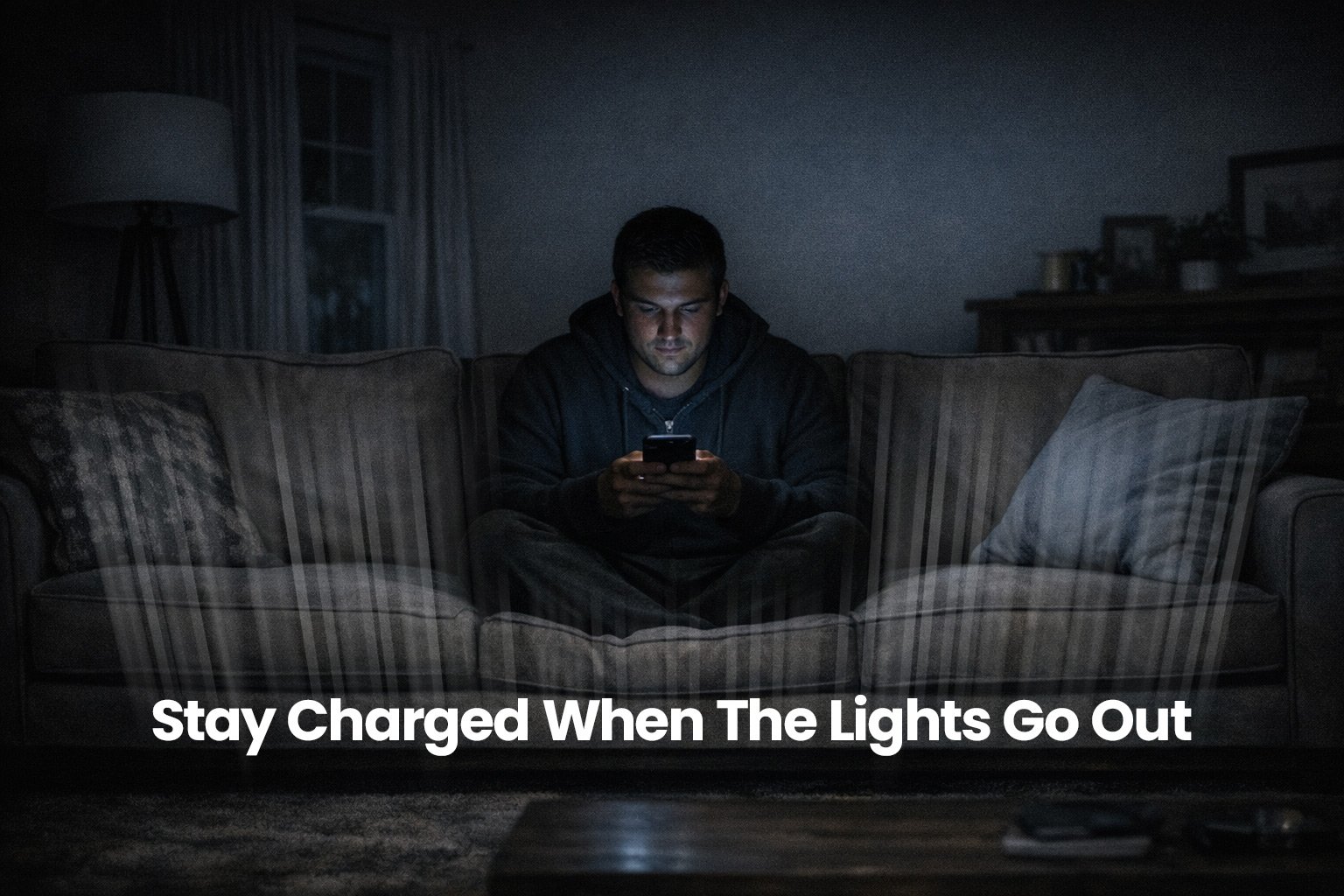
Stay powered when the unexpected hits.
You don't think about electricity until the lights flicker and the fridge stops humming. In 2026, emergency preparedness isn't just about stashing extra water; it's about keeping your communication lines open and your essential gear running. Whether it's a rolling blackout or a weekend off-grid, you need a power source that's reliable and, more importantly, ready to go when you are.
We've moved past the days of heavy, lead-acid jump starters that die after six months in the closet. The current generation of portable power relies on LiFePO4 (Lithium Iron Phosphate) chemistry. It's a bit of a mouthful, but all you really need to know is that these batteries are safer, handle heat better, and last for thousands of charge cycles instead of hundreds. They're built for the long haul.
Choosing the right unit comes down to balancing capacity—how much energy it holds—with how fast you can fill it back up. We've vetted the top contenders to help you decide which one earns a spot in your emergency kit.
Top Pics for Portable Power
| Category | Product | Score | Read More |
|---|---|---|---|
Fast Charging Innovation | EcoFlow RIVER 3 | 92/100 | |
Best Value Performance | BLUETTI EB3A | 88/100 | |
Compact Power Bank | Anker Power Bank | 89/100 | |
Solar Charging Efficiency | Jackery Explorer 240D | 85/100 |
How We Chose
We didn't just look at the shiny marketing numbers. We focused on the emergency turnover rate—how quickly a unit can go from empty to full. In a real-world outage, you might only have a few hours of grid power between blackouts to top off your gear. We prioritized models that can hit a full or significant charge in under 90 minutes.
Safety was our second non-negotiable factor. Every unit on this list (with a slight correction to some older marketing data) utilizes stable battery chemistry that resists overheating. We also looked at the weight-to-power ratio. If you have to evacuate, you shouldn't need a dolly to move your power supply. These units are designed to be grabbed with one hand while you're heading out the door.
EF ECOFLOW RIVER 3

Best for: Fast Charging Innovation
The EcoFlow RIVER 3 is the unit you want when time is your scarcest resource. Its standout feature is the 1-hour full AC recharge. While other stations might take a whole afternoon to get back to 100%, this one is ready to go in the time it takes to eat lunch. It's compact, but don't let the size fool you; it's built to handle the anxiety of intermittent power windows with ease.
It earns the top spot because it manages to pack 245Wh of capacity into a frame that weighs less than 8 pounds. While the base output is 300W, the X-Boost feature allows it to run some devices up to 600W by managing voltage. It beat out competitors by offering the most seamless recharge-to-use workflow we've seen in this weight class.
Pros
- Full charge in only 60 minutes
- Lightweight and easy to carry
- Stable LiFePO4 battery chemistry
Cons
- Lower 300W base output wattage
- X-Boost may not suit sensitive gear
Tech Specs
| Specification | Details |
|---|---|
Major Features |
|
Interface | 245Wh |
Power Requirement | 300W (600W Surge/X-Boost) |
Workflow Benefit | LiFePO4 |
Hardware Specificity | 1 Hour |
Ideal For
- Emergency preppers with short power windows.
- Weekend campers who travel light.
- Remote workers needing a laptop backup.
Not For
- Users trying to run full-sized kitchen appliances.
- People needing multi-day off-grid power.
Editor's Take
If you're looking for a set it and forget it emergency tool that won't leave you waiting by the wall outlet, the RIVER 3 is the smartest pick. It's the benchmark for speed in the sub-300Wh category.
BLUETTI EB3A

Best for: Best Value Performance
The BLUETTI EB3A is the heavy lifter of this group. It's designed for users who need a bit more oomph than the standard entry-level station. With a 600W continuous AC inverter, it can handle gadgets that would trip the safety sensors on smaller units. It's a rugged, value-focused choice that doesn't skimp on the technical internals.
We chose the EB3A as the best value pick because of its high output-to-price ratio. It also includes a built-in UPS (Uninterruptible Power Supply) feature, which means you can keep it plugged into the wall and your PC. If the power drops, it switches over in about 20 milliseconds. Just be aware that while the marketing says 30 minutes, that only gets you to an 80% charge; a full top-off takes closer to 90 minutes.
Pros
- Powerful 600W continuous output
- Built-in UPS for power outages
- Very affordable price point
Cons
- Fan noise is noticeable under load
- Heaviest unit in this specific list
Tech Specs
| Specification | Details |
|---|---|
Major Features |
|
Interface | 268Wh |
Power Requirement | 600W (1200W Surge) |
Workflow Benefit | LiFePO4 |
Hardware Specificity | 30 Minutes (to 80%) / ~1.5 Hours Full |
Ideal For
- Budget-conscious emergency planners.
- Desktop users needing a small UPS.
- Campers with slightly higher power needs.
Not For
- Ounce-counters who need the absolute lightest gear.
- People sensitive to fan noise under load.
Editor's Take
The EB3A offers the most raw power for your dollar. It's a reliable workhorse for keeping more than just your phone alive during a storm.
Anker Power Bank (Reserve 192Wh)

Best for: Compact Power Bank
The Anker PowerCore Reserve (Model 548) is a unique bridge device. It's not quite a full power station, but it's far more than your standard pocket charger. It features a built-in retractable light and a dedicated SOS mode, making it an excellent centerpiece for a tabletop emergency kit. It's built for those who prioritize lighting and communication over running appliances.
Critical Warning: Unlike the other units on this list, the Anker Power Bank has NO AC OUTLETS. You cannot plug in a standard two-prong or three-prong plug. It is designed strictly for USB-powered devices like phones, tablets, and some modern laptops. It won this category because its integrated lighting and portability make it the best choice for renters or commuters who don't need a bulky generator but want something more substantial than a phone brick.
Pros
- Includes a retractable emergency lamp
- Very compact and easy to transport
- Excellent smart digital display
Cons
- HAS NO AC OUTLETS for standard plugs
- Recharging the unit takes hours
Tech Specs
| Specification | Details |
|---|---|
Major Features |
|
Interface | 192Wh |
Power Requirement | 87W Max (USB-C) |
Workflow Benefit | LiFePO4 |
Hardware Specificity | ~4-5 Hours |
Ideal For
- Apartment dwellers needing emergency light.
- Commuters who need multi-day phone power.
- Minimalists who only use USB-C gear.
Not For
- Anyone needing to plug in a standard AC device.
- Users needing fast recharge times.
Editor's Take
Don't be fooled by the generator label some retailers use; this is a high-capacity power bank. If all you need to keep alive is your phone and your room's visibility, this is a beautiful, functional tool.
Jackery 240D Review: The No-Inverter Power Bank for the USB-C Era
Jackery Explorer 240D
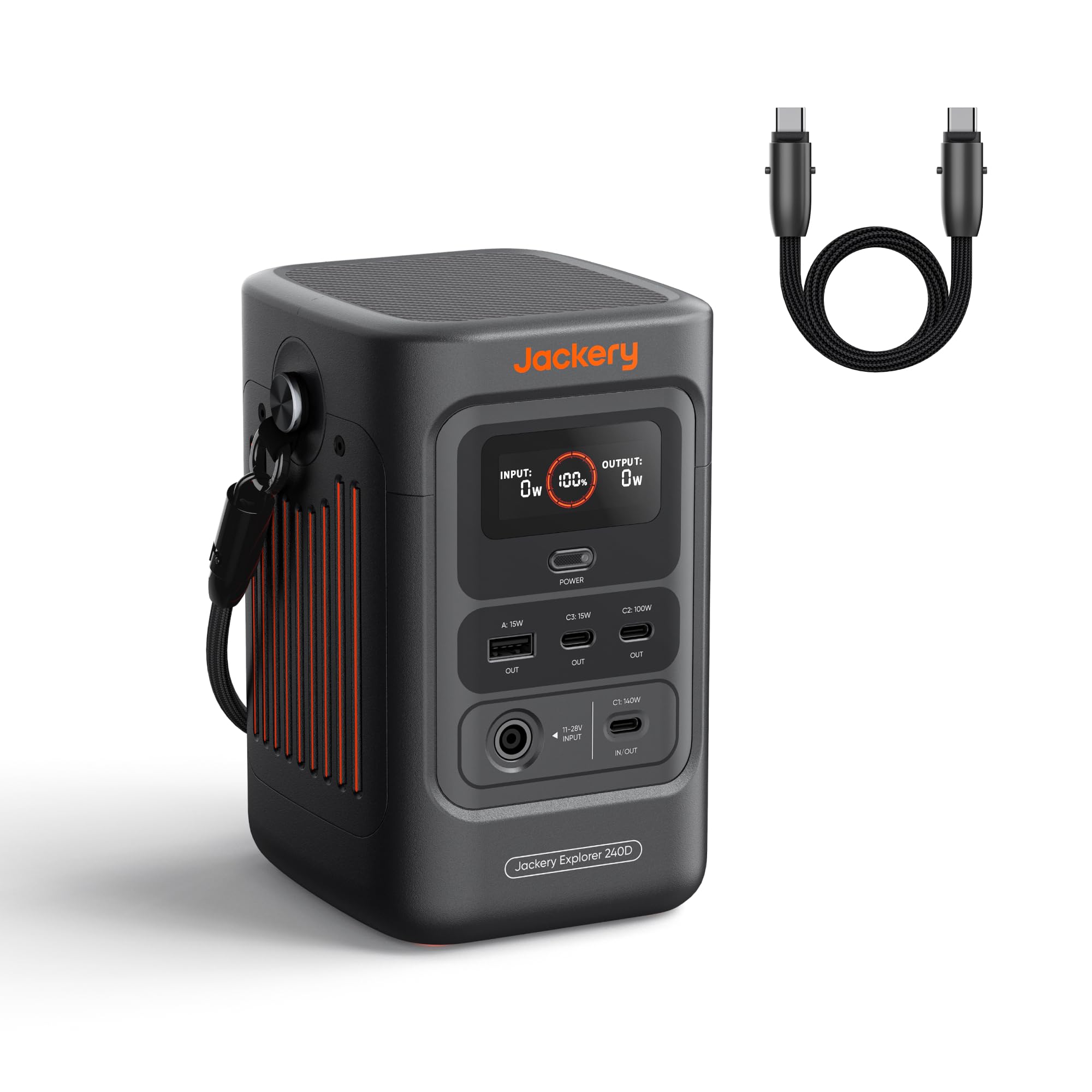
Best for: Solar Charging Efficiency
Jackery is often the first name people think of in portable power, and the 240D is the modernized version of their most famous entry-level unit. It finally brings the 1-hour fast wall charging and LiFePO4 chemistry to their small-frame lineup. It's a straightforward, no-nonsense unit that's incredibly easy to use, even if you aren't a tech person.
The 240D won its spot because of its balance of brand reliability and portability. It's the lightest full power station on our list at just 6.6 pounds. While its 200W continuous output is the lowest in the station category, it's more than enough for laptops, CPAP machines (on DC), and lighting. It's the old faithful of the group, now updated with 2026-standard battery tech.
Pros
- Lightest station in the roundup
- Simple and intuitive to operate
- Industry-leading brand support
Cons
- Limited to 200W continuous output
- Fewer ports than some competitors
Tech Specs
| Specification | Details |
|---|---|
Major Features |
|
Interface | 256Wh |
Power Requirement | 200W (Continuous) |
Workflow Benefit | LiFePO4 |
Hardware Specificity | 1 Hour |
Ideal For
- First-time power station buyers.
- Lightweight backpackers or solo campers.
- Users prioritizing a trusted brand name.
Not For
- Users with devices over 200W (like blenders).
- Those needing a lot of output ports.
Editor's Take
Jackery's Explorer 240D is the safe bet. It's not the most powerful, but it's incredibly portable and now charges as fast as the best of them.
Product Comparison
| Product | Features | Rating | See Price |
|---|---|---|---|
EcoFlow RIVER 3 |
| 92/100 | |
BLUETTI EB3A |
| 88/100 | |
Anker Power Bank |
| 89/100 | |
Jackery 240D |
| 85/100 |
Buyer's Checklist
| Feature To Consider | Why It Matters |
|---|---|
Battery Chemistry | Ensure longevity and safety. |
Continuous Output | Matches your most important device's wattage. |
Port Type | Confirm if you need AC or just USB ports. |
Recharge Time | Look for 1.5 hours or less for emergency scenarios. |
Weight | Consider if you need to move the unit frequently. |
Final Thoughts
When the grid goes down, your anxiety levels shouldn't go up. Choosing a portable power solution is about buying peace of mind. If you want the fastest recovery time, the EcoFlow RIVER 3 ensures you aren't tethered to a wall for long. For those needing to run small appliances, the BLUETTI EB3A provides the heavy-duty output required for real-world tasks. If you're a minimalist focused on lighting and keeping your phone alive, the Anker Power Bank is a clever, multi-functional tool that fits anywhere.
Finally, the Jackery 240D offers the simplicity and reliability that has made the brand a staple in emergency kits for years. Each of these options serves a different version of ready, so pick the one that fits your specific needs and rest easy knowing you've got a plan for the dark.