
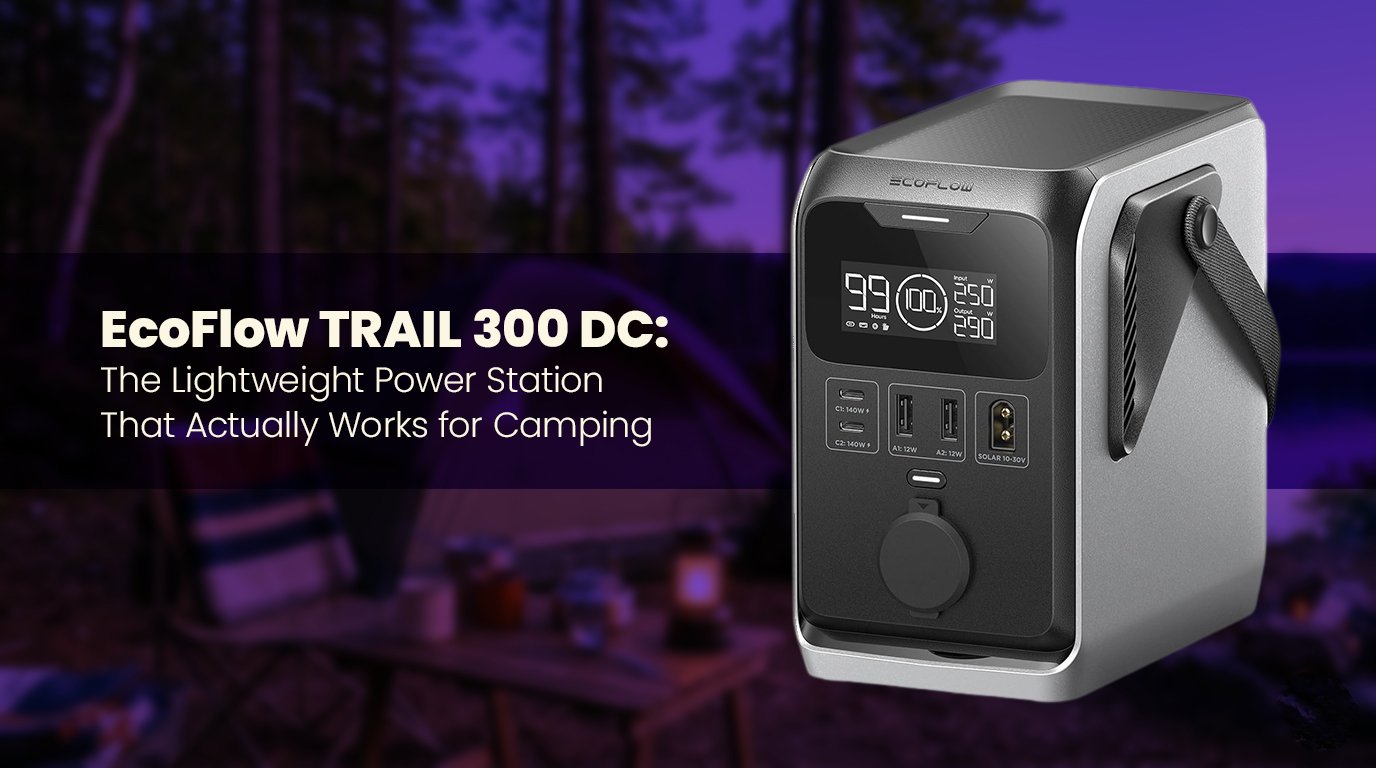
You’re packing for a multi-day camping trip when it hits you: your phone’s at 15%, your camera batteries are depleted, and the nearest outlet is hours away. The EcoFlow TRAIL 300 DC exists specifically for this situation—a compact power station that weighs 5.7 pounds and fits in a backpack. But before you assume it’s just another portable charger, understand what it actually does and doesn’t do. This is DC-only power, which matters.

Last updated on 2026-09-27
What the TRAIL 300 DC Actually Is
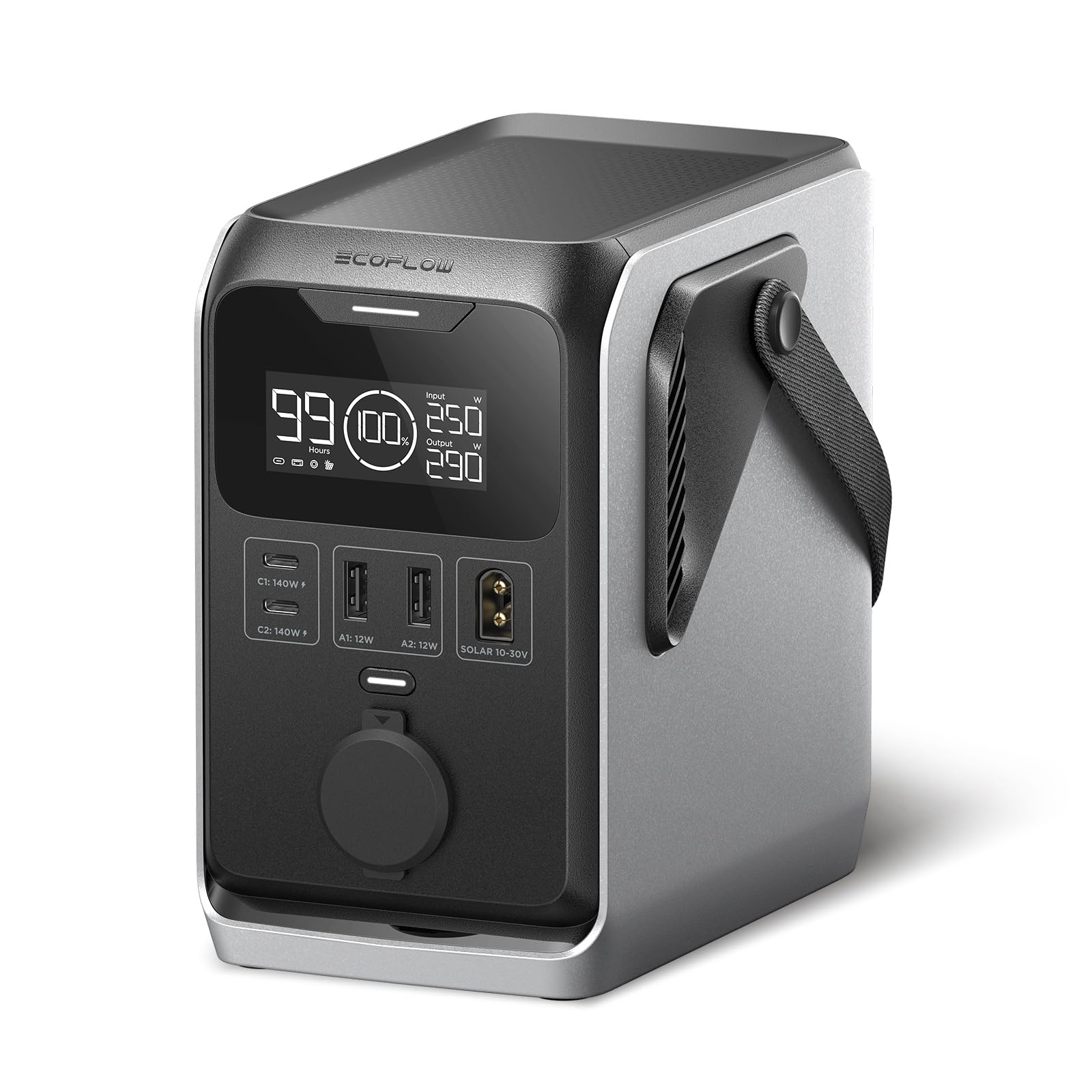
The TRAIL 300 DC is a 288Wh battery with 300W pure DC output, built around LiFePO₄ chemistry. That translates to a power bank measuring roughly 6.5 by 4.5 by 6.5 inches—about the size of a large water bottle—that can charge most of your outdoor gear, and only your outdoor gear. There’s no AC outlet, so you can’t plug in a laptop or run a coffee maker. What you get instead is five output ports: two USB-A (12W each), two USB-C with 140W capacity each, and a 12V car outlet. It’s engineered for phones, cameras, drones, tablets, and car accessories. It’s not engineered for AC appliances.
The practical math: the battery can recharge a smartphone up to 16 times (depending on phone size and battery capacity), a tablet up to 8 times, and a laptop as many as five times. These figures assume mid-range devices—a larger MacBook Pro will get fewer charges, while a smaller ultrabook might exceed five. For camping specifics, the unit can power LED light strips for more than 70 hours or a 12V electric cooler for 20+ hours. These aren’t theoretical numbers—they’re tested benchmarks from manufacturer and independent testing.
One more detail that matters: with the unit switched on but not being used, it consumed about 2Wh over 24 hours, which means standby drain is almost nonexistent. Leave it charged in your gear closet for months and it’ll still have a full battery when you grab it.
The Runtime Reality
This is where specificity matters. Don’t trust a power station that claims it can “charge your phone multiple times” without context. Phone capacity varies wildly—an iPhone 15 is 3,349mAh, a Samsung Galaxy is around 5,000mAh. The 288Wh LFP battery provides roughly 22 camera battery charges or 15-16 phone charges depending on your device.
For a laptop, you’re getting one full charge (maybe 80% on a larger MacBook Pro) before the TRAIL 300 DC is depleted. That’s enough for a day of remote work if you’re careful with power management.
If you run a 50W device, the math is simple: 288Wh ÷ 50W = roughly 5.7 hours of continuous runtime. A small fan draws less; a portable projector pulls more. The LCD display on the unit shows output wattage in real time, so you can calculate remaining runtime yourself once you know what you’re powering.
Ecoflow TRAIL 300 DC Portable Power Station
This interactive guide explores the EcoFlow TRAIL 300 DC, a specialized 288Wh power station designed to shed the weight of AC inverters for maximum DC efficiency.

Efficiency First: The DC Advantage
This unit is just 5.7 lbs while providing 288Wh of capacity.
Interactive Runtime Calculator
One of the report's key takeaways is that "runtime varies by device." Use this tool to see how the 288Wh battery handles your specific gear.
Market Context: Weight vs. Capacity
The following chart illustrates the TRAIL 300's primary competitive advantage: it packs more capacity per pound than standard hybrid units.
Technical Specifications
| Battery Type | LiFePO4 (3,000+ Cycles) |
| Total Capacity | 288Wh |
| Weight | 5.7 lbs / 2.59 kg |
| USB-C Output | Dual 140W Max |
| Solar Input | 110W Max (XT60) |