
Most folks treat smart chatbots like a fancy search engine. They type a quick question, get a bland response, and log off. That’s a massive missed opportunity.
Over the past three years, I’ve tested dozens of large language models (LLMs) to manage editorial workflows and negotiate freelance contracts. I wanted to know if using AI for career advice actually works. The short answer? Yes. But only if you know exactly how to drive it.
What is a chatbot mentor? A chatbot mentor is a language model programmed via strict prompts to simulate professional scenarios, critique your work, or help you acquire new skills. It doesn’t replace human networking, but it provides a private, zero-stakes environment to test sensitive ideas before you bring them to your actual boss.

For best results, set strict restraints on your AI platform to minimize issues like hallucinations.
The Reality Check: The Downsides of AI for Career Advice
A widely circulated 2023 joint study by Harvard Business School and Boston Consulting Group showed that workers using generative tools finished tasks 25% faster and produced higher quality results than their unassisted peers.
But the researchers noted a massive catch: the “jagged frontier.”
The jagged frontier means a bot might write a flawless Python script in one breath, and then completely fabricate a legal precedent in the next. The boundary between what it does brilliantly and what it fails at is invisible and constantly shifting. Outside of their specific training zones, these bots confidently make huge mistakes. They hallucinate facts. They invent fake statistics.
A language model isn’t a human sponsor. It won’t advocate for you during a round of layoffs. It won’t navigate tricky office politics. If your workplace operates on nepotism or favoritism, no prompt will fix that reality. You should have enough actual self-awareness to spot when the machine is lying to you. If you blindly trust the output without verifying it, you’ll eventually look foolish. Relying on AI for career advice isn’t a guaranteed path to a promotion. It’s simply a tool.
My Personal Test Run
Last quarter, I needed to negotiate a $15,000 budget increase for a freelance smart home installation project. Instead of winging it, I spent twenty minutes sparring with a top-tier LLM. I asked the bot to play the role of a stingy, hostile project manager.
It tore my argument apart. The machine pointed out three specific gaps in my timeline regarding supply chain delays for the smart hubs I requested. I fixed those gaps, walked into the real meeting, and secured the budget. The chatbot didn’t win the negotiation for me. I did. But the tool gave me a safe, private place to fail and fix my mistakes before real money was on the line.
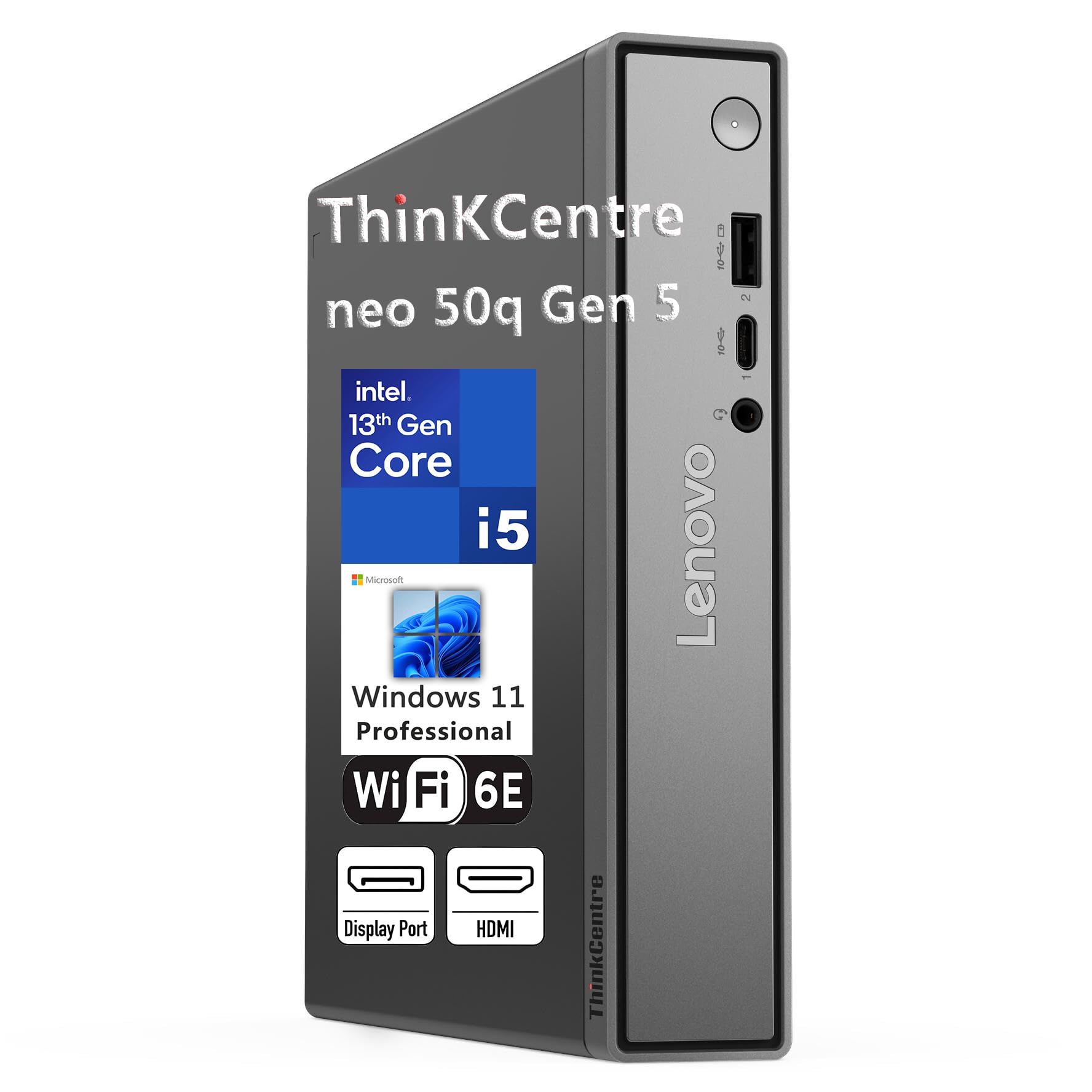
- Powerhouse Performance in a Tiny Footprint - Work Smarter, Not Bigger Experience desktop-class power without the bulk! 13th Gen Intel...
- Dual Display Magic - Double Your Productivity, Transform Your Workflow Why settle for one screen when you can have two? Seamlessly...

AI Prompts for Performance Reviews and Skill Building
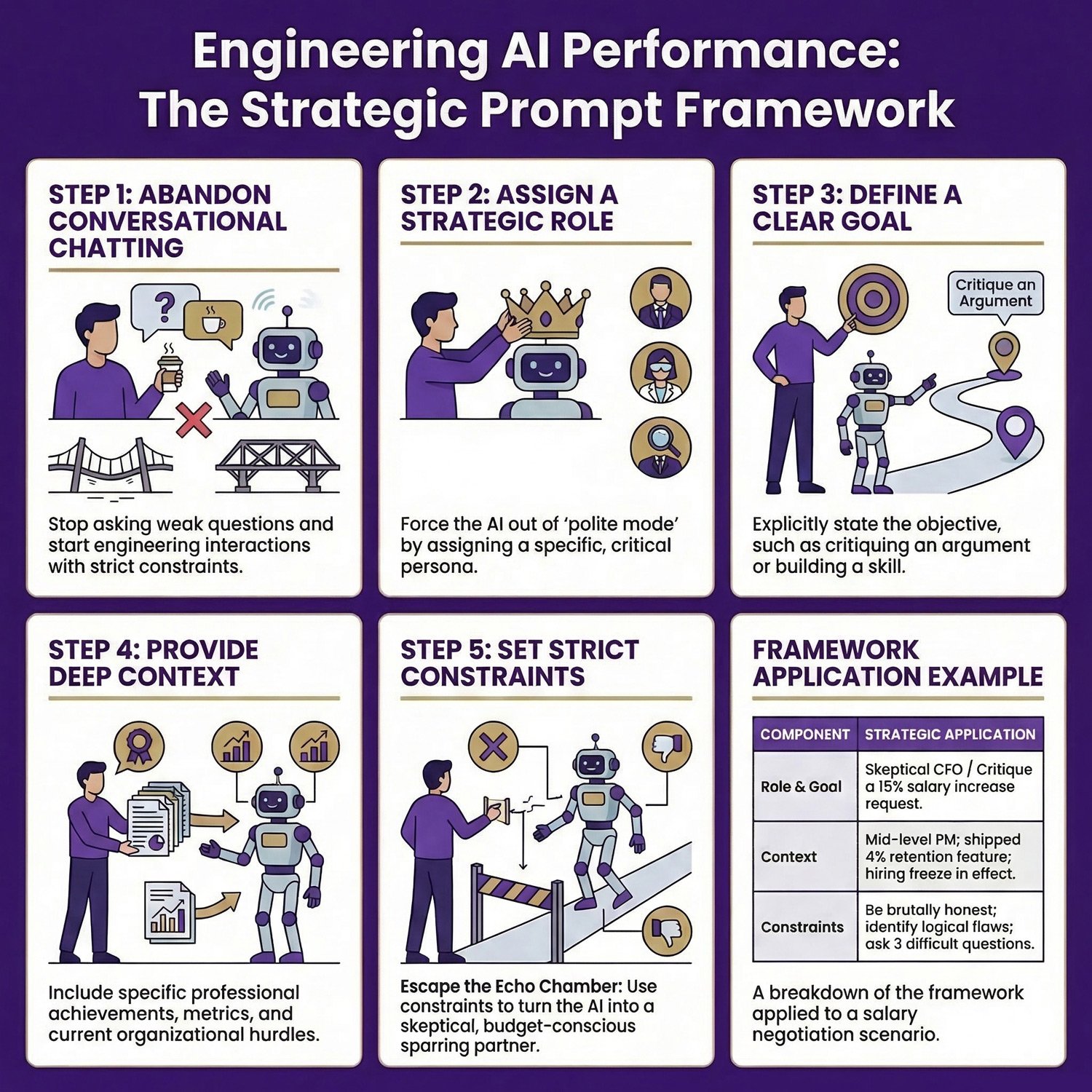
To get real value out of these tools, you need to abandon conversational chatting. You need strict constraints. A reliable framework is Role → Goal → Context → Constraints.
Instead of asking a weak question like, “How do I ask for a raise?”, you engineer the interaction:
- Role: Act as a skeptical, budget-conscious CFO.
- Goal: Critique my argument for a 15% salary increase.
- Context: I’m a mid-level product manager who just shipped a feature that increased retention by 4%. The company is currently on a hiring freeze.
- Constraints: Be brutally honest. Point out the logical flaws in my argument and ask me three difficult pushback questions.
When you frame it this way, you force the system out of its default, polite echo-chamber mode. It becomes a strict sparring partner.
What the Output Actually Looks Like:
If you run that exact prompt, a good model won’t coddle you. It’ll spit out something like this:
“Your 4% retention bump is nice, but during a hiring freeze, I care about cash flow, not just user metrics. How exactly does that 4% translate to bottom-line revenue this quarter? If you can’t tie that retention directly to dollars saved or earned, I’m rejecting this request. Defend the financial impact.”
That’s the kind of friction you need.

HP All in One Desktop Computer 27" FHD Touchscreen

Choosing the Right Tool (And Avoiding Outdated Tech)
Language models update constantly. Recommending a specific version number is a trap because it’ll be obsolete in six months. Instead, choose your tool based on the type of reasoning engine it uses.
Here’s how the top three ecosystems stack up when you specifically need professional guidance:
| AI Platform | Typical Cost | Best Feature for Career Advice |
|---|---|---|
| ChatGPT (OpenAI) | Free / $20/mo | Advanced voice mode for realistic, real-time mock interviews. |
| Claude (Anthropic) | Free / $20/mo | Exceptional nuance for writing sensitive emails and performance reviews. |
| Gemini (Google) | Free / $20/mo | Massive memory capacity for analyzing giant company handbooks or spreadsheets. |
Three Templates to Try Tonight
The best way to understand this is to try it yourself. Pick one of the fill-in-the-blank templates below, drop it into your preferred LLM, and see what happens. Approach the response with skepticism, extract the useful friction, and ignore the rest.
The Skill Builder
The Meeting Prep
The Tone Fixer
In Conclusion
Treating AI as a static search engine limits your professional growth to the same average results everyone else is getting. When you transition from asking basic questions to engineering high-friction scenarios, you transform a simple chatbot into a tireless, objective mentor that pressure-tests your logic before high-stakes meetings. Pick one of the templates provided—whether it’s prepping for a performance review or fixing the tone of a critical email—and run it through a model today.
Seeing how a skeptical, “hostile” AI responds to your arguments will immediately highlight where you need to strengthen your position, ensuring you aren’t just reading about tech trends, but actively using them to secure your next career win.
Frequently Asked Questions
How can solo entrepreneurs use AI for business strategy?
You don’t need a corporate boss to use AI for small business growth; treat the chatbot as a hostile investor or skeptical client. Feed it your business plan or pricing model and instruct it to find three reasons why a client would reject your proposal. This kind of brutal feedback loop is invaluable for founder productivity and refining your pitch before it costs you real money.
Is it safe to upload financial data to artificial intelligence tools?
Absolutely not, unless you are using an enterprise-tier account with strict, explicit data privacy agreements in place. Standard AI tools train their models on user inputs, meaning your sensitive revenue numbers or client lists could potentially surface elsewhere. When exploring AI adoption, always scrub personally identifiable information and exact financials before asking a bot to analyze your operational efficiency.
What are the best AI tools for small business owners focusing on time management?
If your goal is reclaiming time from administrative tasks, Claude is currently the strongest choice for drafting nuanced client emails and vendor negotiations. ChatGPT Plus is excellent for quick, voice-based brainstorming while you’re commuting or organizing your day. However, relying on AI email assistants for critical client communication isn’t a silver bullet, and you must always review the output to ensure it doesn’t sound robotic.
Can AI actually handle business process automation for a non-technical founder?
Yes, but you have to start small rather than attempting a massive digital transformation overnight. Use a chatbot mentor to write simple formulas for your accounting spreadsheets or to draft standard operating procedures for your contractors. Streamlining operations works best when you tackle one frustrating bottleneck at a time, testing the bot’s logic thoroughly before implementing it into your business.
Is paying for premium AI tools worth the cost for reducing overhead?
Upgrading to a paid tier is generally worth it for the massive leap in reasoning power and larger context windows you get compared to free versions. These premium tiers allow you to upload lengthy vendor contracts or messy spreadsheets to help with technical problem solving. Just remember that tech-driven growth only happens if you actually engineer strict prompts; paying for a subscription won’t magically fix a broken business model.