
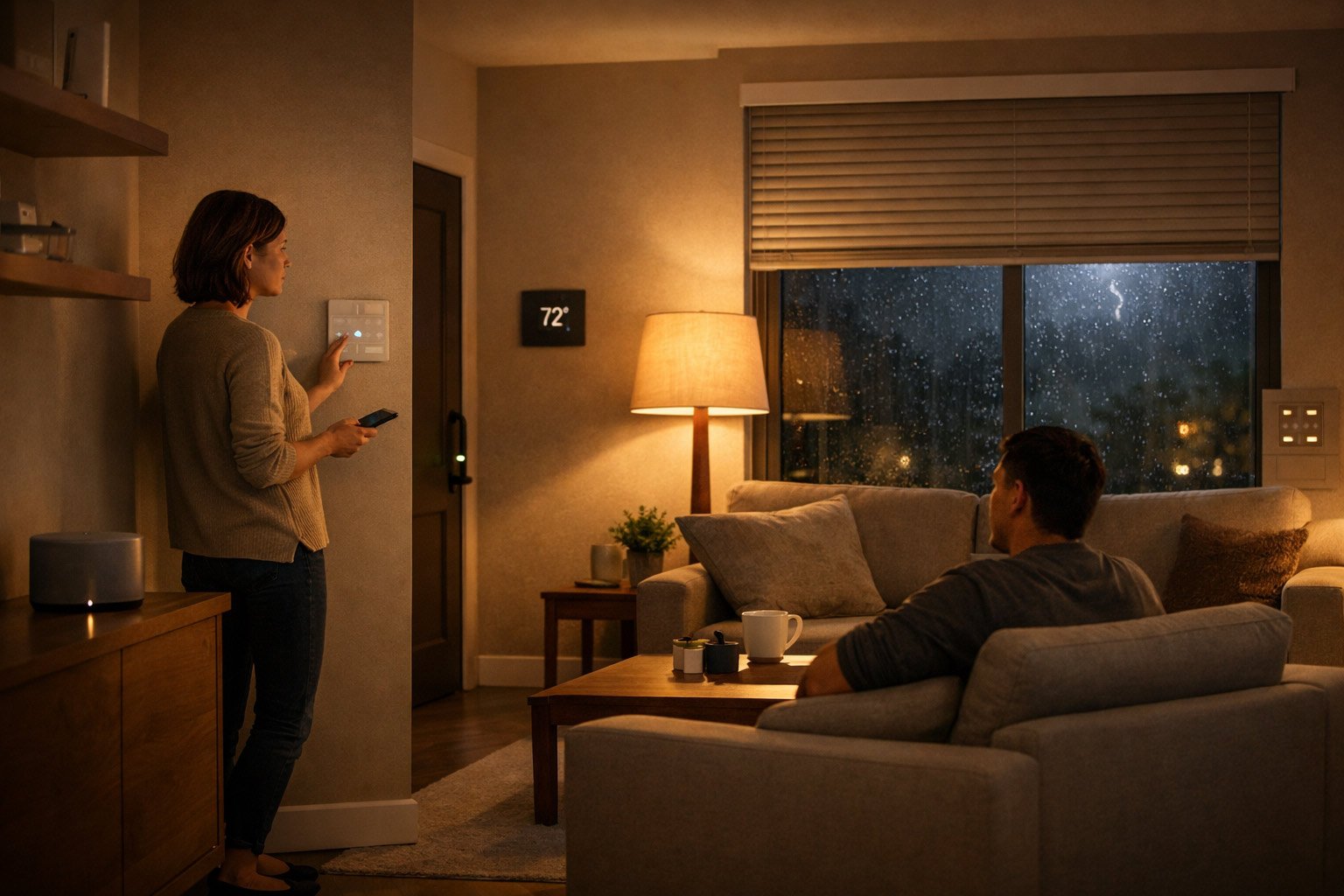
1. Matter 1.5 & Unified Smart Home Systems That Actually Talk to Each Other
We heard big promises about interoperability for years. In 2026, thanks to the updated Matter 1.5 standard, it’s finally a usable reality. You no longer need separate network bridges for your lights, locks, and window blinds.
This is the biggest practical fix to hit the market. Previously, if you bought a smart plug, you had to make sure it was compatible with the exact ecosystem you’d chosen—whether that was Apple HomeKit, Google Home, or Amazon Alexa. If it wasn’t, you were stuck using the manufacturer’s proprietary, often clunky app. Matter 1.5 essentially acts as a universal translator for your home. It creates a standardized language that all these different devices use to communicate securely and locally.
Think about how this changes your daily routines. You can buy a smart lock from Schlage, string lights from Philips Hue, and a thermostat from Nest. Under the old rules, getting these three to work together required third-party software, cloud-based linking services, or buying specific “bridges” for each brand. Now, you pull them out of the box, scan a QR code with your smartphone, and they immediately recognize each other over your local Wi-Fi or Thread network.
You can set a single “Goodnight” command on your iPhone that locks the front door, turns off the living room lights, and drops the temperature by five degrees. No lag, no separate apps, just immediate coordination. This complements other open protocols like Thread and Zigbee, creating a true interoperability layer.
| Preview | Product | Rating | |
|---|---|---|---|
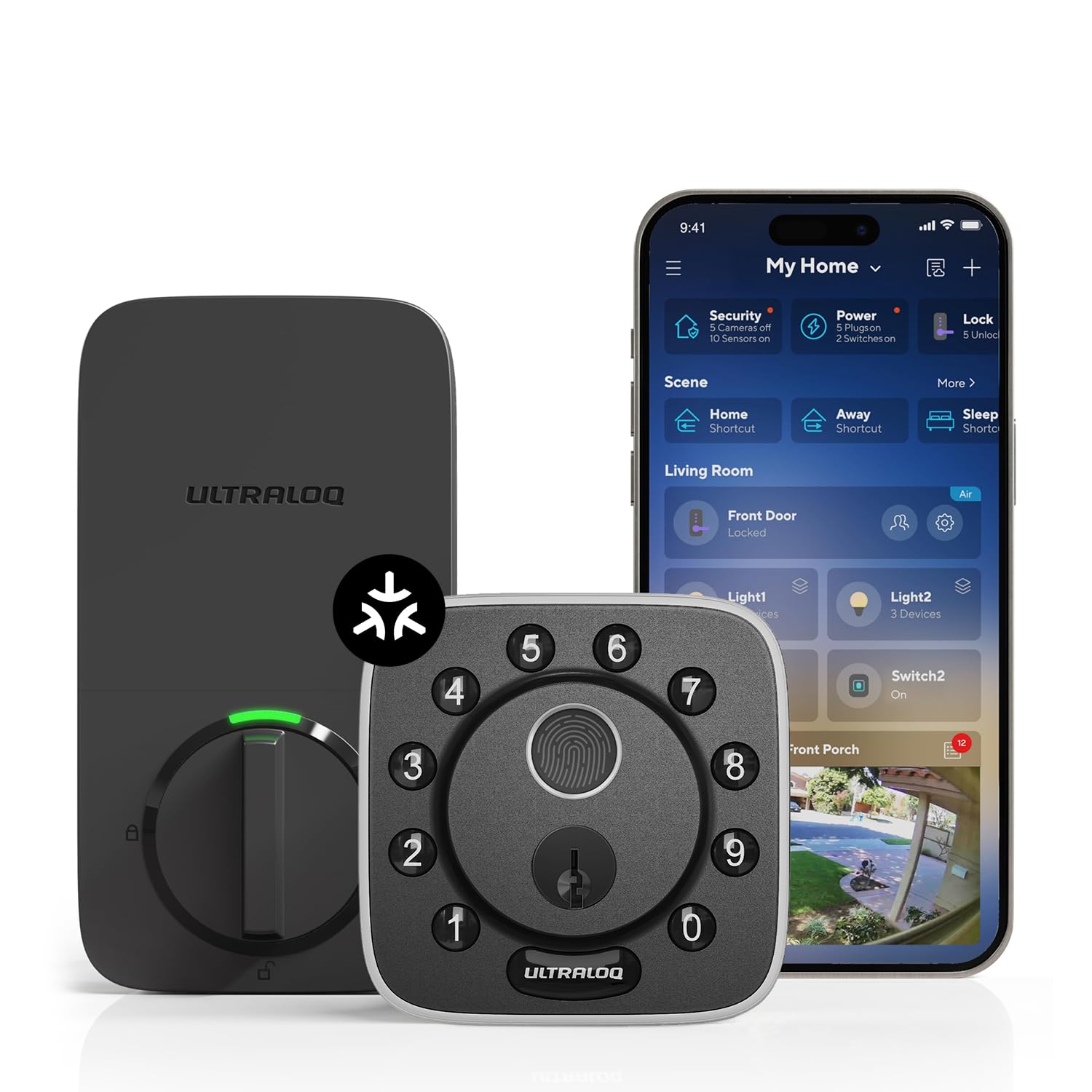 | ULTRALOQ Bolt Fingerprint Matter Smart Lock with Sensor, Bluetooth, App | Matter Over Thread, App… | CHECK PRICE |
Last updated on 2026-08-16
Best All-in-One Gateway

Aeotec Smart Home Hub
Works as a SmartThings hub supporting Z-Wave, Zigbee, and Matter, allowing you to bring older legacy devices together with newer ecosystems. It functions seamlessly with Alexa and Google Assistant to provide simple, unified control through a single app or voice commands.
View Specs & Features
Key Benefits
- Multi-protocol support for Z-Wave, Zigbee, and Matter
- Works as a SmartThings hub to centralize devices
- Voice assistant compatibility with Alexa and Google Assistant
| Compatibility | SmartThings, Z-Wave Plus, Zigbee, Matter, Wi-Fi, Alexa, Google Assistant |
| Connectivity Protocols | Matter, SmartThings, Z-Wave, Zigbee |
| Voice Assistant Support | Alexa, Google Assistant |
Best for Apple Ecosystem
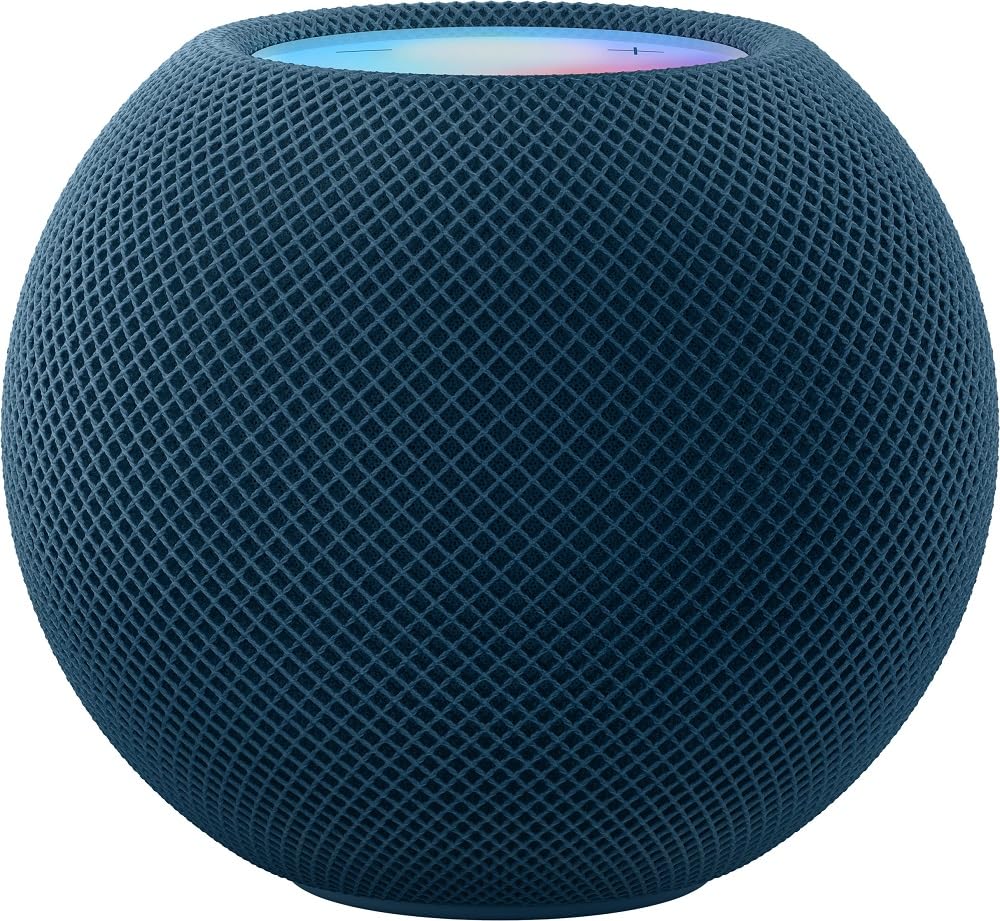
Apple HomePod mini
A compact smart speaker utilizing an S5 chip for real-time audio optimization and hands-free Siri voice control. It serves as a dedicated HomeKit controller with built-in privacy protections and seamless multi-room playback capabilities.
View Specs & Features
Key Benefits
- Rich sound from a compact design for small to medium rooms
- Seamless setup and integration with Apple devices
- Hands-free Siri control for music, timers, and automation
| Compatibility | Apple iOS ecosystem, HomeKit compatible devices |
| Connectivity Protocols | Bluetooth, Wi-Fi |
| Audio Features | S5 chip audio optimization, multi-room playback |
Best Visual Dashboard Panel

Amazon Echo Hub
An 8-inch wall-mountable touchscreen control panel built for the Alexa ecosystem, allowing centralized management of smart home devices. It includes built-in sensors and native controller support for Zigbee, Thread, and Matter protocols.
View Specs & Features
Key Benefits
- Dedicated 8" touchscreen for quick, shared control
- Tight Alexa integration for voice-first homes
- Controller support for Zigbee, Thread, and Matter devices
| Compatibility | Alexa, compatible with thousands of Zigbee, Thread, and Matter devices |
| Connectivity Protocols | Wi-Fi, Bluetooth (Supports Zigbee, Thread, Matter as controller) |
| Display Specs | 8-inch touch display with stereo speakers |
Best Premium Speaker Hub

Apple HomePod (2nd Gen)
This speaker-first hub delivers room-filling audio while doubling as a Thread border router and Matter controller for HomeKit ecosystems. It's ideal if you want high-quality sound and simple voice control without a cluttered multi-device setup, though cross-platform integration remains limited.
View Specs & Features
Key Benefits
- High-quality, room-filling audio that doubles as a hub
- Deep integration with Apple devices and Siri voice control
- Supports Thread and Matter for modern interoperability
Special Highlights
- End-to-end encryption for HomeKit data keeps local activity secure
- Automatic room sensing dynamically optimizes audio performance for your space
- Seamless AirPlay support allows quick, grouped multi-room playback
| Connectivity Protocols | Bluetooth, Wi-Fi, AirPlay, Thread, Matter |
| Smart Home Compatibility | Apple HomeKit, Siri |
| Audio Hardware | High-excursion woofer, five beamforming tweeters |
Best Local-First Automation

Home Assistant Green
This official hardware appliance runs Home Assistant OS to provide privacy-conscious users with full local control over their networks. It keeps your automations fast and completely independent of cloud services, though advanced setups require a steeper learning curve.
View Specs & Features
Key Benefits
- Local-first automation for fast, reliable routines
- Official hardware optimized specifically for Home Assistant OS
- Broad integration options and community add-ons
Special Highlights
- Eliminates cloud reliance so sensitive data and activity logs stay on your network
- 4 GB RAM and 32 GB storage keep local operations running efficiently
- Dual USB expansion ports allow you to connect legacy Z-Wave or Zigbee adapters
| Connectivity Protocols | Ethernet, USB, Bluetooth |
| Smart Home Compatibility | Home Assistant, Smart Home Devices |
| Hardware Specs | ARM processor, 4 GB RAM, 32 GB Storage |
Best Multi-Protocol Hub
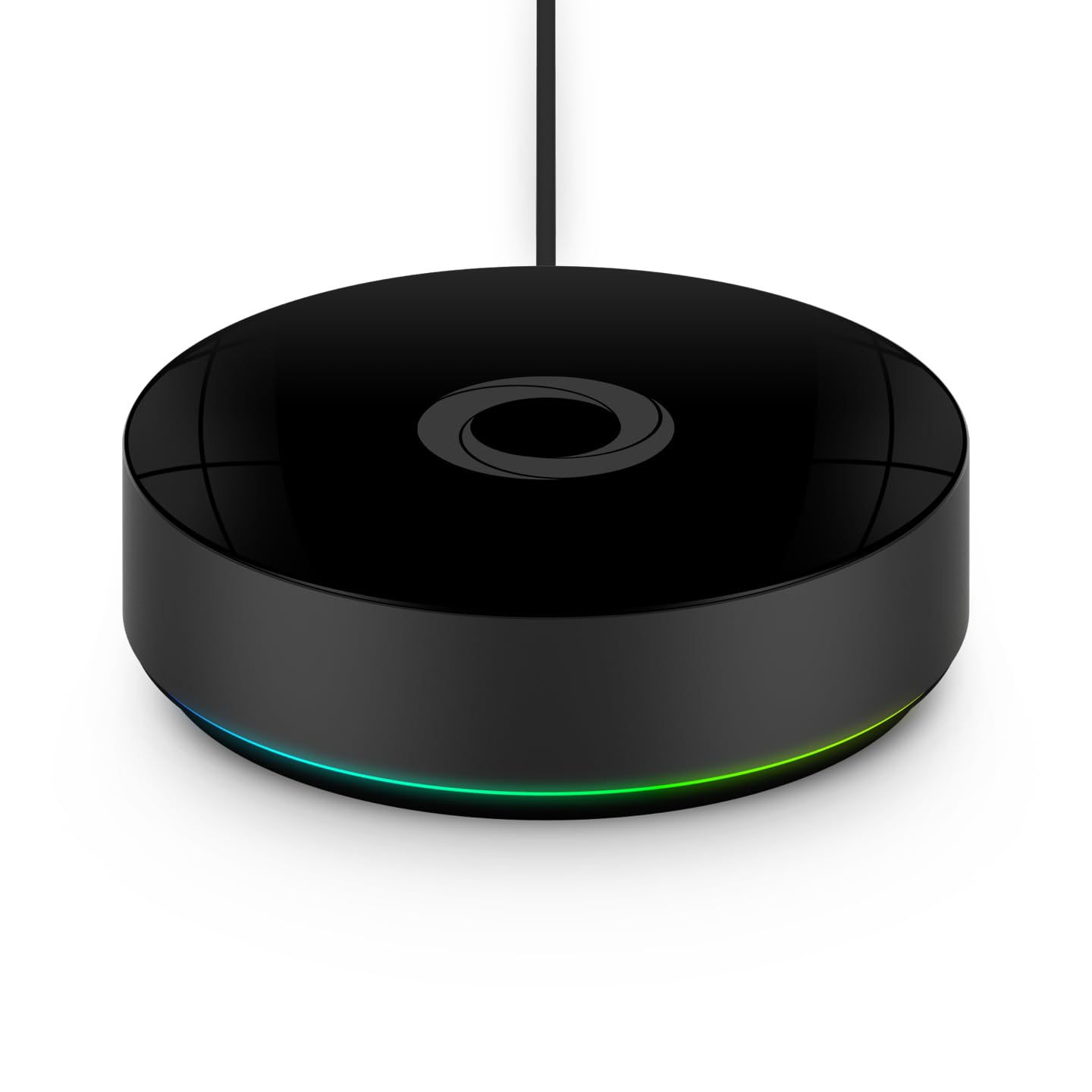
Homey Pro (2026)
This premium hub acts as a universal bridge, consolidating Wi-Fi, Zigbee, Z-Wave Plus, BLE, IR, Matter, and Thread into one clean app. It's built for organic, mixed-brand setups, but be prepared for occasional setup friction and a higher price tag.
View Specs & Features
Key Benefits
- Extensive protocol support across Z-Wave, Zigbee, Wi-Fi, Matter, and Thread
- Consolidates devices from many brands into one control surface
- Powerful automation engine for complex multi-device flows
Special Highlights
- Built-in Infrared (IR) transmitter automates older legacy AV gear and air conditioners
- Executes automations locally to ensure reliability and minimize system latency
- Powerful microprocessor handles extensive device networks without bogging down
| Connectivity Protocols | Wi-Fi, Zigbee, Z-Wave Plus, BLE, Infrared, Matter, Thread |
| Smart Home Compatibility | Siri, Alexa, Google Home |
| Hardware Specs | Advanced microprocessor, ample onboard memory for integrations |
Best for Advanced Local Control
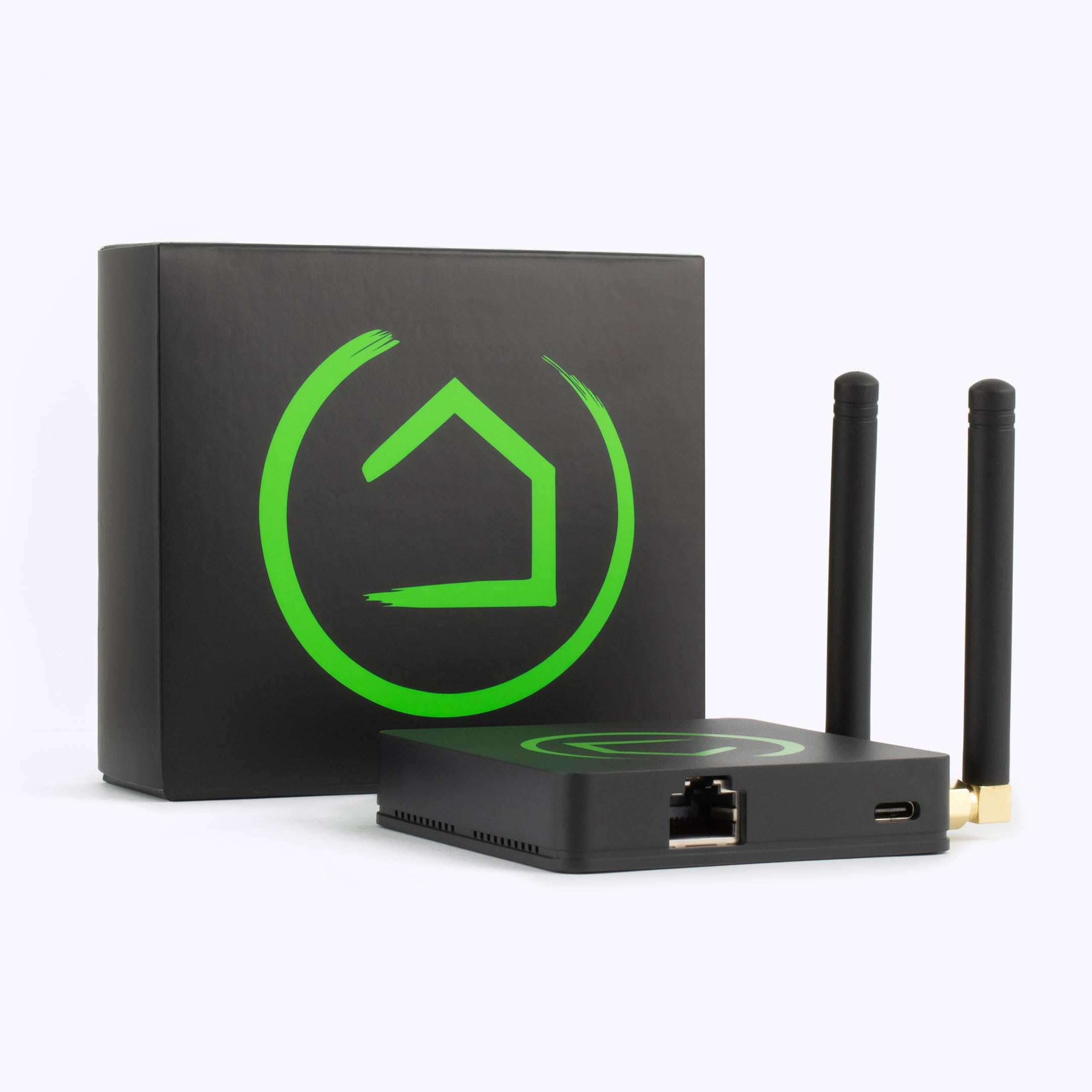
Hubitat Elevation C-8 Pro
This local-first hub runs automation rules directly on your hardware to ensure instant execution and continuous uptime during outages. It's built for Z-Wave and Zigbee enthusiasts who want to avoid cloud dependence, though the interface targets power users.
View Specs & Features
Key Benefits
- Local automation execution so routines run reliably without cloud dependence
- Supports Matter 1.5, Z-Wave 800 LR, Zigbee 3.0, and Bluetooth
- Strong focus on stability and low-latency local execution
Special Highlights
- Z-Wave 800 Long Range extends device coverage across larger properties
- Advanced Rule Machine engine enables highly complex, conditional automation configurations
- Integrates smoothly with Alexa, Google, and Apple HomeKit bridges for flexible setup
| Connectivity Protocols | Z-Wave 800 LR, Zigbee 3.0, Bluetooth, Matter |
| Smart Home Compatibility | Ring, Alexa, Apple HomeKit, Google Home |
| Control Model | Local processing; specifications not fully listed |
Best Budget Matter Controller

Aqara Smart Home Hub M3
This compact hub acts as a Matter controller and Thread border router while offering great backward compatibility for affordable Zigbee sensors. It features a PoE option for a stable, wired connection, making it a reliable choice for edge setups.
View Specs & Features
Key Benefits
- Acts as a Matter controller and Thread border router for future-ready devices
- Strong Zigbee support for a wide range of affordable sensors and accessories
- Multiple connectivity options including Wi-Fi, Bluetooth, IR, and PoE
Special Highlights
- Power over Ethernet (PoE) support offers neat, reliable wired installation
- Built-in 360-degree Infrared (IR) blaster automates climate systems and AV gear
- Local automation clustering allows multiple hubs to automatically back up your rules
| Connectivity Protocols | Zigbee, Bluetooth, Wi-Fi, PoE, IR |
| Smart Home Compatibility | Apple HomeKit, Alexa, SmartThings, Home Assistant |
| Control Model | Integrated edge controller, details not specified |
Best All-in-One Presence Sensor
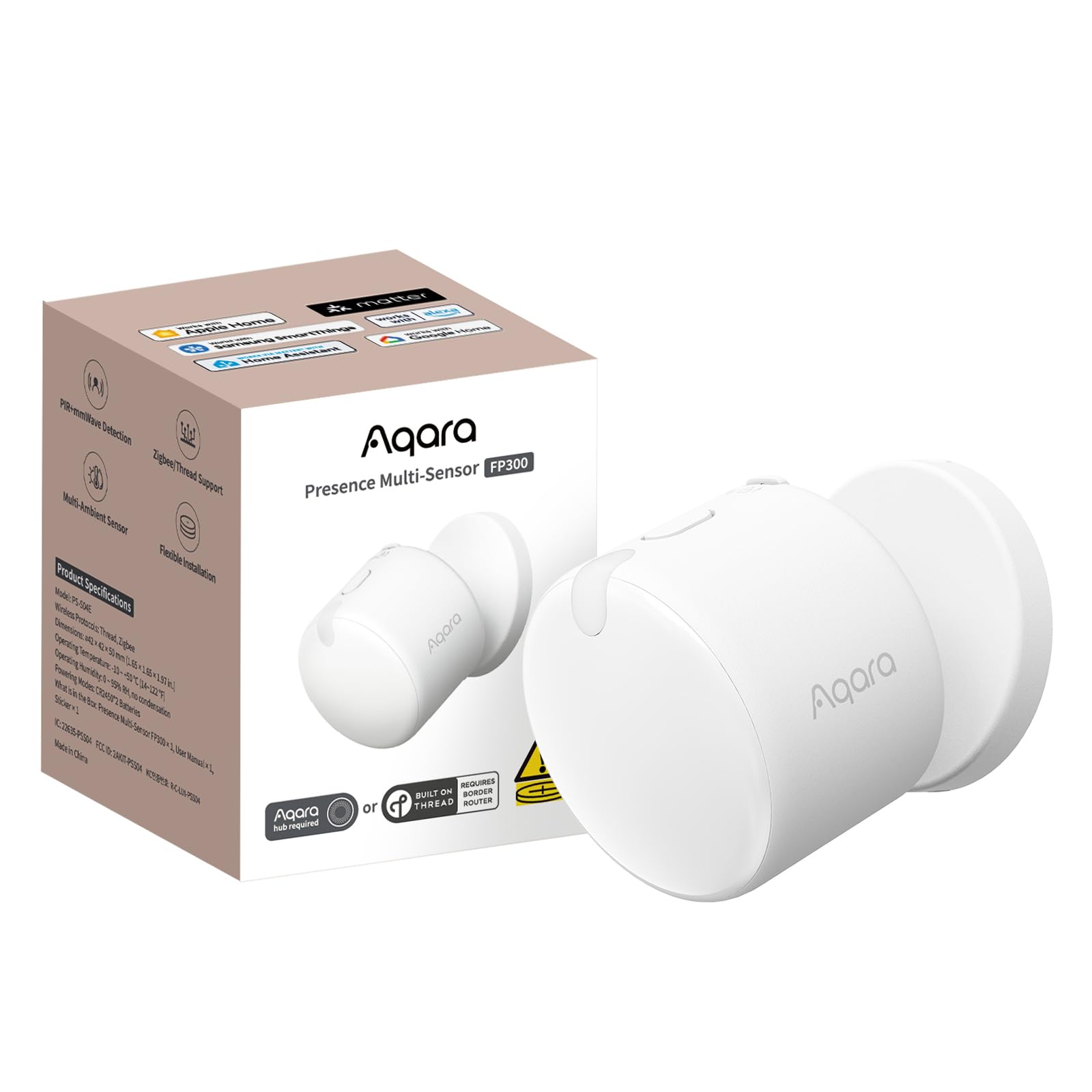
Aqara Presence Sensor FP300
This compact 5-in-1 presence sensor blends mmWave radar and PIR to track stationary occupants, though pairing via Thread or Zigbee requires some initial troubleshooting. It feeds light, temperature, and humidity data directly into your hub to prevent false automation cut-offs.
View Specs & Features
Key Benefits
- Combines mmWave radar and PIR to avoid false cut-offs when sitting still
- Integrates environmental metrics like lux, temperature, and humidity for richer automation contexts
- Broad ecosystem support across Home Assistant, HomeKit, Alexa, and Google Home
Special Highlights
- Wireless 5-in-1 design minimizes single-purpose sensor clutter on walls
- Battery-powered installation offers mounting freedom without visible trailing cords
- Supports high-end automation features like Multi-Person and Fall Detection when exposed by a capable hub
| Connectivity Protocols | Thread, Zigbee |
| Smart Home Compatibility | HomeKit, Home Assistant, Alexa, Google Home, SmartThings |
| Max Range | 6 Meters |
Best Weatherproof Presence Sensor
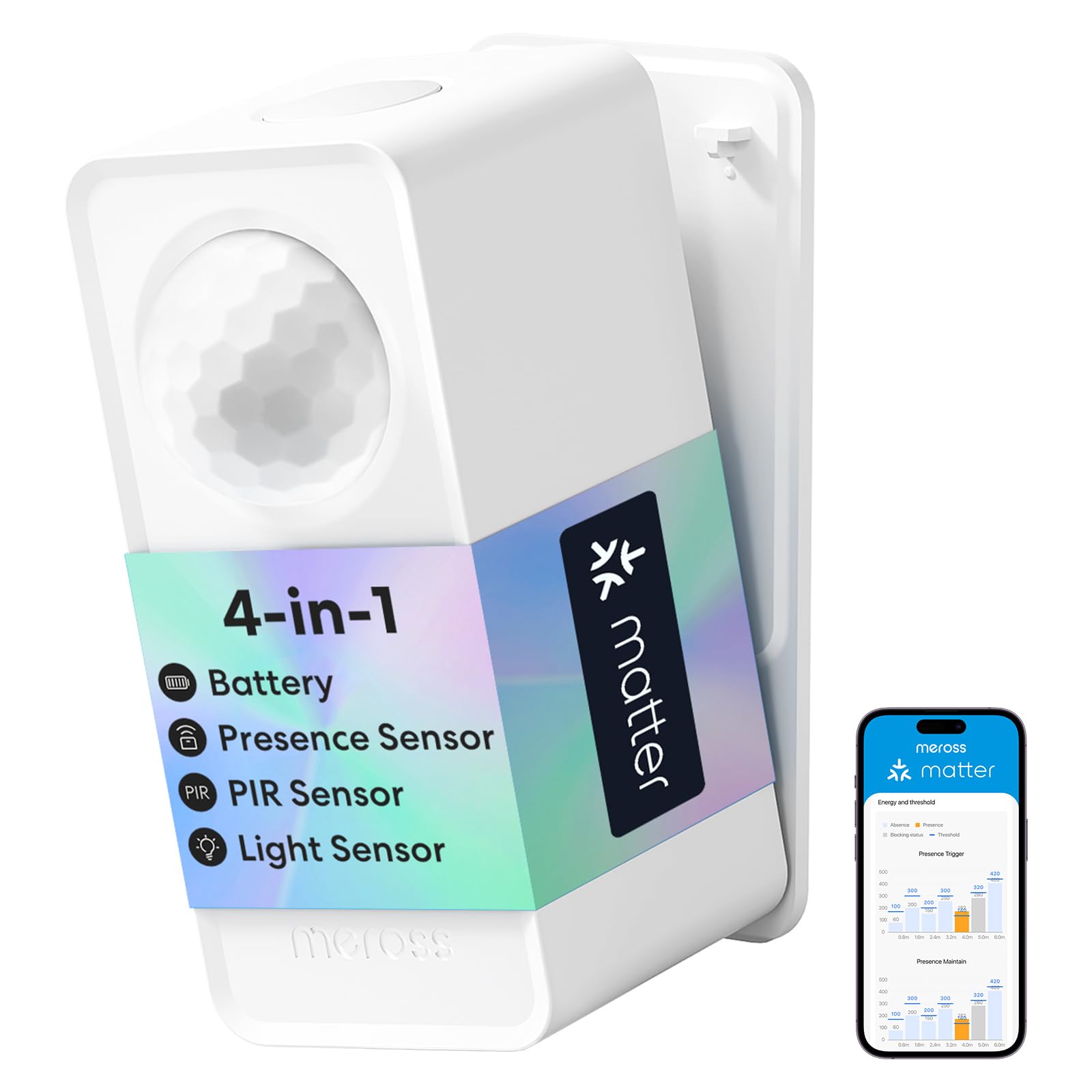
meross Matter Presence MS605
Combining mmWave, PIR, and AI-assisted learning inside an IP67 weatherproof chassis, this battery-powered sensor handles indoor and outdoor occupancy tracking. It offers modern Matter-over-Thread connectivity, though you must provision it first via the native app on 2.4 GHz Wi-Fi.
View Specs & Features
Key Benefits
- Weatherproof IP67 construction allows robust outdoor deployment on porches or patios
- Employs AI learning alongside hybrid sensing to reduce wind-induced foliage false triggers
- Integrates natively with Matter over Thread, simplifying multi-platform setups
Special Highlights
- Battery-powered design enables placement in tricky, un-wired external locations
- Includes light sensing to dynamically adapt exterior illumination based on actual lux levels
- Local-first execution potential via HomeKit or Home Assistant minimizes cloud-related delay risks
| Connectivity Protocols | Matter over Thread (Initial setup on 2.4 GHz Wi-Fi) |
| Smart Home Compatibility | Home Assistant, Google Home, HomeKit, Alexa |
| Max Range | 6 Meters |
Best for Zone Positioning

SwitchBot Smart mmWave Sensor
Featuring advanced Zone Positioning, this battery-powered mmWave and PIR sensor allows you to target automations to specific sub-sections of a room. It requires a SwitchBot Hub to bridge its Bluetooth connection to ecosystems like HomeKit, which introduces an extra hardware dependency.
View Specs & Features
Key Benefits
- Zone Positioning isolates automations to specific room coordinates to prevent broad-area triggers
- Blends mmWave radar and PIR for highly reliable tracking of motionless occupants
- Compact, unobtrusive design mounts easily to walls or ceilings without wiring hassles
| Connectivity Protocols | Bluetooth (Requires SwitchBot Hub for Wi-Fi bridging) |
| Smart Home Compatibility | Alexa, HomeKit, Apple Home |
| Max Range | 393 Feet (Line-of-Sight) |
Best Budget Motion Sensor

SONOFF SNZB-03P
A straightforward, budget-friendly Zigbee PIR sensor that excels at basic, low-latency motion tracking. It does not offer advanced stationary mmWave detection, but its multi-year battery life and low cost make it highly efficient for transition spaces like pantries or hallways.
View Specs & Features
Key Benefits
- Up to 3-year battery life minimizes maintenance chores and recurring battery costs
- Rapid trigger times make it highly effective for safety, hallway, and utility lighting
- Excellent, local-first value for basic motion tracking without complex software configuration
Special Highlights
- Small physical footprint and magnetic mount permit effortless, angled installation
- Standard Zigbee protocol integrates natively with diverse local hubs like Home Assistant
- Easily combined with other occupancy-sensing layers to build robust hybrid routines
| Connectivity Protocols | Zigbee (Requires Zigbee Bridge) |
| Smart Home Compatibility | Smart Home Compatible (Home Assistant, Google Home via bridge) |
| Max Range | 19.7 Feet |
Best Multi-Function Presence Sensor

THIRDREALITY R3
Powered continuously via USB-C, this 60GHz mmWave presence sensor integrates illumination sensing and an RGB status diffuser. It acts as a Zigbee mesh repeater to strengthen your network, though you must place it near a permanent wall outlet.
View Specs & Features
Key Benefits
- High-frequency 60GHz mmWave radar tracks tiny movements, preventing false dropouts during deep focus
- Continuous USB-C power removes battery anxiety and ensures immediate, non-sleeping presence updates
- Acts as a hardware Zigbee repeater, actively strengthening nearby mesh signals
Special Highlights
- Integrated RGB status diffuser provides visual feedback or acts as a smart nightlight
- Built-in illumination sensing dynamically matches automation lighting to ambient room brightness
- Native local integration with Home Assistant (ZHA/Z2M) and compatible Zigbee controllers
| Connectivity Protocols | Zigbee (With built-in repeater) |
| Smart Home Compatibility | Home Assistant, SmartThings, Alexa |
| Max Range | 6 Meters |
Best Hardwired Radar Sensor

Haozee MmWave Presence
This corded 24GHz mmWave radar sensor delivers continuous, low-latency occupancy tracking for fixed installations. It is a solid choice for stable, local networks using Home Assistant via Zigbee2MQTT, but setting it up requires a dedicated Tuya Zigbee hub or a custom local coordinator.
View Specs & Features
Key Benefits
- Hardwired corded power ensures uninterrupted presence reporting and zero battery maintenance
- Highly sensitive 24GHz mmWave radar tracks minor physical shifts that standard PIR sensors miss
- Offers rapid clearance times, instantly signaling when a room or workspace is completely empty
Special Highlights
- Ideal for high-traffic corridors, hallways, and stairwells requiring consistent uptime
- Integrates seamlessly with Zigbee2MQTT to enable robust, local-only home automation architectures
- Compact, low-profile body fits cleanly on walls or ceilings without drawing attention
| Connectivity Protocols | Zigbee (Requires Tuya Hub or local coordinator) |
| Smart Home Compatibility | Smart Home Compatible (Supports Home Assistant via Zigbee2MQTT) |
| Max Range | 8 Meters |
Best Premium Mesh with Smart Home Integration
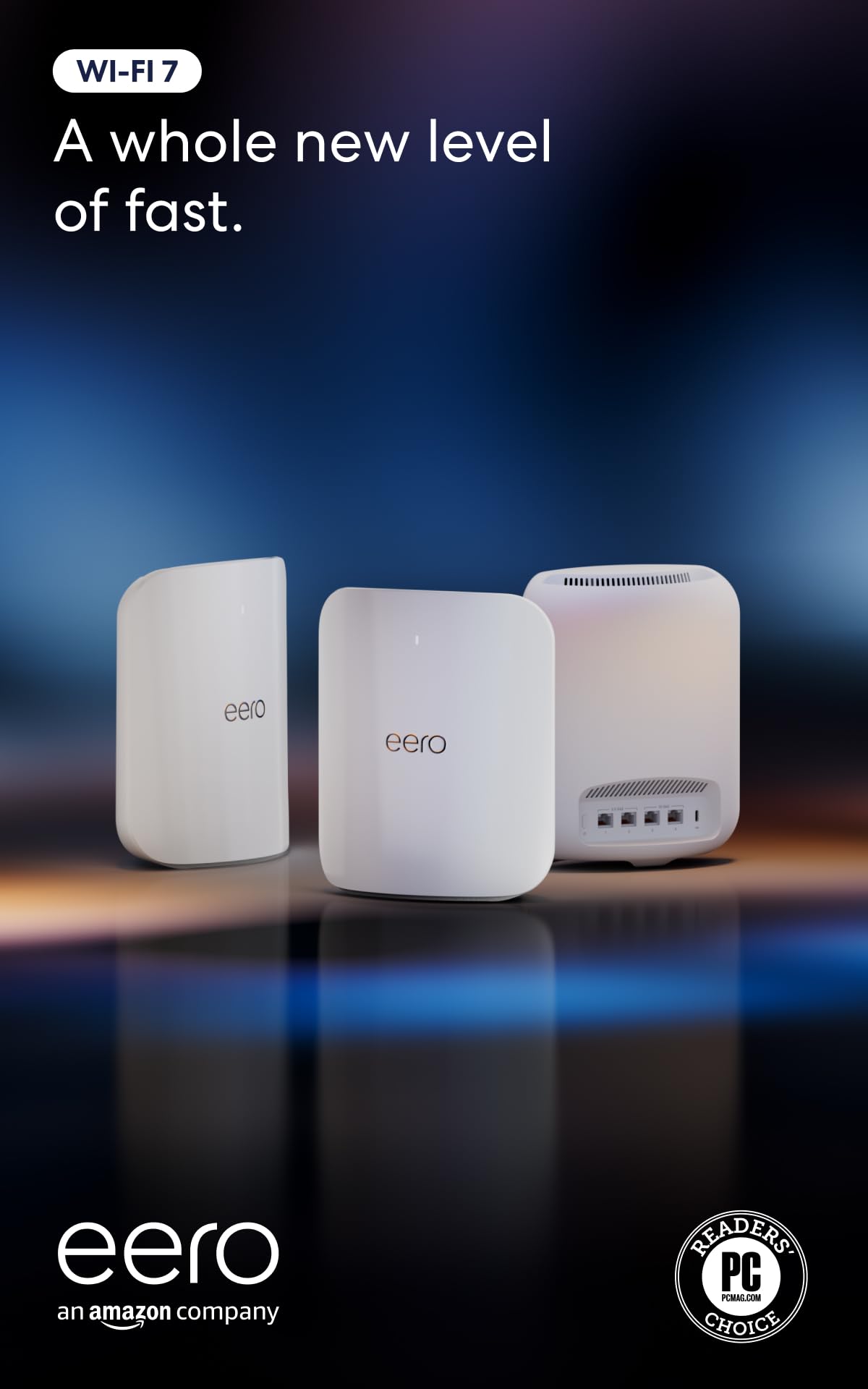
View Specs & Features
Key Benefits
- Supports internet plans up to 10 Gbps for high-speed fiber connections
- Connects over 750 devices simultaneously without introducing significant latency
- Built-in smart home hub functionality cuts down on separate hardware bridges
Best Peak Performance Mesh

Netgear Orbi 970 (3-Pack)
Built for absolute throughput and vast reach, this quad-band mesh system leverages a dedicated backhaul channel to deliver speeds up to 27 Gbps. While coverage is unmatched, the price tag is incredibly high, and occasionally finicky app updates remain an ongoing risk.
View Specs & Features
Key Benefits
Best Value Wi-Fi 7 Mesh
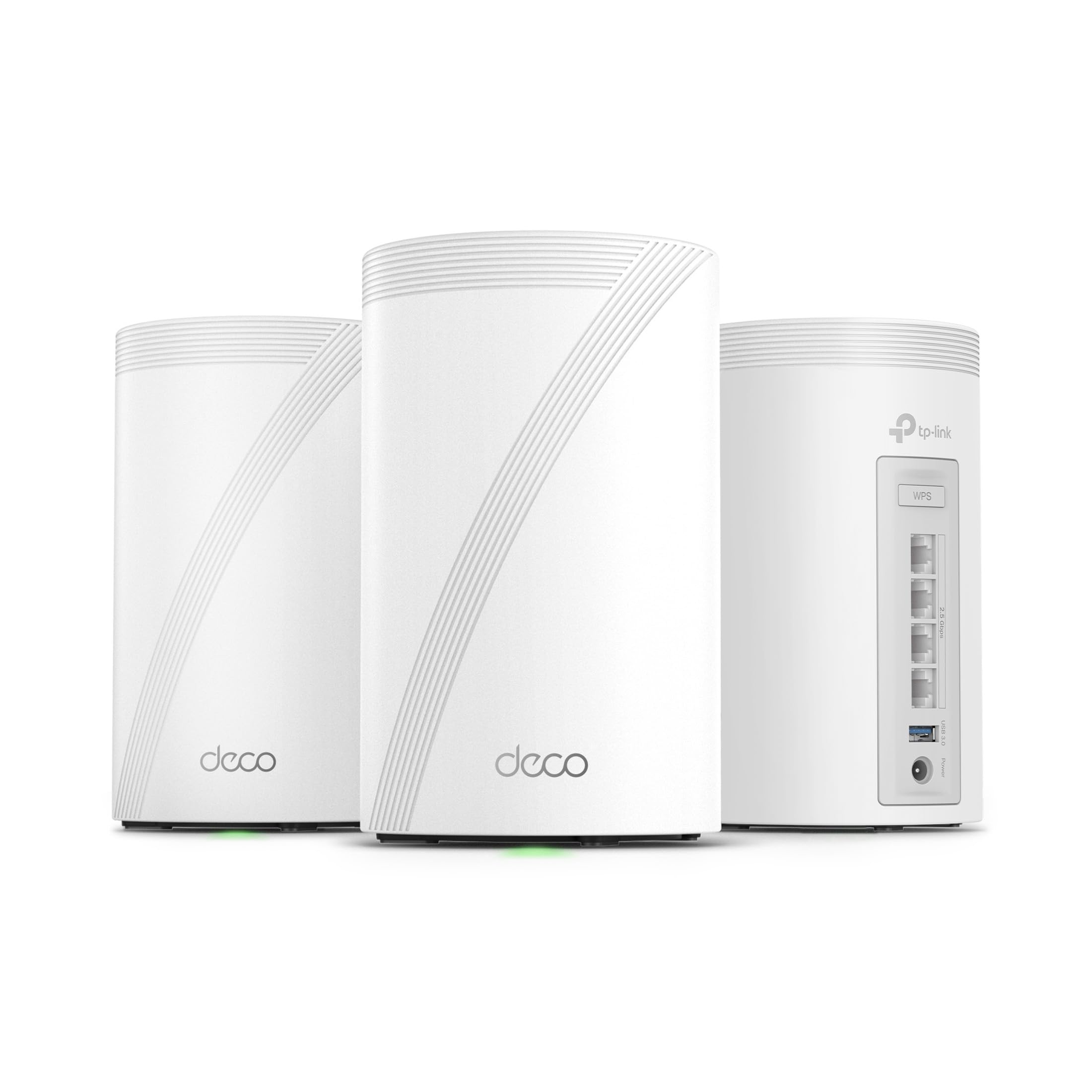
TP-Link Deco 7 Pro (3-Pack)
This tri-band mesh system strikes a strong balance of coverage, speed, and affordability for average households. It delivers up to 10 Gbps of combined throughput, though keep in mind that advanced security features are gated behind a paid HomeShield subscription.
View Specs & Features
Key Benefits
Special Highlights
- Segmented IoT traffic settings keep smart devices from interfering with your primary network
- Tri-band design provides low-latency routing for simultaneous streaming and work activities
- Includes parental controls and user profiles to easily manage device access limits
Best Standalone Wi-Fi 7 Router

TP-Link Archer BE400
Ideal for apartments and small homes, this single-unit dual-band router brings Wi-Fi 7 features like Multi-Link Operation without the complexity of a multi-node mesh system. While its range is limited, its dual 2.5 Gbps wired ports deliver excellent performance for local network storage.
View Specs & Features
Key Benefits
Special Highlights
- Covers up to 2,400 sq. ft., which is plenty for compact spaces and apartments
- Multi-Link Operation support improves wireless link stability in crowded environments
- Includes a built-in USB 3.0 port for easy local network drive sharing
Best Circuit-Level Whole-Home Monitor
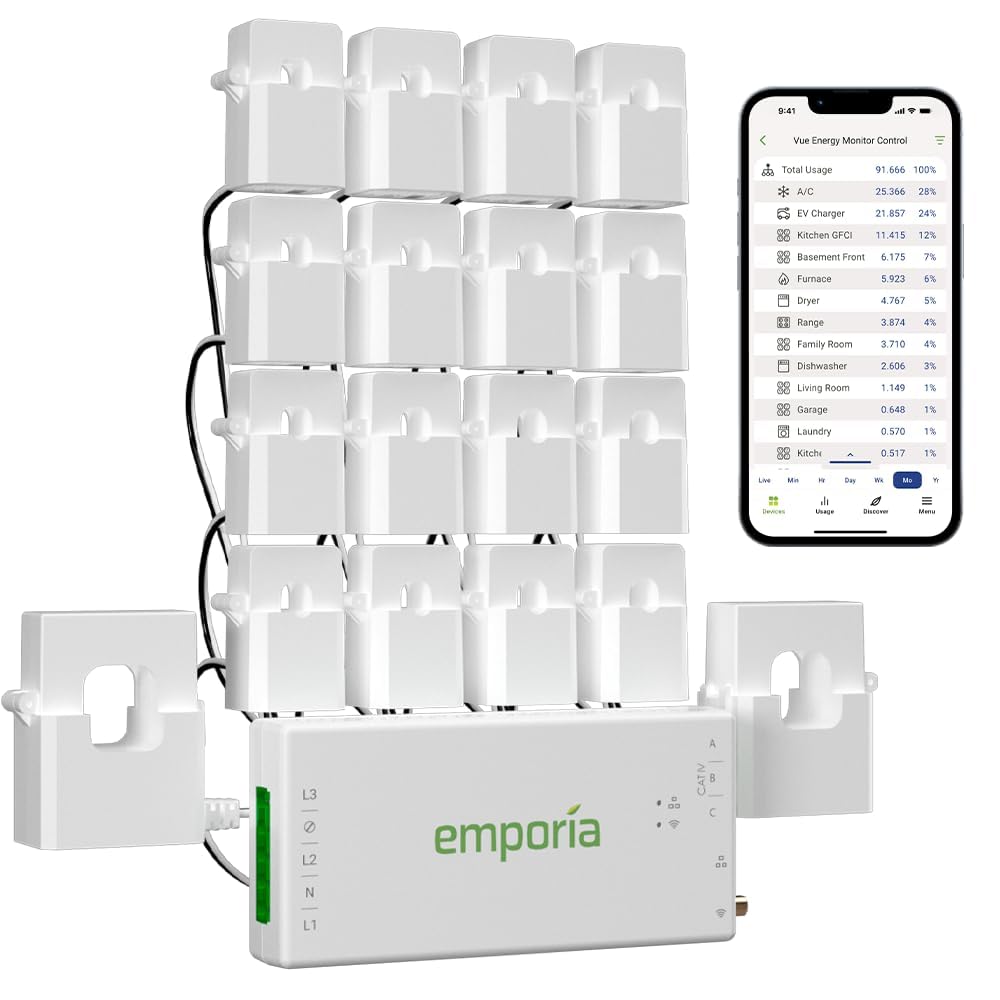
Emporia Vue 3 Home Energy Monitor
This whole-home monitor tracks overall mains usage and includes 16 individual circuit sensors for direct appliance-level visibility. It's a highly capable tool for tracking solar net metering, though the physical installation within your breaker panel is complex and typically requires a licensed electrician.
View Specs & Features
Key Benefits
- Circuit-level visibility so you know exactly what uses power
- Solar and net metering support to track production and export/import
- Works with common smart home systems for automation and alerts
Special Highlights
- UL and CE safety certification for panel installations
- Includes 16 individual clamp sensors to track high-draw appliances
- Integrates with Home Assistant to trigger demand-shaping automations
| Power Consumption Meter | Whole home monitor with 16 circuit sensors; Real-time usage tracking |
| Smart Home Compatibility | Compatible with Smart Plugs, EV Chargers, 3rd Party Thermostats, Home Assistant |
| Weight | 1.5 pounds |
Best Subscription-Free Multi-Circuit Monitor
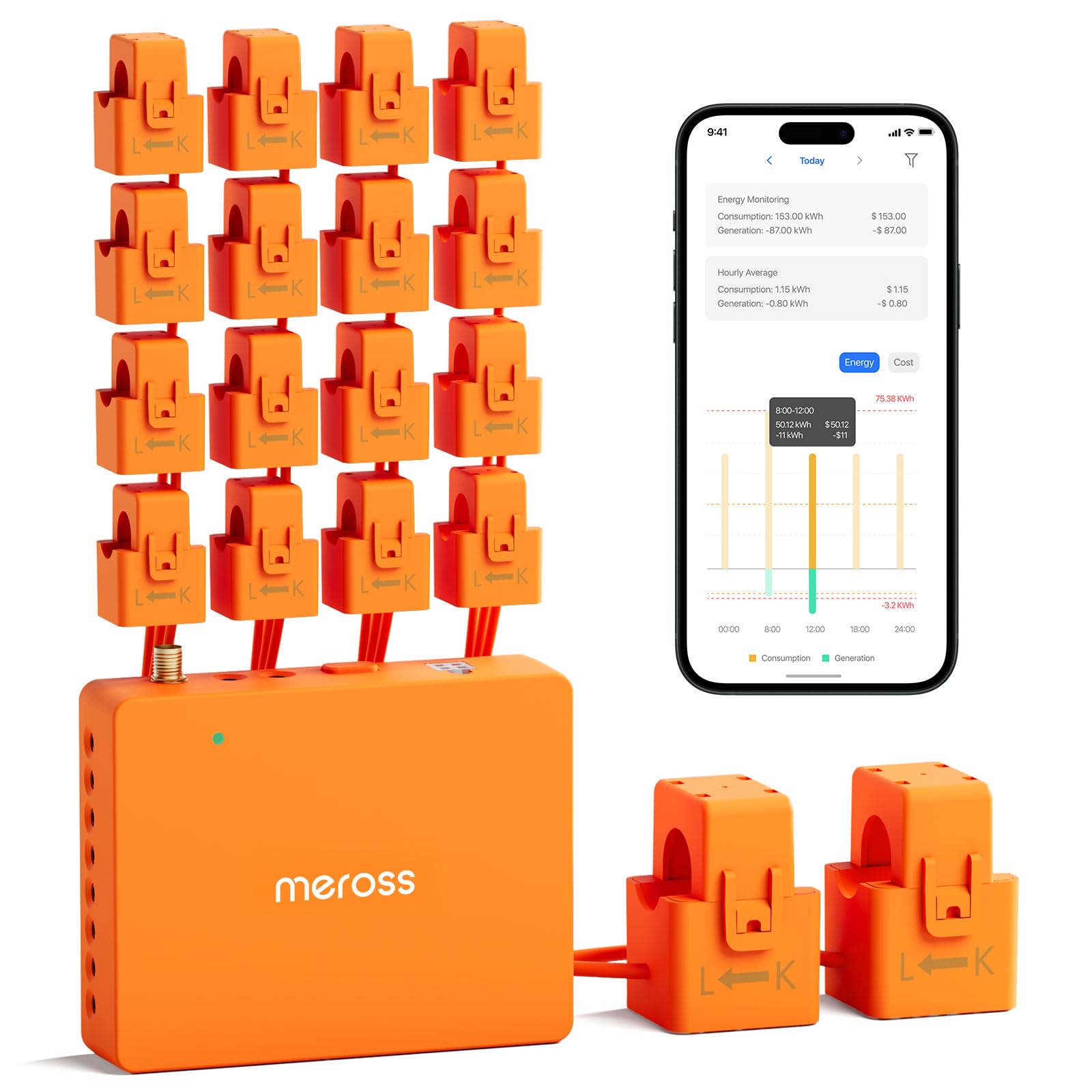
Meross Smart Energy Consumption Monitor
Offering 18 individual monitoring channels, this smart energy monitor tracks your real-time usage without recurring subscription fees. It's a fantastic match for local Home Assistant setups, but fitting 18 physical CT clamps inside a standard residential breaker panel requires careful planning and wire management.
View Specs & Features
Key Benefits
- Monitors up to 18 circuits so you can track more individual loads
- Real-time data helps you identify and stop phantom power draws
- No subscription requirement keeps long-term costs predictable
Special Highlights
- 18-circuit capacity allows granular tracking even in crowded breaker boxes
- Works with Home Assistant for local automations and smart scheduling
- Straightforward mobile app for basic daily monitoring
| Power Consumption Meter | Monitors up to 18 circuits; Real-time power usage tracking |
| Smart Home Compatibility | Supports Home Assistant; No subscriptions required |
| Weight | 4.31 pounds |
Best for Three-Phase or Heavy Load Systems

Shelly Pro 3EM (400A)
This heavy-duty, DIN-rail mountable three-phase energy meter is rated for up to 400A loads and offers both Wi-Fi and wired LAN options. It provides highly reliable local tracking for workshops, solar systems, or EV chargers, but is excessive and over-engineered for standard single-phase homes.
View Specs & Features
Key Benefits
- Three-phase monitoring suitable for higher current installations
- Wi-Fi and LAN options plus Bluetooth gateway for flexible connectivity
- DIN-rail form factor for clean, professional panel mounting
Special Highlights
- Two-way consumption tracking makes it ideal for heavy EV charging or solar setups
- Local LAN connectivity ensures reliable logging without relying on cloud stability
- Compact, DIN-rail design keeps the breaker panel looking professional
| Power Consumption Meter | 3-phase smart energy meter; Supports 400 Amps; Automatic operation |
| Smart Home Compatibility | Works with Alexa & Google Home; No hub required |
| Weight | 0.14 pounds |
Best Trusted Brand Panel Integration

SIEMENS Inhab Smart Home Energy Monitor
This panel-mounted energy monitor combines mains CTs with 16 circuit-level sensors for highly accurate appliance tracking. Built by a legacy manufacturer, it's highly reliable, but its cloud-dependent application structure may deter those seeking a local-only home automation setup.
View Specs & Features
Key Benefits
- Direct circuit connections for accurate, appliance-level measurements
- Includes mains CTs and 16 circuit sensors for balanced monitoring
- Ethernet option for reliable data upload and reduced wireless issues
Special Highlights
- Panel-mounted layout integrates cleanly into existing Siemens load centers
- Supports 16-50Amp circuit level sensors for precise appliance tracking
- Provides direct Ethernet connectivity to bypass unreliable Wi-Fi signals in basements
| Power Consumption Meter | 16-50Amp circuit level sensors; Real-time data reporting |
| Smart Home Compatibility | Compatible with cloud services; Easy installation |
| Weight | 4.8 pounds |
Best for Simple Mains or Subpanel Tracking
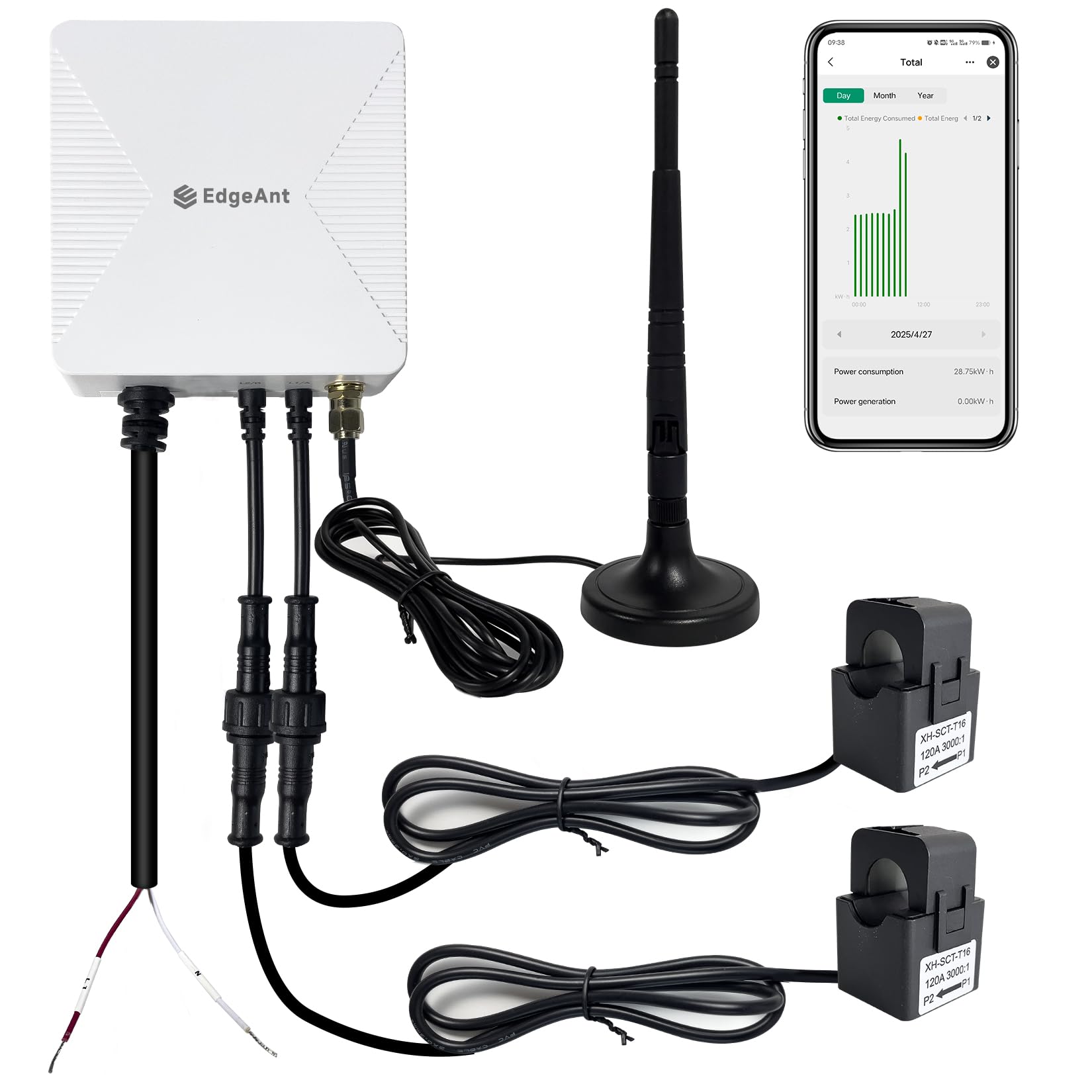
WiFi Energy Monitor with 2 * 120A Clamps
This straightforward Wi-Fi monitor uses two 120A clamps to track overall electricity imports, exports, and solar production. It is an approachable, budget-friendly choice for rentals or outbuildings, but it's incapable of pinpointing individual appliance draws.
View Specs & Features
Key Benefits
- Simple mains monitoring with two 120A clamp CTs for quick deployment
- Real-time tracking that lets you spot unusual draws immediately
- Wi-Fi connectivity for remote access and basic smart home control
Special Highlights
- Ideal for rental auditing or tracking dedicated subpanels (workshops/garages)
- Solar and net metering capable, providing a clear overall import/export picture
- Compact and user-friendly interface lowers the entry barrier for average homeowners
| Power Consumption Meter | Real-time electricity tracking; Solar/net metering capable |
| Smart Home Compatibility | WiFi connected for remote monitoring; User-friendly interface |
| Weight | 1.3 pounds |