
Native Wallet Integration
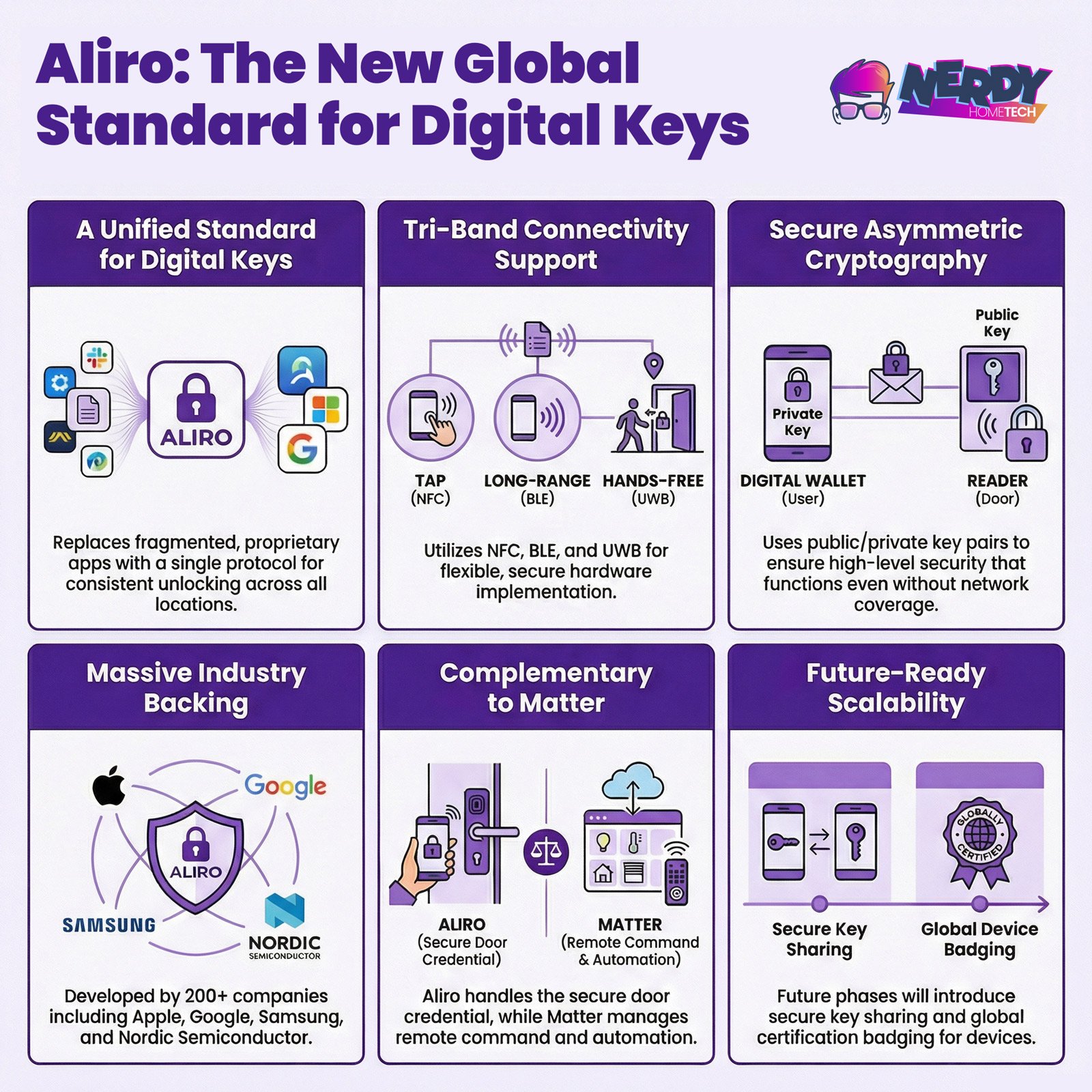
The most notable aspect of Aliro 1.0 is the backing it has from Apple, Google, and Samsung. The intention is to eliminate the need for third-party manufacturer apps to unlock doors.
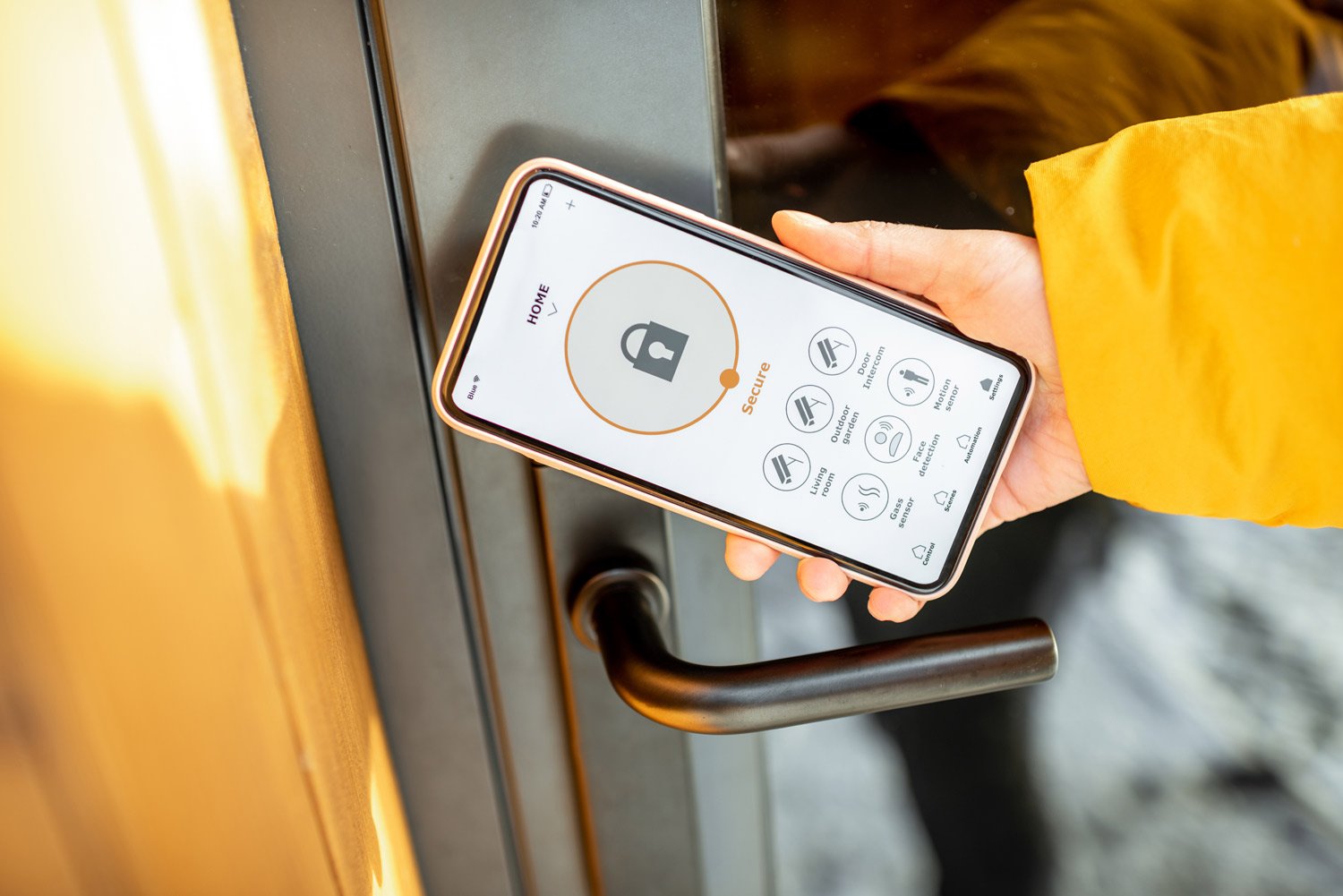
By integrating Aliro directly into native mobile wallets, your device—like a Google Pixel 10xl or an iPhone—recognizes the lock at a system level. We are already seeing the first implementations of this, such as Samsung Wallet’s recently announced “Digital Home Key” feature built on the Aliro standard.
While it is probable that major manufacturers will adopt this native wallet integration, it is merely possible that it will completely eliminate proprietary apps. You will likely still need manufacturer apps for firmware updates or advanced lock configurations.
While both Aliro and Matter were created by the Connectivity Standards Alliance (CSA), they serve different, complementary purposes within the smart home ecosystem.
Here are the primary differences between the two standards:
- Focus and Scope: Matter is a broad smart home connectivity protocol designed for “command-and-control” functions. It handles tasks like remotely locking or unlocking a door, checking the status of a lock, or integrating various devices (like lights and thermostats) into a home automation system. Aliro, on the other hand, is highly specialized. It focuses specifically on access control, standardizing how smartphones and wearables act as secure digital keys at the physical door.
- Why they are separate: Smart locks require specialized security features, like managing digital keys via NFC, Bluetooth, or Ultra-Wideband (UWB) technologies. Because these complex interactions go beyond basic smart hub communications (like dimming a smart light), the CSA created Aliro to handle the specific, localized requirements of access control in a way that Matter cannot.
How they work together Aliro and Matter are designed to be complementary. A smart lock can utilize both standards simultaneously: it can use Matter to seamlessly integrate with your preferred smart home ecosystem for remote management, while utilizing Aliro to provide a secure, tap-to-unlock or hands-free digital credential experience when you walk up to the door. In fact, for smart home applications, major smartphone vendors will require the use of Matter in conjunction with Aliro.
The Downsides, Risks, and Reality Checks
It is crucial to approach physical access control with a healthy dose of skepticism. A residential smart lock is a piece of infrastructure that should ideally last a decade or more, not a consumer electronic device to be swapped out every two years. Here are the realistic risks associated with Aliro:
1. Security Vulnerabilities are Inevitable
Anything digital has, or eventually will have, vulnerabilities. While Aliro’s use of UWB and asymmetric cryptography makes it highly resistant to the relay attacks that plagued early Bluetooth locks, the software stack is complex. Software bugs are inevitable. If a vulnerability is found, patching it requires the manufacturer to issue a firmware update and the user to actively install it. If a company goes out of business or drops support for an older lock, you could be left with permanently vulnerable hardware protecting your home.
2. The “Dead Device” Problem
While NFC can technically function even when a smartphone’s battery is depleted (often used for transit cards), this implementation varies heavily by device and manufacturer. If your phone battery dies completely, relying on UWB or Bluetooth LE for hands-free access will fail. You must always have a physical backup or a keypad.
3. Hardware Fragmentation and Replacement Costs
Aliro requires specific hardware to function securely (particularly for UWB). It is highly unlikely that your existing smart locks will receive a magical firmware update to become Aliro-compatible. Adopting this standard will require purchasing entirely new, likely expensive, hardware.
4. A Focus on Enterprise Over Residential
While Aliro will benefit the smart home market, a significant driving force behind this standard is enterprise and commercial access (offices, hospitals, apartment complexes). The residential rollout may be slower and bumpier as manufacturers prioritize lucrative enterprise contracts.
The Bottom Line
Aliro 1.0 represents a necessary and factual step forward for access control. By standardizing the communication between mobile wallets and door locks, it addresses the severe fragmentation that has plagued the industry.
However, a frictionless, perfectly secure rollout is not guaranteed. Early adopters should expect bugs, delayed feature parity across different smartphone platforms, and the inherent risks of trusting physical security to a complex software stack. If you rely on local, hyper-secure setups (like running Home Assistant locally on a Mac M4 mini to avoid cloud dependency), Aliro’s offline, point-to-point authentication is appealing—but it is still wise to wait for the hardware to mature before treating it as an infallible master key.