
We do the homework so you can make your home work.™
Nerd's Choice

The Breville Barista Express BES870X: Still the Best All-in-One Espresso Machine for Home Learners 

Nerdy Home Tech uses affiliate links. These links will help support the site. For more information, visit our Disclosure page.

Can you make café-quality espresso at home without a $2,000 machine or a separate grinder? The Breville Barista Express proves you can. After years on the market and countless home barista setups, it remains one of the smartest entry points into real espresso. But “entry point” doesn’t mean compromise—and it doesn’t mean this machine works for everyone.

The verdict upfront:

The Breville Barista Express is genuinely worth buying if you want hands-on control, a complete setup out of the box, and espresso that tastes noticeably better than pod machines. The grinder becomes your ceiling after a year or two, and steam timing takes practice. But for someone who’s serious about learning without spending $1,000+, this is your machine.

CHECK PRICE

Who Is The Breville Barista Express Built For?

Ideal User Profiles

This machine serves those prioritizing technical control over convenience.

  • You want to learn real espresso technique, not just push a button and walk away.
  • You'd rather not buy a separate grinder (which easily costs $100–300).
  • You're okay spending 20–30 minutes on setup and dialing over your first few weeks.
  • You can commit to basic maintenance: weekly purging, monthly descaling, occasional grinder cleaning.
  • You want an all-in-one footprint that doesn't require multiple appliances.

Better To Skip If...

There are significant tradeoffs in speed and volume with this single-boiler setup.

  • You need speed and zero learning curve (super-automatics like jura or saeco are better).
  • You're a coffee pro who needs micro-grind adjustments below 0.3mm (you'll upgrade within 6 months).
  • You brew back-to-back espresso shots constantly (single boiler means waiting between brew and steam).
  • Your counter space is genuinely tiny (16 inches tall with an overhanging hopper is a real footprint).
  • You want the absolute lowest entry price (basic pod machines cost less; you're paying for quality here).

Nerdy’s Top Choice

8.4Expert Score
Grab the Breville Barista Express for Better Shots

Tired of weak home espresso? The Breville Barista Express BES870X gives you more control without making the process feel like homework. It has a built-in burr grinder, dose control, and a steam wand, so you can grind, pull, and foam in one spot. It’s a smart pick if you want café-style drinks and don’t mind learning the basics.

Brew Quality
9
Grinder Control
9
Milk Frothing
8
Ease Of Use
8
Build Quality
9
Heat Speed
8
Cleaning Needs
8
Counter Fit
8
Value For Price
9
PROS
  • Built-in burr grinder
  • Rich espresso shots
  • Strong steam wand
  • Solid stainless build
  • Good hands-on control
  • Great long-term value
CONS
  • Takes time to learn
  • Needs regular cleaning
  • No one-touch drinks
  • Grinder can be loud
  • Large for small counters
  • Manual milk frothing

Last updated on 2026-08-06

What Makes This Machine Special

The Breville Barista Express occupies a weird middle ground—and that’s exactly why it works. The grinder is excellent and well-suited to the job at hand, and the machine is designed from the ground up to do two things well: grind coffee and pull shots.

Most entry-level espresso machines force you to buy a grinder separately. That’s a $150+ problem on top of the machine itself. The Barista Express includes a conical burr grinder that’s actually good. It’s not a compromise add-on—it’s a real grinder.

The PID temperature control (Proportional-Integral-Derivative) is another differentiator. That fancy term means your brew water stays stable at whatever temperature you set it. This matters because espresso extraction is temperature-sensitive. Change the temp by 2°C and your shot gets noticeably different—too sour, too bitter, or just right. Most machines at this price skip PID entirely. You get it here.

The 15-bar Italian pump and thermocoil heating system work together to pull shots with actual body and crema—that caramel-colored foam on top that indicates proper extraction. Not all $500 machines can say that.

And honestly? The build quality is solid. Stainless steel housing, weighted portafilter, decent steam wand. Stainless steel thermoblock, metal grinder burrs, and reinforced portafilter scream longevity. This isn’t a machine that feels cheap.

The Grinder: Your Gateway to Espresso, and Your Ceiling

Let’s talk about the elephant in the room: the integrated grinder.

It’s good for learning. The 8-ounce hopper holds about 3–4 days of beans (if you’re a typical home user making 1–2 shots daily). The 18 grind settings range from coarse to fine, covering espresso territory. The conical burrs are stainless steel—durable and consistent.

Here’s the catch: those 18 settings are indexed, meaning they click into place. You can’t fine-tune between clicks. For a beginner learning to dial in for the first time, this is fine. You adjust grind, pull a shot, taste it, adjust again. Most people land on a setting that works and stick with it.

But if you’re making espresso daily, pulling different bean origins, and chasing specific extraction profiles—you’ll hit this grinder’s limits within 12–18 months. At that point, the 54mm washer which seals the portafilter to the machine will inevitably wear down after around 2 years of repeated use. You’ll start eyeing standalone grinders like the Baratza Sette 270 ($150) that offer finer control.

For the first year? The grinder is fine. For long-term espresso obsession? Plan to upgrade.

Noise is moderate—not silent, not obnoxiously loud. Espresso grinders generally aren’t quiet; this one is quieter than many.

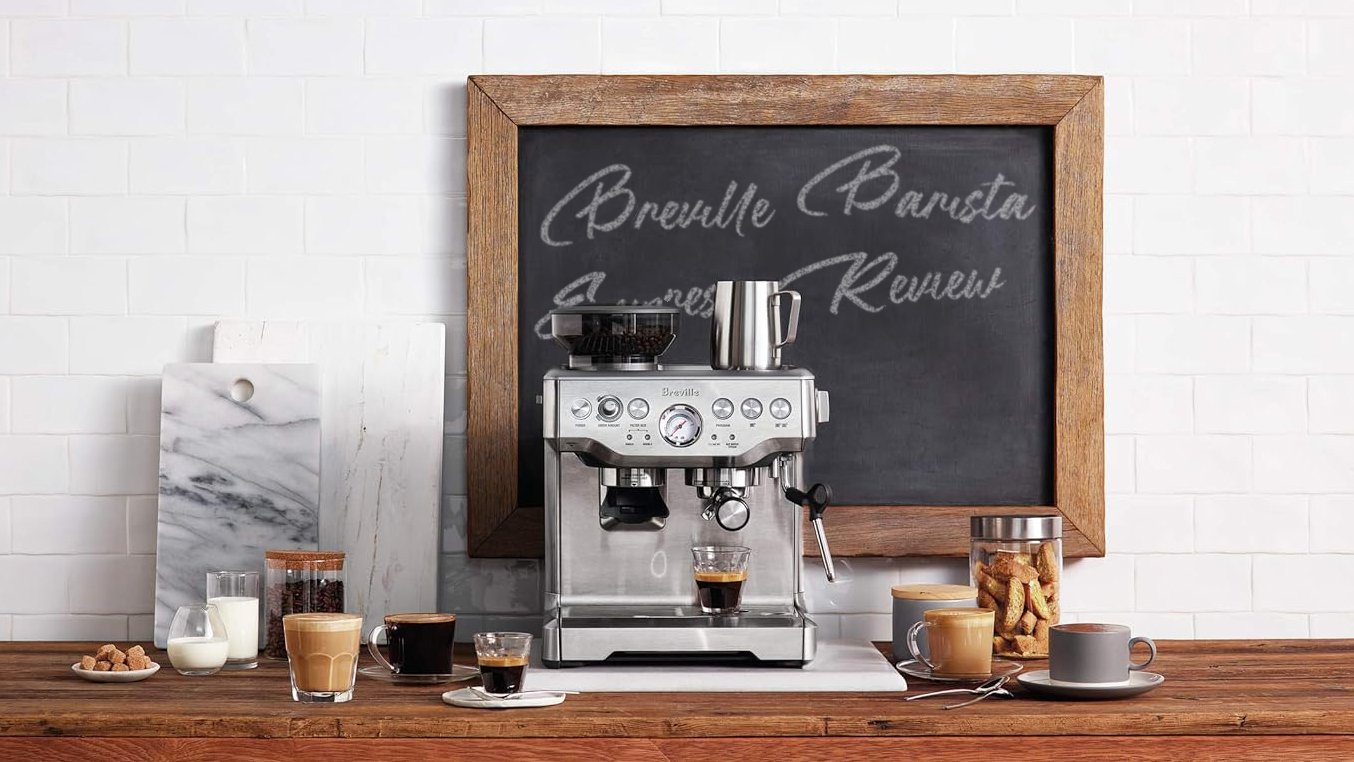
Breville Barista Express Espresso Machine Bes870Xl

Brewing, Temperature, and the Pre-Infusion Detail

The PID temperature control lets you adjust brew water between 86–96°C (187–205°F). Start in the middle (91°C) and dial from there.

Light roasts?

Go cooler (88–90°C) to avoid over-extraction and highlight brightness.

Dark roasts?

Go warmer (93–96°C) to pull more body and sweetness.

This simple temperature control is the reason even mediocre technique pulls decent shots. A machine without PID would amplify every mistake.

The pre-infusion system gradually ramps up pressure at the start of extraction. For the first ~10 seconds, the pump delivers lower pressure, letting water soak into the coffee grounds evenly. This prevents channels (uneven paths where water rushes through, pulling sour shots). It’s a small thing that makes a big difference.

You can override this in manual mode by holding the brew button yourself, which is useful if you want to experiment with different pre-infusion times. Most beginners don’t touch this. The default ~10 seconds works fine.

Heat-up time is roughly 30 seconds to 2 minutes depending on whether the portafilter and group head are warm. Preheat by running water through the empty group head for 5 seconds before you insert the basket. This small step prevents temperature drop during extraction and improves consistency significantly.

Pro tip from testing: Warm your drinking cup with hot water while the machine heats. Pour the warm water out right before pulling the shot. It sounds fussy but it genuinely improves the final espresso temperature and flavor by the time it reaches your mouth.

Steam Wand and Milk: Practice Required

The steam wand is powerful—capable of real microfoam for latte art. But there’s a learning curve.

The wand works on full steam pressure, which is effective but less forgiving than wands on $2,000 machines. Your technique matters. Angle wrong and you’ll get big bubbles instead of silky foam. Most people need 20–40 repetitions to pull consistently good microfoam. Some catch on faster. Some slower.

The wand doesn’t rotate 360°, which is a minor limitation. On some machines you can position it however you want; here you get a fixed angle that works but isn’t ideal for everyone.

After steaming, purge the wand immediately (press the steam button for a second without the pitcher attached) and wipe it with a damp cloth. Milk residue hardens inside and blocks the nozzle. It’s a 10-second task that prevents frustration.

Maintenance Schedule

Espresso machines need maintenance. The Barista Express isn't different, but it's straightforward.

Daily Tasks

10 Seconds Wipe steam wand and purge it Prevents milk buildup and nozzle blockage.
5 Seconds Empty the drip tray Prevents stale water pooling.
5 Seconds Run water flush through group head Stabilizes brew path and temperature.

Weekly Tasks

5 Minutes Soak basket and portafilter Use a cleaning tablet to remove coffee oils and residue.
2 Minutes Brush the group head screen Removes fine grounds buildup.
3–5 Minutes Backflush with cleaning disk Pushes out residue and protects pump longevity.

Monthly & Beyond

20 Minutes (Monthly) Descale heating system Removes mineral buildup and maintains heating efficiency.
2 Minutes (Monthly) Replace water filter Improves water quality and overall taste.
5 Minutes (Monthly) Clean grinder burrs Recommended for grind consistency.
10 Minutes (2-3 Months) Deep clean group head Thorough maintenance for optimal performance.

This sounds tedious written out. In practice, most of these tasks take 5–10 minutes. Weekly backflushing is the one you can’t skip—it keeps the pump happy and espresso flowing cleanly.

With proper maintenance, you’re looking at machine life in the 3–7 year range for regular home use. Some units are still going strong after 5+ years with daily use. The portafilter washer mentioned earlier typically needs replacing around the 2-year mark if you’re pulling 1–2 shots daily. It’s a $10 part and a 5-minute job.

Durability and Longevity (Real-World Data)

After extensive use, the Breville Barista Express BES870XL consistently delivers on its promises. With fresh beans and proper technique, shots with rich, complex flavors and a thick, persistent crema rival many café offerings.

Haven’t needed to call for help except once about a minor grind issue. There’s even an extended warranty you can snag to keep this bad boy brewing for years to come.

The build quality holds up. Metal where it matters (heating block, grinder burrs, portafilter), plastic where it doesn’t hurt (water tank, bean hopper). The brushed stainless exterior resists fingerprints better than polished finishes.

That said, some wear items will eventually need attention: the aforementioned portafilter gasket, the water filter, potentially grinder burrs if you run oily dark roasts constantly. These aren’t failures—they’re normal maintenance on any espresso machine.

One realistic note: Breville replacement parts can take weeks to ship and sometimes require multiple contact attempts. Budget for this if something breaks out of warranty.

How It Stacks Up Against Alternatives

You're probably comparing this to a few other machines. Here's the honest breakdown:
Product Name Image Operation Mode Special Highlights Material
Philips 5500 Series Fully Automatic Philips Fully Automatic 20 presets, LatteGo, SilentBrew Brushed Stainless Steel
Breville Barista Express BES870XL Breville Manual Integrated burr grinder, Steam wand Brushed Stainless Steel
Ninja Luxe Café Premier Ninja Fully Automatic 3-in-1, Barista Assist, Dual Froth Brushed Stainless Steel
Cuisinart Espresso Bar Fully Automatic Cuisinart Fully Automatic Burr grinder, 19-bar, Cold Extract Stainless Steel
CASABREWS CM5418 Casabrews Semi-Automatic 20-bar pump, Compact, Milk frother Brushed Stainless Steel
Atatix Espresso Machine Atatix Semi-Automatic 20-bar, Compact, SS Body Brushed Stainless Steel
CASABREWS 3700 Essential Casabrews 3700 Semi-Automatic 20-bar, Powerful frothing, Beginner-friendly Brushed Stainless Steel
Mr. Coffee 4-Shot Steam Mr. Coffee Semi-Automatic 4-shot, SS Pitcher, Portable Brushed Stainless Steel
Primula Classic Stovetop Primula Manual Portable, No electricity, Stovetop Aluminum

The Barista Express isn't the cheapest espresso setup, and it's not the most advanced. It's the best balanced option if you want to learn properly without spending a fortune.

1 Best Mini Pcs For Home Automation And Streaming

Best Mini PCs for Home Automation and Entertainment

Discover the best mini PCs for home automation and entertainment. Compare performance, power draw, and networking capabilities to find your perfect home server.

Setup, Calibration, and Your First Week

Unboxing to first shot takes about 30 minutes.

Remove the machine, run water through the group head and portafilter without a basket to flush the system. Fill the water tank with filtered water (the included water filter helps, but use fresh water regardless—don’t let water sit in the tank for days).

The machine comes with single and double baskets (18–20g for double shots is standard). Load the double basket, tamp with medium pressure (the included tamper is fine for learning), lock in the portafilter, and pull a shot.

Your first shots will probably taste like hot water, sour espresso, or bitter mush. This is normal. You’re learning to dial in—adjusting grind size until the extraction time feels right (25–30 seconds for a double shot, measured from when the pump starts).

IssueFix
Shots running too fast? Under 20 seconds, thin and sour.Grind finer.
Shots running too slow? Over 35 seconds, dark and bitter.Grind coarser.
Flavor still needs tuning after the grind is dialed in?Use PID temperature adjustments to fine-tune acidity and sweetness.

Most people nail this within 5–7 days of regular pulling. The included manual is actually helpful, and Breville’s support website has decent guides.

Budget 10–15 dollars of beans for learning waste. It’s worth it to figure out your baseline.

Troubleshooting common issues and quick fixes

Before you start making changes, take a calm moment to assess. Often, small adjustments to grind, dose, and tamp can solve most problems. Use the quick table below to find common fixes. Then, follow the short how-to notes that match your issue.

SymptomLikely causeQuick fixes
Weak, thin espressoToo coarse grind, low dose, wrong basketGrind finer; raise dose by 0.5–1 g; switch to single-wall basket; check bean freshness
Bitter or over-extracted shotGrind too fine, long extraction, high tempGrind coarser; shorten shot time; lower dose if needed; confirm machine temperature
Sour or under-extracted shotGrind too coarse, short extraction, low tempGrind finer; lengthen extraction toward 25–30 seconds; increase dose slightly
Channeling during extractionPoor distribution, uneven tamp, clumpsUse WDT or distribution tool; tamp evenly; break clumps after dosing; consider weighing dose
Grinder jams or noisy grindingForeign objects, oily beans, chaff buildupClear hopper of debris; clean burrs per manual; avoid very oily beans; run cleaning cycle
Low steam or blocked wandClogged tip, scale buildupPurge and soak tip; use a pin to clear holes; descale if steam weak
Leaking portafilterWorn gasket or improper seatingInspect and replace group head gasket; clean seating area; lock portafilter fully
Machine won’t power or heatPower, tank seating, electronic hiccupCheck outlet and tank placement; unplug 30 seconds to reset; contact Breville if persistent

For weak or watery espresso, start by checking your grind and dose. A finer grind and a bit more coffee can help. Make sure you’re using the single-wall basket for true espresso. Fresh beans, roasted within six weeks, make a big difference.

If your espresso tastes bitter, try a coarser grind and shorter extraction. Change one thing at a time to understand the cause. For sour shots, aim for longer extraction and a finer grind, and check the brew temperature. Use the pressure gauge to guide your adjustments; if it’s not reaching espresso range, increase dose and grind finer.

Preventing grinder jams on your Breville Barista Express is easy. Keep the hopper clean and avoid oily beans. If the burrs get clogged, remove the hopper and clear out debris. Follow Breville’s cleaning steps for burr maintenance and use recommended cleaning pellets when necessary. Never force the burrs; clean and reassemble slowly.

Steam wand issues are often simple. Purge the wand after each use. If the tip clogs, soak and use a small pin to free the holes. Reduced steam often signals scale, so plan periodic descaling if you have hard water.

For portafilter leaks, check the group head gasket and the seat area. Replace a worn gasket and clean the contact surface. If the machine displays errors or won’t heat, make a basic reset by unplugging for 30 seconds and reseating the water tank. Contact Breville support for persistent electrical faults.

Use this checklist to keep troubleshooting focused: adjust grind, check dose, confirm basket type, verify tamp and distribution, and maintain grinder and group head cleanliness. Keep notes of each change so you can repeat what works.

Espresso Quality: What You Actually Get

The espresso quality is remarkably high for a machine in this price range. It easily stands head and shoulders above many entry-level machines from brands like De’Longhi.

You’re pulling shots with actual body, crema, and complex flavor—not watered-down approximations. With decent beans and basic technique, you’re getting café-grade shots regularly.

This isn’t a machine that pulls bad espresso. It’s a machine that makes it hard to pull bad espresso even if you’re not perfect. The PID temperature control and pre-infusion do a lot of the heavy lifting.

Recommended Performance Upgrades

While the stock machine is capable out of the box, these four targeted upgrades remove technical variables and accelerate the learning curve for better espresso consistency.

Digital Scale ($30–50)

Timed dosing is convenient, but weighing your grounds (typically 18–20g for double shots) removes one variable and improves consistency faster. Hario or Timemore make affordable scales.

Digital Scale

Heavier Tamper ($20–30)

The included magnetic tamper is fine, but a solid 58.5mm flat tamper with more weight makes tamping more consistent and less dependent on user arm strength.

Heavier Tamper

Bottomless Portafilter ($30–40)

This shows you exactly what's happening during extraction. Channeling becomes immediately obvious, which significantly accelerates the learning process.

Portafilter

Distribution Tool ($15–20)

Effectively levels the coffee grounds within the basket before you tamp, reducing the risk of uneven extraction and "soft spots" in the puck.

Distribution Tool

The Honest Drawbacks (So You Know What You’re Getting)

This machine has real limitations, not just “minor quirks.”

LimitationWhy It MattersWho This Affects MostSeverity
Grinder plateaus quicklyAfter 1–2 years of daily use, indexed settings (0.3mm gaps) feel limiting for experimenting with bean originsEspresso enthusiasts, people experimenting with different roastsMedium
Single boiler = sequential brewingCan’t brew espresso and steam milk simultaneously. Pull shot, remove portafilter, steam milk. Adds 2–3 minutes.Anyone making lattes back-to-back or for multiple peopleMedium
Steam wand learning curveMore forgiving than commercial wands, but you’ll waste milk practicing. Budget for 20–40 repetitions to get smooth microfoam.Beginners learning milk frothingLow–Medium
Cabinet clearance is realAt 16 inches tall with the hopper accessible from the top, this won’t fit under most kitchen cabinets.Kitchens with limited vertical space or under-cabinet storageHigh (if space is tight)
Counter footprintNot huge, but not tiny either. Requires dedicated space—not something you tuck away between uses.Small kitchens with minimal counter spaceMedium
Replacement parts slow shippingBreville isn’t Amazon-fast on parts availability. If something fails, budget 2–4 weeks for repair.Anyone who needs quick fixes or lives outside major metro areasLow–Medium

None of these are deal-breakers for most home users. They’re honest trade-offs of the machine’s positioning and price point.

Water and Descaling Reality

Hard water is the quiet killer of espresso machines. Mineral buildup reduces heating efficiency and messes with extraction.

Use filtered water from your tap pitcher or a basic filter jug. Not distilled (too soft, can damage the machine), not straight hard tap water (mineral buildup).

Descale monthly in hard water areas, every 2–3 months in medium water, and less frequently if you’re on soft water. Use Breville’s descaling solution or a standard espresso machine descaler. Don’t use white vinegar (too acidic for the seals). The process takes 20 minutes and is genuinely simple—follow the manual.

Colors and Aesthetics

You get two finish options: Brushed Stainless Steel and Black Sesame. Both look solid on a kitchen counter. Brushed stainless hides fingerprints better. Black is slightly more dramatic. Neither is wrong.

Who Should (and Shouldn't) Buy This

Before committing to the counter space and learning curve, here is a realistic look at whether this machine fits your daily routine.

Buy It If:

  • You're new to espresso and serious about learning.
  • You want to avoid buying a separate $150+ grinder.
  • You value PID temperature control and consistent results.
  • You can commit to basic maintenance.
  • You have the counter space.
  • You enjoy the process, not just the caffeine.

Don't Buy It If:

  • You need instant convenience (pod machines are faster).
  • Budget is your absolute priority (used Gaggia Classic is cheaper).
  • You're a coffee professional upgrading from home (you need a dual boiler or better).
  • Your kitchen is tiny and counter space is premium real estate.
  • You want zero learning curve and just want good coffee.

Final Verdict

The Breville Barista Express is the best all-in-one espresso machine for someone serious about learning without spending $1,000+.

It pulls genuinely good espresso with PID temperature control, includes a grinder that’s actually useful, and comes with the accessories you need. The steam wand works, the build quality is solid, and maintenance is straightforward.

The grinder will eventually feel limiting, the single boiler means sequential brewing, and you’ll hit learning plateaus that require practice. These aren’t flaws—they’re honest trade-offs of the machine’s positioning.

For home learners, that 4.2/5 reflects a machine that delivers on its promise: café-quality espresso at home without needing separate purchases or overwhelming complexity. It’s not perfect. It’s genuinely useful.

Frequently Asked Questions

Does it come with everything I need to start?

Yes. Baskets, tamper, dosing funnel, milk pitcher, cleaning tools, water filter. You just need beans and fresh water.

How long does it take to learn to pull good shots?

Most people nail dialing in within 5–7 days of regular use. Milk frothing takes longer—20–40 repetitions for smooth microfoam. Budget 2–3 weeks before you’re consistently pulling decent lattes.

Can I upgrade the grinder later?

Absolutely. After a year or so, you can swap in a Baratza Sette 270, Eureka Mignon, or similar. The portafilter is standard 54mm, so grinders interface normally.

What’s the temperature range, and how does it affect taste?

86–96°C (187–205°F). Cooler = brighter acidity, more delicate flavors. Warmer = more body, sweeter. Start at 91°C and adjust ±2°C based on your taste.

Is backflushing really necessary?

Yes. It removes fine grounds that build up in the group head. Takes 3–5 seconds weekly, prevents pump strain, and keeps espresso tasting clean.

How often should I descale?

Monthly in hard water areas, every 2–3 months in medium water, less in soft water. Use a descaling solution, not vinegar.

Can I make just espresso without frothing milk?

Completely. Pull double shots, enjoy as ristrettos or lungo. No need to steam milk if you don’t want lattes.

What’s the 54mm portafilter, and why does it matter?

54mm is a standard size for home machines. Means third-party baskets, portafilters, and accessories fit. Bigger machines use 58mm (more thermal mass, slightly more nuanced extraction).

How loud is the grinder?

Moderate. Not silent, not obnoxiously loud. Quieter than many burr grinders.

What if the machine breaks?

Breville’s 2-year warranty covers defects. Out of warranty, parts are available but can take weeks. The machine is generally reliable if maintained.

Should I get an extended warranty?

Optional. If you pull 2+ shots daily and plan to keep it 5+ years, it’s reasonable insurance. If you’re a casual user, standard warranty is probably enough.

Can I use it for an office or small café?

Not really. It’s designed for home use—2–3 shots daily max. Commercial use would shorten its life significantly.

How does it compare to coffee shop espresso?

With decent beans and proper technique, very close. Not identical (café machines are more powerful), but noticeably better than most home alternatives.

You might also like…

-40% Coffee Maker, 20 Bar Espresso Machine With Milk Frother & Cold Brew,Compact...
$68.99 $115.18
READY TO BUY?
Walmart Walmart.com
-16% De’longhi Dedica Duo Espresso Machine, Compact Size With Built In Frother For...
$249.00 $299.95
READY TO BUY?
Walmart Walmart.com
Delonghi Magnifica Evo Next Fully Automatic Espresso Machine
$899.00
READY TO BUY?
Walmart Walmart.com
Last update was on: August 9, 2026 4:07 pm

Oscar Rabeiro
Oscar Rabeiro

Bringing 25+ years of expertise in graphic design, marketing, and advertising to Nerdy Home Tech. Specializing in demystifying home automation and AI, I craft engaging content that simplifies complex tech for newbies and seasoned pros alike. Join me on a journey through the world of smart home tech!

Nerdy Home Tech
Logo