
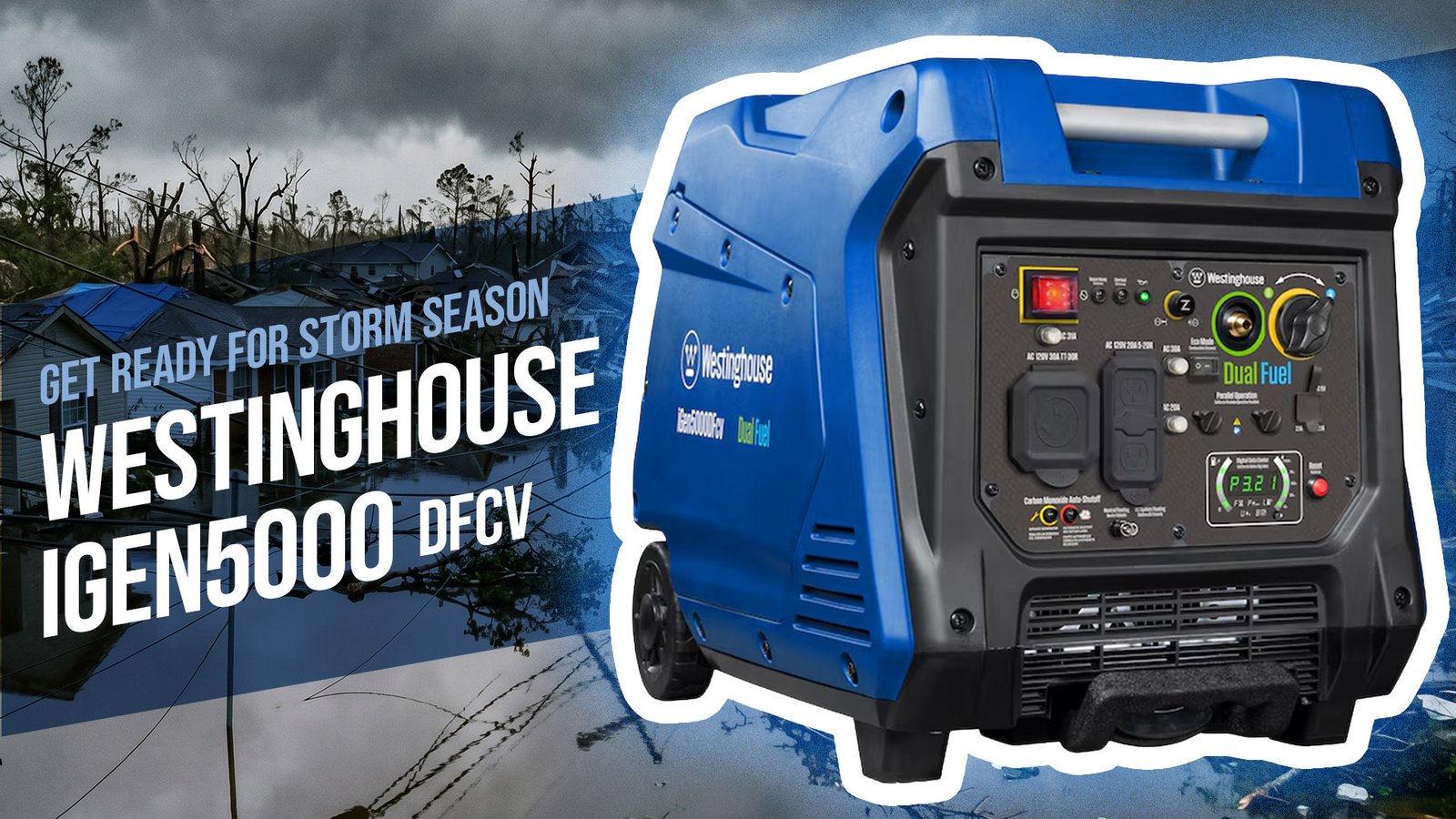
The Executive Verdict: Where the iGen5000DFcv Fits
The Westinghouse iGen5000DFcv sits in a useful middle lane: more capable than small recreational suitcase inverters, but quieter and cleaner-running than many open-frame jobsite generators. On paper, it delivers 3,900 running watts and 5,000 peak watts on gasoline, or 3,500/4,500 watts on propane. That gives it enough capacity for many outage and RV scenarios, especially when the load mix is managed with some discipline.
The appeal is straightforward. You get dual-fuel flexibility, inverter-grade output rated at under 3% THD, a built-in TT-30R outlet for RV use, and a CO shutoff system. The trade-offs are just as clear: this is still a 120V-only generator, it is heavy for one person to lift, and the “cv” version is recoil-start only. That means it makes sense for buyers who want serious portable backup power, but not for anyone expecting whole-home 240V coverage or push-button convenience.
SHOP FOR WESTINGHOUSE AT LOWE’S
Who I Recommend It For (and Who Should Pass)
When evaluating this unit for storm prep or off-grid use, I break buyers down into specific use cases rather than broad marketing categories.
I highly recommend this for:
- Storm-prep homeowners who want to keep a refrigerator, gas furnace blower, sump pump, lights, chargers, and networking gear running during outages.
- RV and travel-trailer owners who want a built-in TT-30R outlet and enough inverter power for many common RV loads, provided they manage startup surges carefully.
- Buyers who want cleaner power for electronics than a conventional generator usually provides and also want the storage advantages of propane.
I do NOT recommend this for:
- Anyone who needs 240V output for central AC, electric dryers, electric ranges, or many deep-well pumps. This unit is 120V only.
- Users with shoulder issues, limited mobility, or low tolerance for recoil starting. The iGen5000DFcv does not offer electric start.
- Buyers expecting true suitcase portability. At about 105.8 lb dry, this is easy to roll but not pleasant to lift into a truck bed alone.
- Anyone shopping for prime power or whole-home standby performance. This is a portable backup tool, not a utility replacement.
Westinghouse 5000 Peak Watt Portable Dual Fuel Inverter Generator, Recoil Start, Gas/Propane

Power Profile & Load Realities
The 5,000-watt peak class matters because many appliances pull a brief startup surge that is much higher than their running wattage. That said, buyers oversimplify this constantly. A generator does not “run a fridge” or “run an AC” in the abstract. It runs a specific appliance under specific conditions, with a specific fuel, while other loads may already be active.
On gasoline, the iGen5000DFcv is rated for 3,900 running watts and 5,000 starting watts at 120V. On propane, that drops to 3,500 running watts and 4,500 starting watts. That is enough for many practical backup combinations, but not all of them. Startup success still depends on appliance age, compressor size, ambient temperature, altitude, and what else is already plugged in.

Best Portable Inverter Generators for Storm Season: The Smart Buyer’s Guide
The Propane Reality Check:
The Output Drop:
Expect about a 10% reduction in available wattage versus gasoline. If you plan to use propane as your primary fuel, leave extra headroom instead of loading the generator close to its rated limit.
Real-World Runtime:
The headline runtime numbers are based on light 25% loads. In actual outage use, compressor-heavy loads like refrigerators and air conditioners can shorten runtime significantly. Treat the published figures as best-case guidance, not a promise.
The Storage Win:
Propane stores far better than gasoline for long emergency readiness. It does not go stale, and it avoids many carburetor issues that punish occasional-use generators.
The Cold-Weather Caveat:
Propane is not magic. In very cold weather, cylinder performance can drop, and power delivery may become less satisfying than the spec sheet suggests. Gasoline usually gives you the stronger performance ceiling.
Physical Design, What’s in the Box, & The Recoil-Start Reality
The iGen5000DFcv uses an enclosed inverter-style housing rather than an exposed open-frame layout. Westinghouse markets it as operating as low as about 52 dBA at 25% load, which is quieter than many conventional portable generators, though noise always rises with load and placement matters.
Out of the box, Westinghouse includes the basics most buyers expect, including the propane regulator/hose, a funnel, and engine oil for initial setup. The telescoping handle and wheels make it manageable across a driveway or garage floor, but this is still a large portable generator. Soft ground, mud, and truck-bed lifting are where the weight stops being an abstract number.
The “cv” suffix matters. This version is recoil-start only. There is no onboard battery, no push-button ignition, and no remote start. For some buyers, that is a tolerable trade-off. For others, especially older users or anyone buying for storm use in bad weather, it is the reason to choose another model.

Technical Interface, CO Sensor, and Data Center
The “c” in the model name signals an integrated carbon monoxide shutdown system. That is a useful safety feature, not a substitute for safe operation. You still need outdoor-only placement, open-air ventilation, and proper distance from doors, windows, and vents. It also does nothing to protect you from bad extension-cord practice or illegal backfeeding into household wiring.
The front panel includes an LED Data Center that gives you live visibility into:
- Estimated remaining runtime.
- Fuel level for gasoline use.
- Output load relative to the running-watt limit.
- Voltage and frequency.
- Lifetime hours for maintenance planning.
Ownership Lifecycle: Maintenance, Warranty, and TCO
A generator is only valuable if it starts when the power goes out. The iGen5000DFcv is still a small engine, which means maintenance discipline matters more than brochure features. Westinghouse lists a 3-year residential limited warranty, but smart buyers should still confirm current warranty terms and service support at the time of purchase.
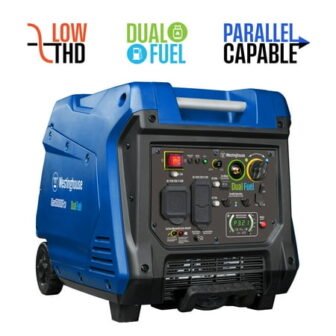
 Walmart.com
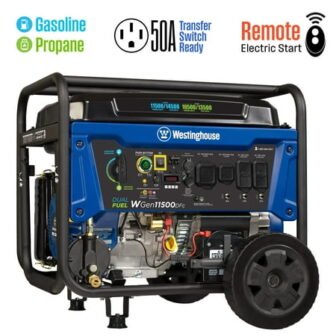 Walmart.com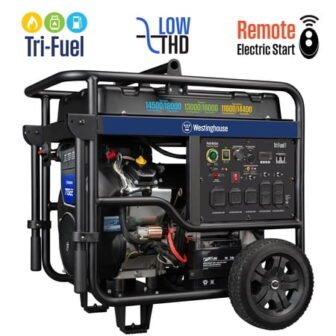
The Competitive Landscape: Westinghouse vs. Generac
No generator exists in a vacuum. If you are shopping in this 5,000-watt inverter class, the most obvious like-for-like alternative is the Generac iQ5200DF (Model G0089470). It targets the same buyer who wants dual fuel, inverter-grade power, and outage or RV capability, but it leans harder into convenience.
The Generac adds electric push-button start, recoil backup, and built-in USB charging. The Westinghouse fights back with native TT-30R RV readiness and a slightly more direct value story for buyers who do not care about electric start. Neither machine changes the underlying category limit: both are 120V portable inverters, not whole-home 240V solutions.
Here is a side-by-side spec comparison so you can weigh the output, outlets, and starting systems for yourself:
| Spec / Feature | Westinghouse iGen5000DFcv | Generac iQ5200DF (G0089470) |
|---|---|---|
| FIND AT LOWE’S | FIND AT LOWE’S | |
| Generator type | 120 V inverter, portable, dual fuel | 120 V inverter, portable, dual fuel |
| Fuel | Gasoline / Propane (LP) | Gasoline / Propane (LP) |
| Running watts (gasoline) | 3,900 W | 3,900 W |
| Starting watts (gasoline) | 5,000 W | 5,200 W |
| Running watts (propane) | 3,500 W | 3,500 W |
| Starting watts (propane) | 4,500 W | 4,700 W |
| Voltage / phase | 120 V, 60 Hz, single-phase | 120 V, 60 Hz, single-phase |
| Power quality (THD) | Inverter output, <3% THD | Inverter output, <3% THD |
| Gasoline tank capacity | 3.4 gal | 3.2 gal |
| Runtime @ 25% load (gasoline) | Up to ~18 h on 3.4 gal tank | Up to ~15 h on 3.2 gal tank |
| Runtime @ 25% load (propane, 20 lb) | Up to ~22 h | Up to ~20 h |
| Carbon monoxide protection | CO sensor with automatic engine shutdown | COsense CO monitoring with automatic shutdown |
| Starting system | Recoil (manual) only | Electric push-button start + recoil backup |
| Engine displacement | ~224 cc class (manufacturer-listed) | 223 cc OHV 4-stroke |
| Outlets – 120 V AC | 120 V 20 A outlets plus 120 V 30 A TT-30R RV-ready plug | 2× 120 V 20 A GFCI duplex (5-20R), 1× 120 V 30 A L5-30R |
| USB / DC outlets | Varies by trim level; verify current listing | USB-A and USB-C ports included |
| RV-ready status | Yes – TT-30R 30 A outlet | Not TT-30 RV-ready; adapter required for many RV setups |
| Parallel capable | Available within the inverter series; verify kit compatibility | Parallel-ready (parallel kit sold separately) |
| Noise rating | As low as ~52 dBA at 25% load (manufacturer claim) | No specific dB figure broadly published |
| Dry weight | ≈105.8 lb | ≈107 lb |
| Mobility | Integrated wheel kit and telescoping handle | Integrated handle and never-flat wheels |
| CO / safety standards | CO sensor; CARB/EPA compliant | COsense; CARB/EPA and ANSI/PGMA G300 compliant |
| Warranty (residential) | 3-year limited warranty | 3-year limited warranty |
Two Other Buying Paths Worth Considering
Some buyers should not choose either of these models. If lift weight is your main problem, two smaller parallel-capable inverters may be the smarter path because they are easier to move, easier to store, and offer some redundancy.
If 240V output is your main problem, stop shopping this class entirely and move up to a generator designed for split-phase home backup.
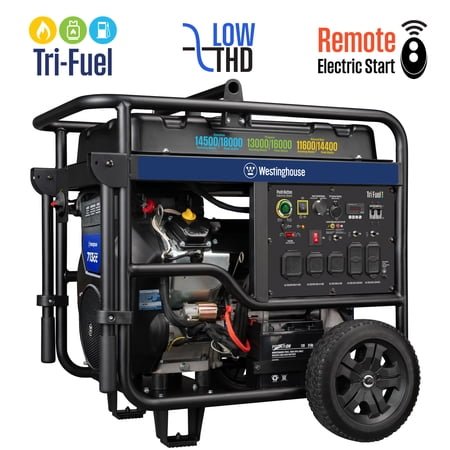
Westinghouse 14,500W Push Button Start Power Generator
Easily portable with never flat wheels, steel handles and lift bar, it’ll have your house, travel trailer or jobsite powered in seconds. Backed by a 3 year limited warranty, lifetime tech support and the Westinghouse Nationwide Service Network.
You might also be interested in:
The Final Call
If you want a high-output, dual-fuel inverter for outage essentials or RV use, and you can live with recoil starting, the Westinghouse iGen5000DFcv is a strong practical option. Its best qualities are simple: useful real-world output, native TT-30R RV readiness, cleaner inverter power, and the flexibility to store propane for long emergency gaps.
However, do not romanticize what it is. It is heavy, it is manual-start only, and it is still a 120V portable generator. That means it can be an excellent backup tool for the right buyer, but it is not a whole-home answer and it is not the right machine for shoppers who want effortless starting.
If convenience matters more than price and RV outlet simplicity, the Generac iQ5200DF makes a better argument because it gives you electric start and slightly more surge headroom. If you want the more direct value play and your actual use case fits a 120V dual-fuel inverter, the Westinghouse remains the more compelling buy.
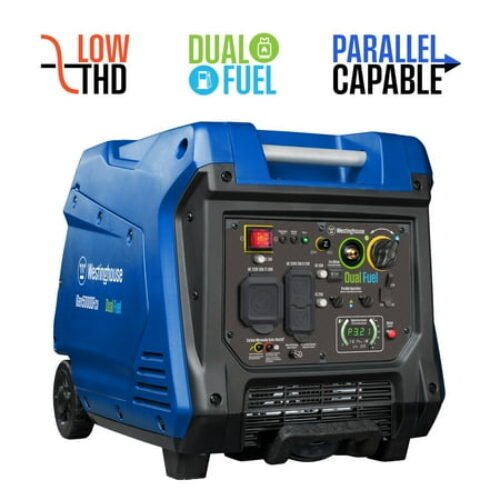
Westinghouse 5000 Peak Watt Portable Dual Fuel Inverter Generator, Recoil Start, Gas/Propane
Walmart.com The best time to buy a generator is when you don’t need it—and the Westinghouse iGen5000DFcv is exactly the kind of dual‑fuel inverter you’ll be glad you parked in the garage before the lights go out.
With 3,900 running / 5,000 peak watts on gasoline (3,500 / 4,500 on propane), clean low‑THD inverter power, and an RV‑ready 30‑amp outlet, it can keep your fridge, furnace blower, sump pump, and electronics running smoothly on either fuel during a storm.
Add in the built‑in CO sensor, long runtimes, and quiet, fully enclosed design, and this becomes a “buy once, save your outage” tool rather than just another noisy contractor generator.