Here’s how to protect your data from Google and Amazon in under 20 minutes.
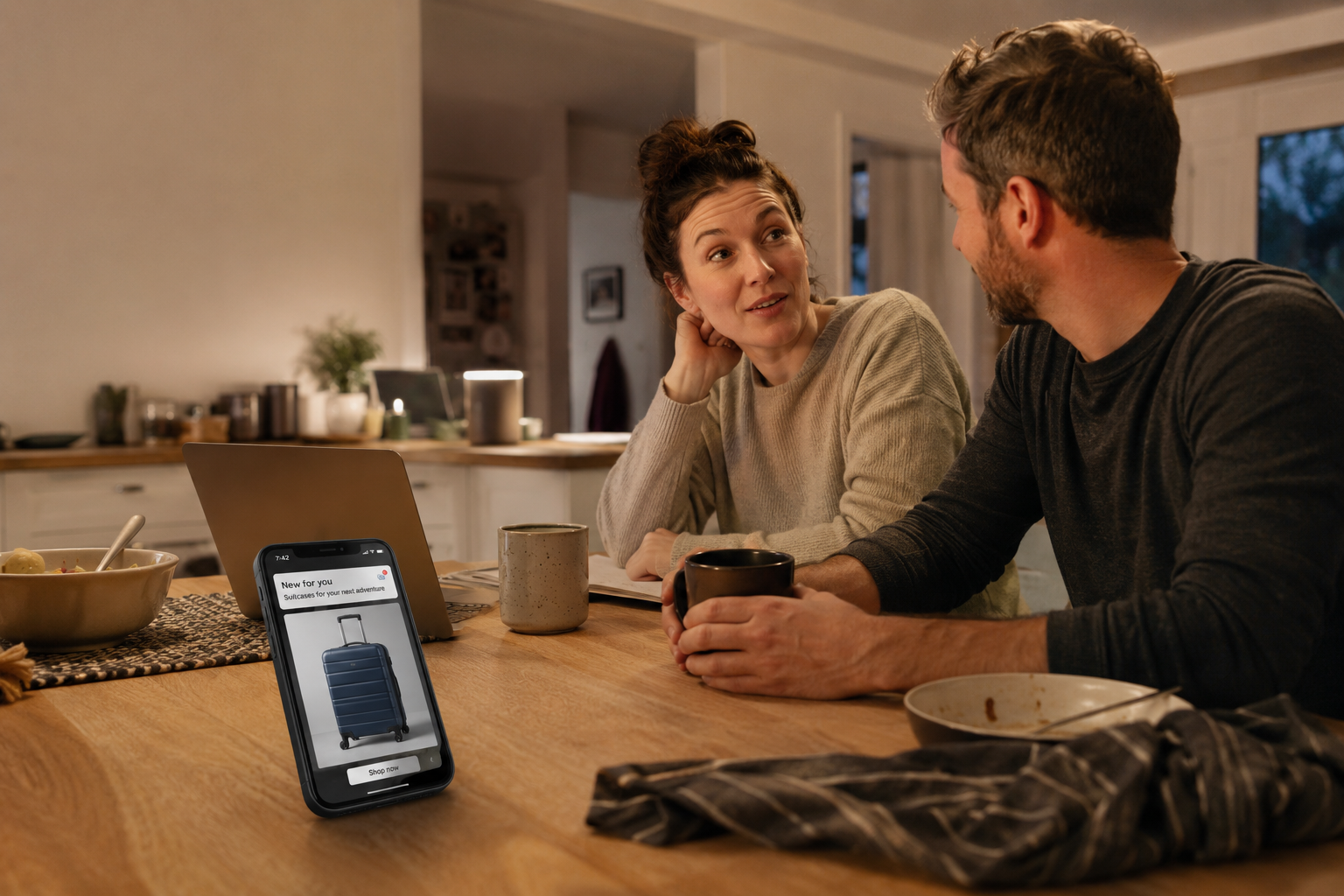
You mention a weekend trip to a friend at dinner. No search. No text. Nothing typed anywhere. Twenty minutes later, your phone shows you an ad for a suitcase. That’s not just a spooky coincidence anymore.
In 2024, the FTC logged 1.13 million identity theft reports. Then the first nine months of 2025 alone beat that entire year’s total. The FBI’s cybercrime unit says online crime cost Americans $20.9 billion in 2025, up 26% from the year before, the first time its complaint count has ever topped a million in the center’s 25-year history. Somewhere in that pile of numbers is data that started small. A Google search. An Amazon cart. It ended up in the wrong hands.
Google and Amazon aren’t the only companies watching you. But they’re the two you use every single day, often without a second thought. So let’s skip the vague “big tech is watching” hand-wringing. Here’s what they actually collect, what’s already gone wrong, and what you can fix this weekend.
What Google Actually Has on You
Google’s business runs on knowing you well enough to sell that to advertisers. Here’s the actual list: your search history, everything you’ve watched or searched on YouTube, your location, your Chrome browsing if you’re signed in, and voice recordings if you use Google Assistant.
And here’s the part most articles skip. Google got caught being misleading about this. In 2022, Google agreed to pay $391.5 million to settle a case brought by 40 state attorneys general. The problem: turning off “Location History” in your account didn’t actually stop location tracking. A separate setting called “Web & App Activity” kept logging where you were anyway. Google used it for ad targeting from 2014 to 2020. An Associated Press investigation is what finally exposed it.
The lesson isn’t “delete your Google account.” It’s simpler than that. Privacy settings on these platforms aren’t one switch. You often have to flip more than one to actually turn something off.
What Amazon Actually Has on You
Amazon tracks what you buy. It tracks what you look at but don’t buy. It tracks what’s sitting in your cart right now. If you use Alexa, add your voice recordings to that list.
In May 2023, the FTC fined Amazon $25 million for breaking children’s privacy law. The company kept kids’ Alexa recordings forever, even after parents asked for them to be deleted. In that same settlement, Amazon paid $5.8 million in refunds over Ring, its doorbell camera brand. The FTC said Ring gave employees free access to customer video, including footage from cameras pointed at bedrooms and bathrooms. One employee viewed videos of at least 81 different women over a few months in 2017, according to the FTC’s complaint.
That’s not a “your data could be misused” scare story. That’s a real, documented case of it happening.


Last updated on 2026-09-21
Quick comparison: what each company actually tracks
| Data type | Amazon | |
|---|---|---|
| Search / browsing history | Yes — Search, Chrome (if signed in) | Yes — product searches, pages viewed |
| Location | Yes — via two separate settings | Limited — mainly shipping addresses, app location if granted |
| Voice recordings | Yes, if you use Google Assistant | Yes, if you use Alexa |
| Purchase / viewing behavior | Indirect (via Search, Maps, YouTube) | Direct — purchases, cart, wish list, watch history on Prime Video |
| Home camera footage | No | Yes, if you own a Ring device |
| Documented misuse case | $391.5M settlement, 40 states (2022) | $25M + $5.8M FTC settlement (2023) |
Why They Collect All of This
Targeted ads are the actual business model here. More data means better ad targeting, which means more money. That’s not a conspiracy. It’s just how the free internet gets paid for.
To be fair, personalizing things has real upside too. Search results that get what you meant. Recommendations that save you a few minutes. Alexa that remembers your morning routine. The problem isn’t that these companies use your data. It’s what happens next. Your data gets combined with other data. Or stolen. Or handed to an employee who shouldn’t have touched it, like in the Ring case above.
Both companies do offer real controls. Almost nobody uses them. That’s the actual gap worth closing.
The 20-Minute Privacy Tune-Up
You don’t need to quit Google or cancel Prime. You need about 20 minutes and this table.
| Where | Do this | Time it takes |
| myactivity.google.com | Turn off both Location History and Web & App Activity — they’re separate settings, and turning off just one does nothing | 2 min |
| myadcenter.google.com | Turn off personalized ads if you’d rather Google stop using your activity to target you | 1 min |
| takeout.google.com | Request a copy of everything Google has stored on you (doesn’t delete anything, just shows the receipts) | 5 min to request |
| Amazon.com → Privacy Settings → “Request My Data” | See what Amazon has on file (can take up to a month to arrive, so don’t wait until you need it fast) | 2 min |
| Alexa app → Settings → Alexa Privacy | Delete your voice history, or set it to auto-delete on a rolling basis | 2 min |
| amazon.com/adprefs | Opt out of Amazon’s personalized ads (“Do Not Personalize Ads”) — note this is per-browser unless you’re signed in | 1 min |
| Ring app (if you own a device) | Check whether you’ve opted into sharing footage with local police, and turn it off if you don’t want that | 1 min |
| Bitwarden or NordPass | Set up a password manager and stop reusing passwords | 10 min, one-time |
| Google + Amazon account settings | Turn on two-factor authentication — Microsoft’s own research found this one step blocks 99.9% of automated account takeovers, even when your password has already leaked | 3 min |
| haveibeenpwned.com | Check whether your email has shown up in a known data breach | 1 min |
| Equifax, Experian, TransUnion | Freeze your credit for free | 10 min |
| annualcreditreport.com | Pull your free credit reports — you get one from each bureau per year | 5 min |
“I Don’t Have Anything Worth Stealing”
You do. Credit card fraud was the single biggest identity theft category the FTC tracked in 2024, with 449,076 reports. Nobody breaks into your accounts because your life is interesting. They do it because your card number and login are worth money on their own. That’s true no matter who you are. Nordpass is our choice for password manager.

“This Sounds Like a Lot of Work”
It’s not, and you don’t have to do it all tonight. If you only do one thing from this whole article, make it this: turn on two-factor authentication on Google and Amazon right now. It takes about three minutes. That one step alone blocks almost every automated account takeover attempt out there. You can knock out the rest of the table above over the weekend, a few minutes at a time.
This isn’t about getting paranoid over every ad that seems to know too much. It’s about closing the few doors that are wide open right now. So when the next big breach makes headlines, you’re not the one refreshing your bank app at 2 a.m.
If you already suspect your information has been misused — a card you didn’t open, an account you don’t recognize — skip the checklist for a minute and go straight to identitytheft.gov. It’s the FTC’s free recovery tool, and it walks you through the report and dispute process step by step.