

Top Pics for Water Leak Protection
| Product | Best Category | Key Buying Info | Read More |
|---|---|---|---|
GoveeLife 1s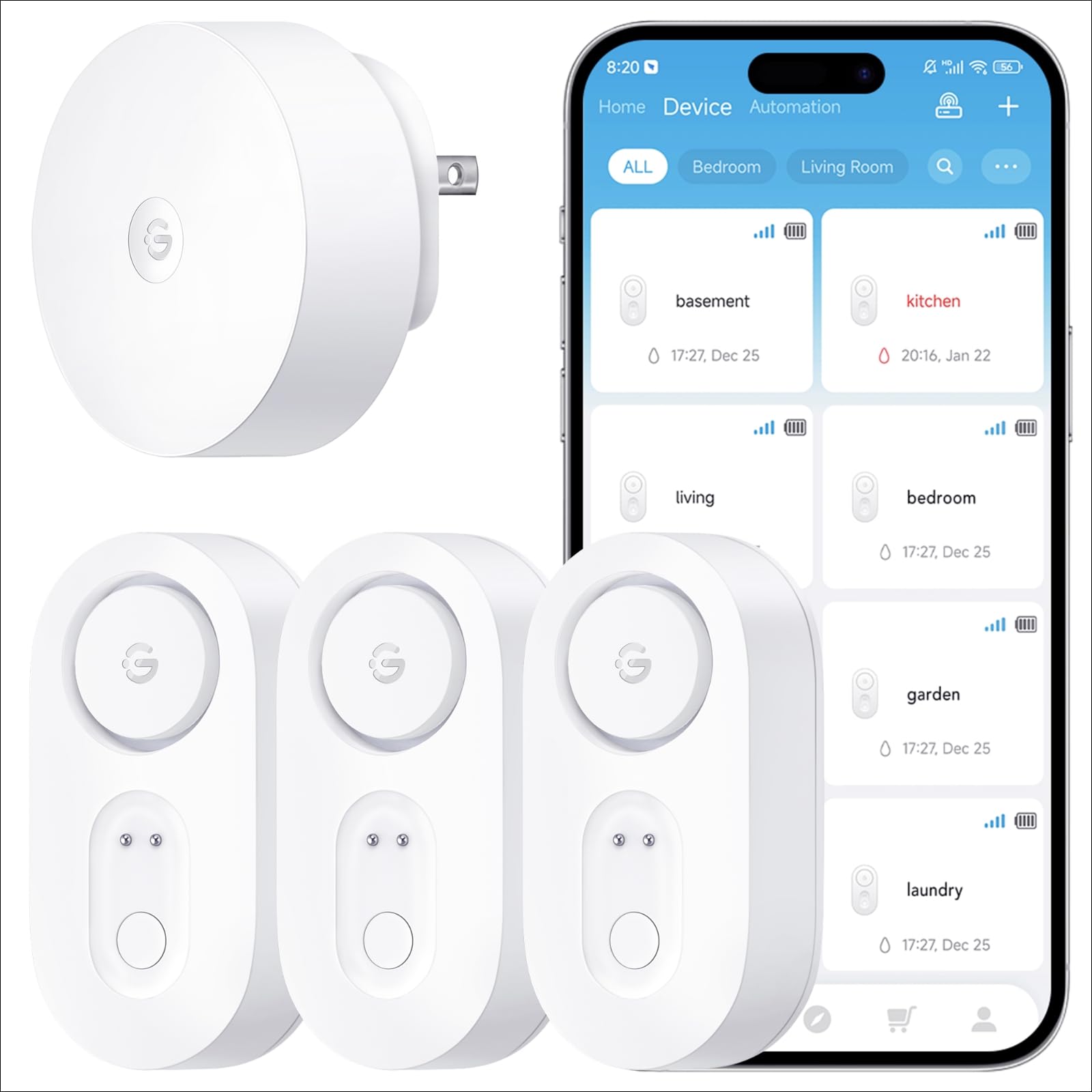 | Long Range | Cost Tier: $$ 1804 ft range; hub included. | MORE |
METAK Alarm | Budget Sensor | Cost Tier: $ 100dB local siren; no Wi-Fi. | MORE |
Aqara 3 Pack | Zigbee Connectivity | Cost Tier: $$ Stable mesh; requires hub. | MORE |
X-Sense Wi-Fi | Loud Alarm | Cost Tier: $$ Piercing 110dB siren. | MORE |
Moen Flo | Main Valve Shutoff | Cost Tier: $$$$ Active pipe protection. | MORE |
TP-Link Tapo | Smart Home Ecosystem | Cost Tier: $$ Adjustable alarm volume. | MORE |
Frizzlife LP365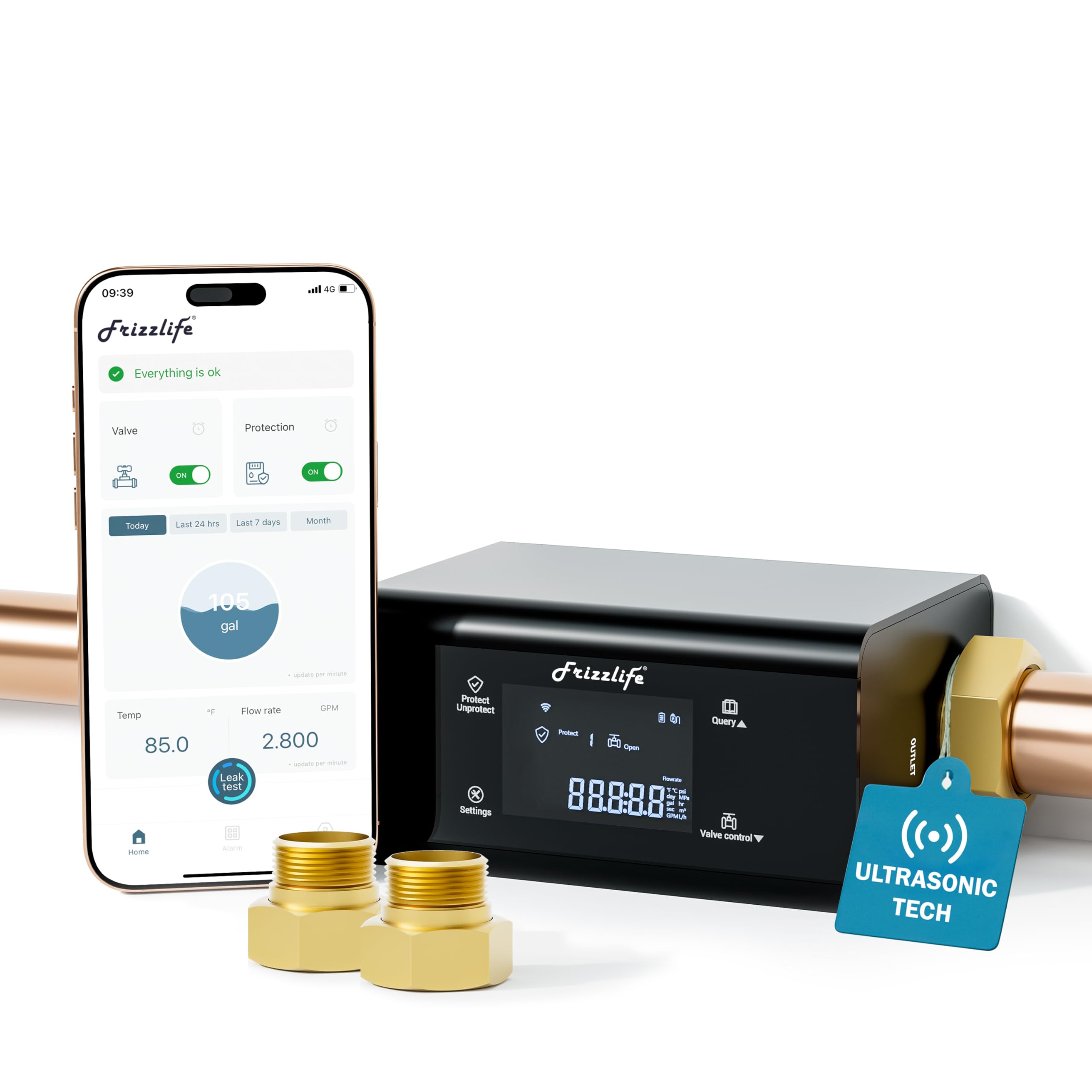 | Smart Flow Monitor | Cost Tier: $$$$ Ultrasonic sensing tech. | MORE |
YoLink DIY | DIY Shutoff Kit | Cost Tier: $$$ Clamps to existing valves. | MORE |
How We Chose
When evaluating leak detectors and shutoff valves, we set aside the marketing fluff to look closely at what happens when water actually touches the floor. The most important distinction is the device class. We separated passive sensors—which simply notify you that your floor is wet—from active inline valves that step in and automatically shut off your water supply. Understanding this gap is crucial for matching a system to your home's risks and your budget.
We also looked heavily at connectivity protocols and power sources. A device running on standard Wi-Fi is easier for a beginner to set up, but systems using dedicated base stations or Zigbee networks often provide better range through thick walls. Finally, we examined the exact intervention method for each product. Whether it relies on a local alarm, a phone notification, or a motorized mechanical arm, we prioritized solutions that offer clear, reliable alerts to help mitigate disaster.
GoveeLife Upgraded Smart Water Leak Detector 1s
This Wi-Fi connected leak detection kit from GoveeLife includes a central gateway and three battery-powered sensors. It stands out by communicating across extended distances, offering an impressive range of up to 1804 feet in open-air conditions, which makes it ideal for spreading sensors across a larger property.
If you've got outbuildings, a detached garage, or a sprawling basement, this setup helps ensure you stay connected. It beat out simple standalone sensors by funneling multiple detection zones through a single, reliable hub to ping your phone immediately.
Pros
- Extensive 1804 ft range
- Loud 105 decibel alarm
- Long 5-year battery life
Cons
- Passive detection only
- Needs dedicated gateway
Tech Specs
| Major Features | Includes gateway and three individual floor sensors, 1804 feet range, 105 decibel local alarm, App and SMS alerts, 5-year battery life |
| Device Class | Sensor Kit |
| Connectivity Protocol | Wi-Fi (via Gateway) |
| Power Source | 6 AAA batteries |
| Intervention Method | 105dB Alarm + App/SMS Alerts |
Ideal For
- People with large properties or thick walls.
- Homeowners monitoring basements, laundry rooms, and kitchens simultaneously.
Not For
- Users looking for a system that actively shuts off water.
- Buyers who want an all-in-one standalone device without a hub.
Editor's Take
The GoveeLife 1s kit's a smart move if you've got a lot of ground to cover and struggle with Wi-Fi dead zones in your basement. Keep in mind that walls and floors will reduce that maximum range, but the dedicated gateway provides a much stronger signal than typical direct-to-router sensors. It's a highly capable monitoring solution for anyone who wants robust alerts without touching their plumbing.
METAK Water Leak Detector Sensor Alarm
Sometimes you just need a straightforward device that makes a lot of noise when things get wet. The METAK sensor's a simple, plug-and-play contact alarm that triggers a local siren the moment moisture touches its probes.
It skips the complexity of Wi-Fi setups, apps, and smart home hubs entirely, offering a purely local defense. It wins the budget category because it provides a reliable, piercing warning right at the source of the problem for a fraction of the cost of connected systems.
Pros
- Very affordable
- No smart hub required
- Loud 100 decibel alert
Cons
- No mobile app alerts
- Short audible range only
Tech Specs
| Major Features | Standalone battery-powered, Loud 100 decibel alarm, Simple touch controls, Compact footprint, Ready out of the box |
| Device Class | Standalone Sensor |
| Connectivity Protocol | None (Local Alarm Only) |
| Power Source | 2 AAA batteries |
| Intervention Method | 100dB Local Alarm |
Ideal For
- Renters looking for cheap, non-invasive under-sink protection.
- Anyone who prefers straightforward gadgets over smart home complexity.
Not For
- Homeowners who travel frequently and need mobile notifications.
- People with large, multi-story homes where a local alarm might go unheard.
Editor's Take
The METAK alarm's as basic as it gets, and that's its main strength. Note that this is a localized, standalone alarm—it doesn't connect to Wi-Fi and won't send alerts to your phone if you're away at work. If you just need a cheap, reliable siren to scream at you when the washing machine overflows while you're in the next room, this gets the job done.
Aqara Water Leak Sensor 3 Pack
The Aqara Water Leak Sensor relies on the Zigbee protocol, which is a specialized low-power wireless standard used heavily in smart homes. Because Zigbee devices pass signals to each other, they create a highly stable network that doesn't bog down your standard home router.
This 3-pack is excellent for sliding into very tight spaces like under dishwashers or behind toilets. It shines for users already invested in smart ecosystems, beating basic Wi-Fi sensors by integrating smoothly into complex home automation routines.
Pros
- Stable Zigbee connection
- Compact sensor design
- Smart home triggers
Cons
- Requires Aqara hub
- Low volume local alarm
Tech Specs
| Major Features | Compact low-profile design, Zigbee protocol support, Push app notifications, Triggers smart automations, Lithium coin cell powered |
| Device Class | Sensor (3-pack) |
| Connectivity Protocol | Zigbee (Requires Aqara Hub) |
| Power Source | 3 Lithium CR2032 batteries |
| Intervention Method | App Alerts (Low-decibel alarm) |
Ideal For
- Home automation enthusiasts who already own an Aqara Hub.
- Users building out a stable Zigbee mesh network.
Not For
- Buyers looking for a quick Wi-Fi setup (requires hub).
- Those needing a loud physical siren.
Editor's Take
If you're serious about smart home automation, Zigbee's the way to go, and Aqara makes some of the most reliable sensors in the business. Just remember that you must own or purchase an Aqara Hub for these to work. They're perfect for users who want to trigger lights or send notifications quietly rather than relying on a screeching physical alarm.
X-Sense Wi-Fi Water Leak Detector
The X-Sense system shares a lot of architectural DNA with the GoveeLife kit, utilizing a central Wi-Fi base station to manage three independent floor sensors. Where it distinguishes itself is sheer volume, pushing out a piercing 110 decibel alarm when water is detected.
This kit bridges the gap between smart app alerts and traditional high-decibel home security. It stands out in this roundup for producing the loudest local warning siren, ensuring you hear a basement leak even if your phone's on silent.
Pros
- Piercing 110 decibel siren
- Base station boosts signal
- Simple floor mounting
Cons
- Passive detection only
- Hub takes up outlet space
Tech Specs
| Major Features | Base station + three floor sensors, 110 decibel alarm, 1700 feet range, Push app alerts, Smart home integration |
| Device Class | Sensor Kit |
| Connectivity Protocol | Wi-Fi (via Base Station) |
| Power Source | 3 AAA batteries |
| Intervention Method | 110dB Alarm + App Alerts |
Ideal For
- Homeowners who want both mobile alerts and an unmissable physical alarm.
- People covering large distances where routers struggle to reach.
Not For
- Users living in small apartments (overkill).
- People who already chose the GoveeLife system.
Editor's Take
The X-Sense kit's loud, capable, and very similar to the GoveeLife offering. Because the two systems overlap so heavily in range and function, choosing between them's largely down to whether you prefer X-Sense's slightly louder 110dB siren. It's an excellent middle ground for homeowners who want robust monitoring without paying plumber installation fees.
Moen Flo Smart Water Shut Off Valve
Moving from passive alarms into active plumbing hardware, the Moen Flo represents serious structural protection. Installed directly onto your home's main water supply line, it constantly monitors water pressure, flow rates, and temperatures to detect anomalies.
If it senses a burst pipe or even a tiny micro-leak, the valve physically closes to cut off your home's water supply. It earns its spot by offering professional-grade whole-home protection, shifting you from simply knowing about a flood to actively stopping it.
Pros
- Active automatic shutoff
- Detects micro leaks
- Established brand tech
Cons
- Requires plumbing work
- Needs AC outlet nearby
- High initial cost
Tech Specs
| Major Features | Inline smart valve for 3/4-inch pipes, Monitors flow and pressure, Detects drop-per-minute leaks, Automatic shutoff, Detailed app analytics |
| Device Class | Inline Smart Valve |
| Connectivity Protocol | Wi-Fi |
| Power Source | AC Power |
| Intervention Method | Auto Shutoff + App Alerts |
Ideal For
- Homeowners who want absolute peace of mind.
- People willing to hire a plumber to protect their investment.
Not For
- Renters (requires pipe modification).
- Homes without a nearby main power outlet.
Editor's Take
The Moen Flo's an investment, both in the hardware and the professional installation it usually requires. Unlike other options that use ultrasonic sensors, Moen relies on an established mechanical turbine and pressure sensors to gauge flow. It's expensive, but for homeowners dealing with aging pipes or severe freeze risks, it's one of the most effective ways to prevent catastrophic water damage.
TP-Link Tapo Smart Water Leak Detector
The TP-Link Tapo detector's a compact Wi-Fi sensor that excels at playing nicely with other smart home products. It connects through a required Tapo Hub, allowing you to build automation routines directly with platforms like Alexa and Google Home.
It includes a rare feature for this category: an adjustable alarm volume. This flexibility helps it beat similar sensors by letting you lower the siren's volume if the sensor's located in a quiet office, or max it out to 90 decibels if it's sitting next to a noisy furnace.
Pros
- Adjustable alarm volume
- Strong Alexa support
- Compact and discreet
Cons
- Requires Tapo hub
- Slightly bulkier than Aqara
Tech Specs
| Major Features | Adjustable 90 decibel alarm, Alexa/Google Home integration, Smart home triggers, Lightweight chassis, Push alerts |
| Device Class | Sensor (Requires Hub) |
| Connectivity Protocol | Wi-Fi (via Tapo Hub) |
| Power Source | 2 AAA batteries |
| Intervention Method | Adjustable Alarm + App Alerts |
Ideal For
- Current users of the TP-Link Tapo ecosystem.
- Buyers who want to trigger smart actions when a leak occurs.
Not For
- People wanting to avoid proprietary smart hubs.
Editor's Take
If you're already running TP-Link cameras or smart plugs via a Tapo Hub, adding this sensor's a no-brainer. The adjustable volume's a subtle but fantastic feature, allowing you to tailor the alarm to the specific room it lives in. It offers a great balance of local noise and smart capabilities.
Frizzlife LP365 Smart Water Monitor and Shutoff
Like the Moen Flo, the Frizzlife LP365's a heavy-duty inline smart valve that tracks your home's water usage and shuts down the main supply if it senses trouble. What sets it apart is the underlying technology it uses to read the water.
While Moen relies on a mechanical turbine, Frizzlife uses ultrasonic technology to measure flow. This means it has no moving parts inside the water path, reducing the risk of mineral buildup jamming the sensor over time. It's a highly capable alternative for homeowners who want modern tracking tech built right into their pipes.
Pros
- Ultrasonic flow sensor
- Active automatic shutoff
- Detailed app metrics
Cons
- Requires plumbing work
- Needs AC outlet nearby
Tech Specs
| Major Features | Ultrasonic (no moving parts), Real-time flow metrics, Detects leaks to 0.01 GPM, Fits 1" and 3/4" pipes, Auto shutoff |
| Device Class | Inline Smart Valve |
| Connectivity Protocol | Wi-Fi |
| Power Source | Corded Electric (AC) |
| Intervention Method | Auto Shutoff + App Alerts |
Ideal For
- Homeowners wanting high-end active prevention.
- Buyers preferring ultrasonic monitoring over turbines.
Not For
- Renters (requires pipe modification).
- Properties without a nearby power outlet.
Editor's Take
The Frizzlife monitor offers a fascinating technological tradeoff compared to Moen. Ultrasonic flow detection's very precise and immune to mechanical wear, making this a smart choice if you've got hard water that tends to clog traditional meters. Just keep in mind it shares the same high-tier installation hurdles as any inline plumbing valve.
YoLink DIY Automatic Water Leak Detection Kit
The YoLink kit approaches water shutoff from an entirely different angle. Instead of cutting pipes to install an inline valve, this kit provides a motorized "manipulator" arm that clamps onto your existing plumbing valve and physically turns the handle when a leak's detected.
It includes three wireless sensors that communicate back to the controller to trigger the arm. It stands out because it brings the active protection of automatic shutoff to a DIY audience, avoiding expensive plumbing fees entirely.
Pros
- No plumbing cuts needed
- Wireless sensor triggers
- DIY friendly setup
Cons
- Needs quarter-turn valve
- Requires AC power adapter
- Motor can jam on old pipe
Tech Specs
| Major Features | Motorized manipulator arm, Hub + three sensors, No pipe cutting required, App remote control, Long-range LoRa protocol |
| Device Class | Shutoff Kit (Manipulator) |
| Connectivity Protocol | Wireless (YoLink Hub) |
| Power Source | AC Adapter |
| Intervention Method | Auto Shutoff + App Alerts |
Ideal For
- Homeowners wanting shutoff without a plumber.
- Users with modern, easy-to-turn ball valves.
Not For
- Homes with old, stiff, or round gate valves.
Editor's Take
This's an incredibly clever workaround for avoiding plumbing costs, but it comes with strict requirements. Be aware that this kit requires a quarter-turn ball valve to function. It won't work on traditional round gate valves, and the motorized arm requires a nearby AC power adapter. If your plumbing valve's stiff or corroded, the motor may not have the torque to turn it, so check your pipes before purchasing.
General Tools MMD4E Digital Moisture Meter

While the other devices on this list are designed to catch and prevent leaks as they happen, the General Tools Moisture Meter serves a different purpose. It's a diagnostic tool used to assess the aftermath of a flood or to track down hidden moisture inside your walls.
By pressing the pin-type probes into drywall, subflooring, or concrete, you get an immediate digital readout of the material's moisture content. It's a practical necessity for contractors or homeowners assessing whether a floor's truly dry after an accident.
Pros
- Pin probes for drywall
- Clear backlit LCD screen
- Fast moisture reads
Cons
- Not an active alarm
- Manual use only
Tech Specs
| Major Features | Pin probes for wood/drywall, Backlit LCD, Audible/visual alerts, Ergonomic design, Auto-power off |
| Device Class | Diagnostic Tool |
| Connectivity Protocol | None |
| Power Source | 1 9V Battery |
| Intervention Method | Manual Readout |
Ideal For
- Homeowners assessing damage post-leak.
- Contractors checking subfloors before flooring.
Not For
- Anyone looking for automated flood prevention.
Editor's Take
This isn't a smart home gadget, but it's an incredibly useful piece of kit to keep in the toolbox. If one of your smart sensors goes off, this moisture meter helps you figure out exactly how far the water spread into your baseboards or drywall. It's highly accurate and simple to use.
Product Comparison
| Product | Features | Cost Tier | See Price |
|---|---|---|---|
| GoveeLife 1s |
| $$ | See Price |
| METAK Alarm |
| $ | See Price |
| Aqara 3 Pack |
| $$ | See Price |
| X-Sense Wi-Fi |
| $$ | See Price |
| Moen Flo |
| $$$$ | See Price |
| TP-Link Tapo |
| $$ | See Price |
| Frizzlife LP365 |
| $$$$ | See Price |
| YoLink DIY |
| $$$ | See Price |
| General Tools |
| $ | See Price |
Buyer’s Checklist
| Feature to Consider | Why It Matters |
|---|---|
| Valve Size | Ensure your inline valve matches your pipe size (usually 3/4 or 1-inch) to avoid plumbing mismatches. |
| Shutoff Method | Decide if you want a passive alert (you fix it) or an active shutoff (the machine fixes it). |
| Sensor Coverage | Count high-risk spots (heaters, laundry, dishwashers) to know exactly how many sensors you'll need. |
| Installation Type | Inline valves require physical plumbing alterations, while manipulators clamp onto existing valves. |
| Alerting Style | Choose between loud 110dB sirens for local warning or urgent app notifications for when you're away. |
Frequently Asked Questions
What is the difference between an active valve and a passive sensor?
A passive sensor's a small device you place on the floor that sounds an alarm or sends a text message when it detects water. It alerts you to the problem but can't stop it. An active valve's spliced directly into your plumbing line. When it detects a leak, it physically closes off the water supply to your entire house, actively stopping the damage.
Do I need to hire a plumber to install these systems?
You don't need a plumber to install passive floor sensors or base stations—those're simple DIY setups. However, if you purchase an inline smart valve like the Moen Flo or Frizzlife, you'll likely need a professional plumber to cut your main water pipe and install the hardware safely. The YoLink manipulator kit offers a middle ground, bolting onto existing ball valves without cutting pipes.
Will a smart leak detector work if the power goes out?
Most floor sensors run entirely on batteries and'll still sound their local alarms during a power outage. However, if your home loses power, your Wi-Fi router'll also shut down, meaning you won't receive mobile app alerts. Hardwired smart valves generally need an AC outlet and'll stop functioning unless they've got a backup battery installed.
What is the Zigbee protocol?
Zigbee's a wireless language used by smart home devices to talk to one another. Instead of every sensor fighting for bandwidth on your Wi-Fi router, Zigbee devices pass signals through a dedicated hub. This creates a highly stable, low-power network that's great for battery-powered sensors tucked away in tight, hard-to-reach spaces.
How long do the batteries last in these sensors?
Because they spend most of their lives simply waiting for a leak, battery life's usually excellent. Basic sensors can last one to two years on standard AAA or coin cell batteries, while premium kits like the GoveeLife advertise up to a 5-year lifespan. It is always a good idea to check them annually.